Journey to ground zero of the unrest in France
The spark for the student protests was ignited largely in the department of Seine-Saint-Denis, the country’s poorest province, which has the largest immigrant population and the most young people who feel they have lost their future
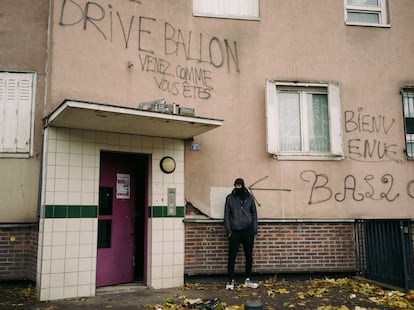

Moktar, 21, pulls up his neck gaiter, tightens the hood of his puffer jacket and steps out of the house in the late afternoon, dressed in immaculate black from head to toe. Behind the little mustache and the thick-lensed glasses with gold-rimmed temples, he smiles — a third-year college student from a very modest Tunisian family. Friendly, sharp, with an unusually political sense for his age and skin toughened by his surroundings, Moktar grew up in one of the poorest buildings in the L’Abreuvoir neighborhood in Bobigny (population 48,873), right opposite one of the drug-dealing hotspots where traffickers, police, customers, and addicts come and go all day. “Ballon here,” reads graffiti on the wall, advertising the nitrous oxide gas sold for inhalation.
Moktar knows everyone there.
“You’re keeping an eye on our car for us, huh?” he says to one of the two guys who are keeping an eye on the comings and goings in the basement of the building across the street, in exchange for a couple of doses.
In the 50-square-meter apartment six people live together. His father drives for a VTC ride service and Moktar helps him out on weekends, despite having finished the equivalent of a two-year higher technical diploma in International Trade at the Nanterre faculty with one of the top grades: “15 out of 20,” he notes. But the system has pushed him out. He was supposed to complete his third year at another faculty that they never assigned him to, and now he’s stuck. A wasted year. The same thing has happened to 126,652 students this year who have been waiting for an answer since July because of problems with the Parcoursup software, which steers young people’s university choices through opaque algorithms — students have called for its removal as a condition for ending the protests. “I studied theater and the robot told me to sign up for economic sciences. Can you believe it?” protests his friend Medhi, 19.
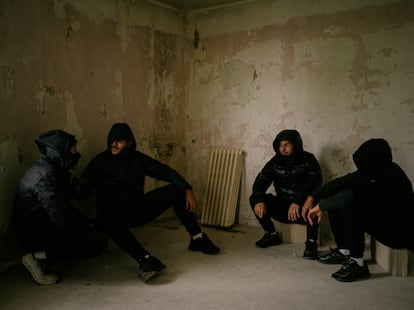
He went to last week’s demonstration with his lifelong neighborhood friends. “We stayed out late,” he adds wryly. They smile and show videos from that dawn. A week later, with bans, a growing sense of discrimination, and the realization that France rejects them, they’ve returned to the streets. “The whole banlieue will be there, brother,” they say about the protest called for the next day.
The neighborhood breathes revenge, hatred of the police, and a huge sense of being trapped. “We organize on networks. TikTok, also Snapchat. The cops still don’t understand that language,” says Rayan, wearing a tracksuit and a North Face vest, as he drives the reporter’s car to see other parts of the neighborhood.
93 is the postal code for Seine-Saint-Denis, France’s poorest department and the one with the highest proportion of immigrants — a third of the population. It is also the youngest in the country and the one that expresses itself from the margins. For many, it is a stigma impossible to overcome, affecting professional, personal, and romantic prospects. For a few, it is a real-estate opportunity to push lower-income people further from home and gentrify neighborhoods, as is already happening in Bobigny, Saint-Ouen, or Saint-Denis itself. But above all, the 93 is a scar between Paris and its suburbs — two worlds that long lived without crossing and have now come together in recent student demonstrations across the country.
“My future? Far from here. We’ll look for work in Australia, in Switzerland. I don’t know. The problem is they don’t consider us French. They don’t respect us,” Moktar laments as his friends nod.
Moktar was at the October 17 protests that ended in pitched battles with 2,500 businesses vandalized across the country, many owned by people from working-class neighborhoods who lost everything — nothing can justify that. More than 2,000 people detained — a large number of whom are minors — amid an oppressive atmosphere reminiscent of the end of a reign. They have photos and videos. Last Friday they were preparing to repeat it at the demonstration held on Saturday.
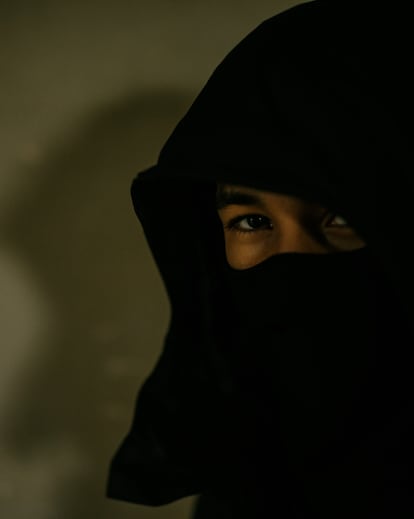
Timeo speaks. He is 24, of Algerian origin, dressed head to toe in black. “At the end of the demonstration we broke shop windows, it’s true, in some stores downtown. But also the CNews headquarters. It’s a far-right, racist TV channel that discriminates against us and blames Arabs for the bad things happening in France. It will happen again, brother. The whole banlieue will come down to Paris. We can’t stop now,” he declares.
Timeo, like his friends Medhi, Yussuf, and Rayan, lives in a temporary public housing flat. The old building where he grew up is being renovated in Tower 2 of L’Abreuvoir, a neighborhood with a 47% poverty rate (three times the national average) and an average household income of €1,180 ($1,320), according to the National Statistics Institute (INSEE).
From the heights, where there is now only rubble and debris, the horizon of the banlieue fades into the gates of Paris, where this Saturday he returned wearing diving goggles and a neoprene mask to protect himself from tear gas. His friend Moktar defends the tactic. “No uprising has happened without violence. How long were the students protesting? Until there were costly damages, until the economy was hit, they didn’t pay attention to us,” he says.
Tension in France, the social and identity fracture, is heightening six months before a crucial election in which the far right is closer than ever to the Élysée Palace (Marine Le Pen would win both the first and second rounds in almost all polls today). At the same time reporters visited Bobigny, a few kilometers away Kevin T., a 39-year-old Frenchman, had just murdered one person and wounded four others, including a 12-year-old girl, in a racist hate crime. He had been looking for Black people and Arabs. At his home he owned a copy of Hitler’s Mein Kampf.
French President Emmanuel Macron went to the scene. “The narrative that is taking hold is creating an atmosphere of instability. Tensions are rising for a variety of reasons,” he lamented. “It is a tragic example of the dangers posed by ideologies of hate and speeches that seek to pit citizens against one another,” the Muslim community denounced.
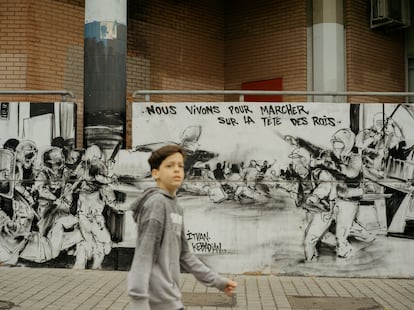
Part of the violence in the protests responds to that logic of polarization, embodied on the street by the police and demonstrators. To the feeling of exclusion. To a bespoke laicism, islamophobic. But among the more than 3,000 people detained in recent days there are also white middle-class students and ordinary criminals who take advantage of the chaos to loot.
Last Thursday at 1.30 p.m. the judge opened the session in courtroom 24 of the Paris Criminal Court. Friends, family, onlookers. First defendant: Ashnil, a 19-year-old demonstrator from Colombes (a banlieue north of Paris). In the middle of the chaos he slipped into a Monoprix supermarket that was being looted with his peers. He was masked and dressed in black. He put a few Kit-Kats, a couple of boxes of Petit Écolier cookies and two tubs of ice cream into his backpack: €30 in total. “Why?” the magistrate asks him. “I was hungry,” he replies. But it doesn’t hold up. The kid had liked several posts showing looting that day. “I wish we’d been there,” he wrote on one. Six months of community service.
The day before Aniss B., 20, wearing a Lamine Yamal soccer jersey, passed through the same courtroom. He greeted the microphone: “Good morning, everyone.” From Clichy-sous-Bois (Seine-Saint-Denis), accused of theft, destruction, and damage to a clothing store, the third-year student at the Tolbiac university campus has just experienced his “first arrest.” He asks to be allowed to attend class this week.
Two more: Lamine and Sofiane, two men in their thirties, were locked inside the Printemps department store. When security guards found them early in the morning they had clothing and Louis Vuitton bags. Sofiane wore branded sneakers that still had the anti-theft device attached. The court asks Lamine about a photo of a Vuitton product found on his phone that he had sent in the middle of the night. “I was trying to turn the phone on, the flash went off and the photo was taken,” he explains. “What a coincidence!” the judge snaps.
Sébastien Roché, a professor at the National Centre for Scientific Research (CNRS) in Grenoble, specialist in the sociology of the police and author of De la police en démocratie (The Police in a Democracy), believes that “the looting reflects these kids’ relationship with consumer society. Part of France cannot access basic goods, yet they are part of a social model where status is tied to consumption and our material possessions. Looting is an illegal appropriation to reach that. It is not political protest, but it attaches to it.”
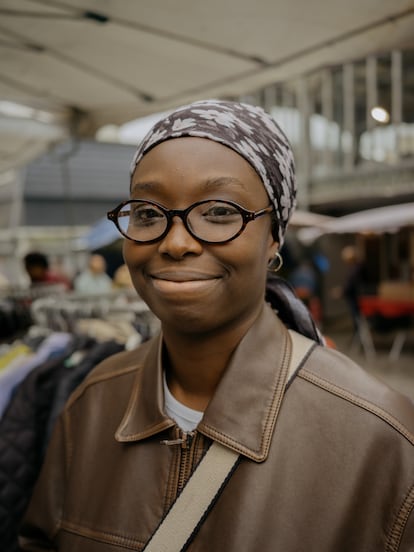
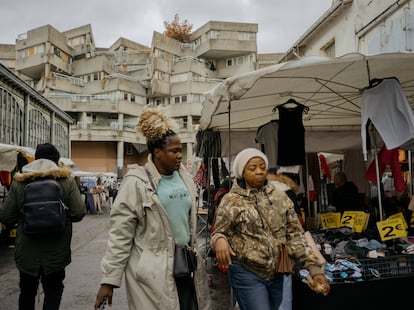
In the city of Saint-Denis, the department capital, the protests ignited. On Friday mornings there is a market. Here the basilica that holds the remains of France’s kings coexists with halal shops, mosques and a multitude of ethnicities and religions. Some streets bear names that reveal a working-class past, like Lenin Avenue or the City of the Cosmonauts, and the newspaper L’Humanité, founded by Jean Jaurès, has its headquarters here.
Didi, 27, wearing a headscarf, dark glasses and a brown jacket, crosses the market with a shopping bag. A lawyer of African origin, she supports the demonstrations but rejects violence and looting outright, and objects to associating the banlieue with that level of violence. She studied at the Paul Éluard high school, one of the places where the student unrest began before spreading across France. “Look, you can be born and raised here and still prosper, study. I’m a jurist and on Saturday I’ll return to the demonstrations: they’re legitimate and it’s a disgrace that the government’s only response has been violence. I am a revolutionary leftist, but I will vote for La France Insoumise (LFI). I already did for Bally Bagayoko [the charismatic mayor of Saint-Denis who has become a symbol for the students]. Not for his party, but because he’s one of us, he understands us.”
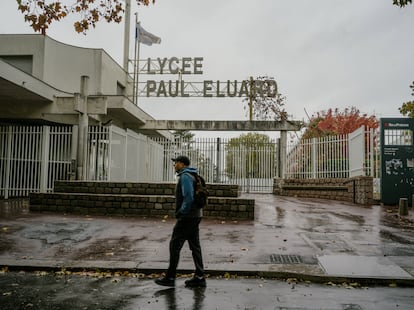
Postal district 93 and its 1,681,725 inhabitants are many other things. Seine-Saint-Denis was the epicenter of the 2024 Paris Olympic Games. There was fresh construction and it was cleaned up. Work began on the metro line that would one day connect all the suburbs and illuminate Greater Paris: something like the end of that medieval notion of the banlieue. But the 93 is also a journey into the future: the department in Île-de-France with the highest birth rate and the lowest death rate in the region. And, above all, with the highest share of under-20s (28.9%), the symbol of what Jean-Luc Mélenchon calls the New France.
The LFI’s leader obtained 49.09% in the first round of the 2022 elections in the department and came first in 36 of the 40 municipalities. Despite this, Mélenchon missed the second round of the presidential race by just 400,000 votes. Four years later, he launched his fourth campaign from Saint-Denis. Today it’s hard to find a single young person who won’t vote for him.
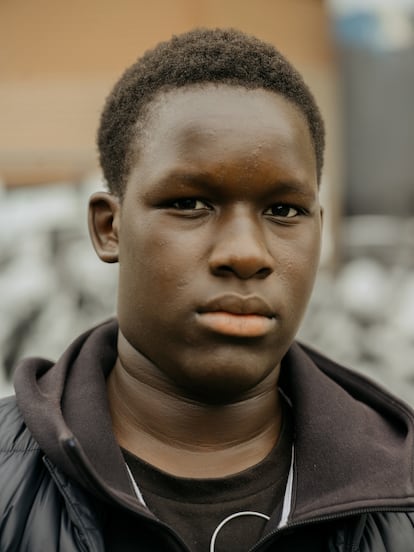
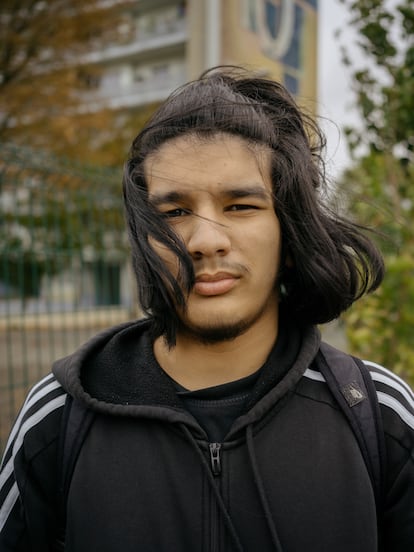
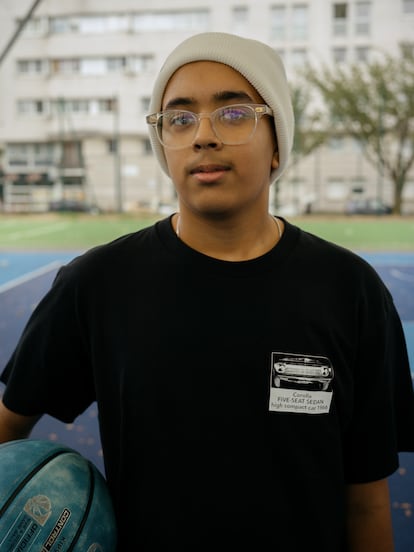
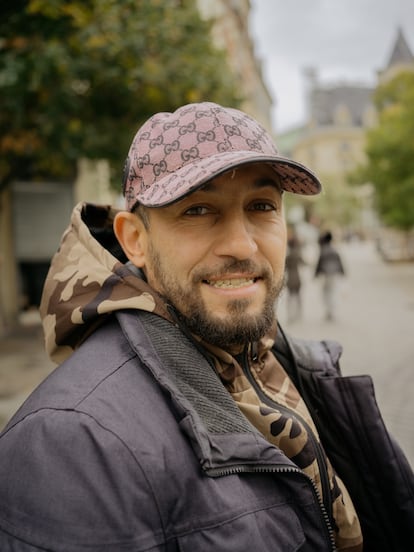
Lyes, 38, of Kabyle Algerian origin, says: “It’s a movement that affects all of us and spreads across the world.” Or as Mohamed, of Moroccan origin, 40, and a carpenter, puts it: “They have forgotten the banlieue, as if we weren’t French.” Lilia, 20, of Algerian origin, a marketing student, adds: “It’s shameful how students are treated here. There are no resources, no teachers, the buildings are literally falling down on top of us.”
For everyone, the issue comes down to the six letters of the word future. It partly stems from the failure of the old idea of integration that began after Algeria’s independence in 1962, after 132 years of French colonial rule. Housing explains part of it. Repatriates from Algeria had to be housed. Ninety percent of public housing units were built between 1962 and 1975. In 10 years almost all social housing was produced following the same model, with regional bodies unprepared to manage those enormous complexes, which ended up privatized and increasingly dilapidated as they passed to new generations of immigrants.
Over the last 30 years France has experienced a process in the banlieues that soccer makes clearer. In 1998, when France won the World Cup, the children of immigrants wanted to be French. They claimed it in the streets, shouting. Zinedine Zidane, Marcel Desailly, and David Trezeguet were the pride of the new France, even if that weighed on Jean-Marie Le Pen’s far right.
Today, stars like Ayyoub Bouaddi (a Manchester City player), of Moroccan origin and born in Senlis, north of Paris, prefer to represent their grandparents’ countries. “It’s the strengthening of an imagined homeland, as [Salman] Rushdie said, increasingly strong. And it happens because they feel [as though] part of their country rejects them. Around 40% of voters lean toward xenophobic options like the National Rally (RN) of Marine Le Pen or Éric Zemmour’s party [Reconquête]. There’s a kind of revenge against their birth country, which doesn’t treat them as they would like,” explained sociologist Stéphane Beaud, author of the essay Affreux, riches et méchants? Un autre regard sur les Bleus (Ugly, Rich, and Mean? A Different Perspective on Les Bleus).
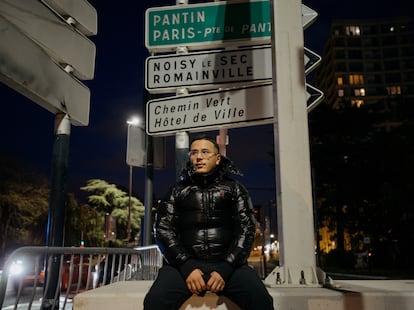
Moktar, who doesn’t see himself in France in a few years’ time either, points directly to the core of this protest. “Education was a pillar of this Republic. If you worked hard, studied, got good grades, you’d get ahead. It was supposed to be the social elevator. Today it’s the opposite. The education system has halted my career. It’s racist, exclusionary, elitist, and it has deteriorated. I don’t know about you, but I see none of the equality the Republic proclaims anywhere.”
Sign up for our weekly newsletter to get more English-language news coverage from EL PAÍS USA Edition