
Somali pirates demonstrate growing strength with new ship hijackings
Aided by a confluence of crises at home, in the Red Sea and in Hormuz, Somali groups have captured six ships since April in the biggest uptick in activity in years
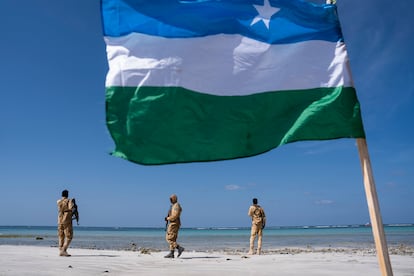

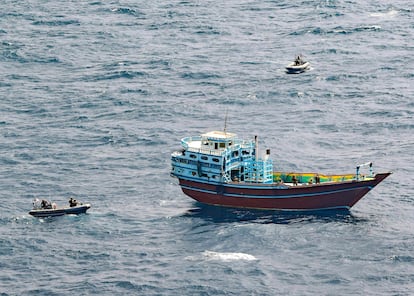
Last Thursday, the tanker SIBU 1 was sailing about 155 miles east of the Yemeni city of Al Mukalla when it was boarded by six armed men who took control of the vessel, the UK Maritime Trade Operations center (UKMTO) — the Royal Navy–run body responsible for commercial security in the area — reported. The ship, which the United States has sanctioned for being part of the shadow fleet Iran uses to export oil and evade sanctions, immediately altered course and headed for Somalia.
Just three days earlier, a cargo ship that had departed Turkey for Somalia and is believed to have been carrying weapons was boarded and hijacked by eight other individuals off the coast of the city of Mareeyo in the self‑governing Somali state of Puntland, the UKMTO said. Unlike similar past incidents, this boarding was met with bombardment in Somali waters attributed to Turkish forces, which left at least four dead and sparked significant local anger.
The hijackings come amid the biggest surge in Somali piracy in a decade, driven by disruption to shipping in the Red Sea and the Strait of Hormuz during the Gulf crisis, domestic instability in Somalia, and persistent economic grievances among its population. The rise began to alarm observers as early as April, but its current scale reflects growing capabilities among the groups behind the attacks and the difficulty of stopping their spread.
In the first half of 2026, the International Maritime Organization recorded 38 incidents of piracy and armed robbery worldwide, the lowest level since 1992, but Somali pirates — responsible for 94% of hijackings — were the notable exception. Since April they have captured six vessels, holding them off the country’s coast while ransom talks proceed, as well as more than 100 crew members, who face shortages of food and water and the threat of violence, the UN agency said.
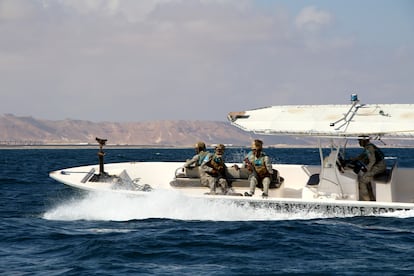
Exactly who is behind these actions, however, remains unclear. Antipiracy military missions have identified two active groups, one operating close to the Somali coast and another further out at sea. Local media, citing security sources, have instead pointed to young members of a single inland clan in the coastal town of Garacad, Puntland, organized around one of the vessels seized in April.
Still, the complexity of some operations carried out this year shows Somali pirates are better armed and equipped than in the past and operating with a sophistication — at sea and on land — that is significantly higher, according to an analysis published in July by the Maritime Strategy Center think tank. Those greater capabilities help explain, in part, why they are mounting attacks increasingly farther from Somalia’s coast and in harsher weather conditions.
Their incursions into Yemeni waters, including the May seizure of a ship anchored off an oil terminal in the country’s east, have intensified suspicions that Somali pirates are receiving outside assistance. Puntland authorities have said an external actor, which they have not named, has been involved in recent operations. A report from Yemeni military intelligence obtained by the Global Initiative Against Transnational Organized Crime points the finger directly at Houthi rebels.
One of the main factors thought to be fueling the piracy uptick in Somalia is the diversion of naval forces that previously fought the threat off the Horn of Africa toward campaigns confronting the Houthis in the Red Sea and Iran in the Strait of Hormuz. Disruption to traffic through those two routes has also increased shipping along Somalia’s coast.
The revival of piracy has coincided with severe internal turbulence in Somalia, where the federal government remains mired in a deep constitutional crisis amid growing challenges to its authority from regional executives. In Puntland, where piracy is concentrated, security forces are stretched by operations against the local branch of the Islamic State (ISIS). Lack of economic opportunities, including the proliferation of illegal foreign fishing, also remains unresolved.
The origins of modern piracy in Somalia are usually traced to the early 1990s, after the state collapsed and civil war erupted. However, it was not until 2007, following a deep economic and security crisis in Puntland, that piracy began to expand. Only a broad international deployment, improved vessel security, and local mobilization curbed it in subsequent years.
Drone strike
In Puntland the situation has deteriorated further in recent days after a drone strike killed four people off the coast of the Nugaal region following the seizure of the vessel believed to be carrying Turkish arms. Initial information about the attack — attributed to Turkey, which has not commented — indicated the victims were pirates. Later local accounts said three of those killed were fishermen and that only the fourth had contact with the hijackers.
The Puntland government said there were bombardments against fishermen last Tuesday and Thursday, although it blamed international warships and warned it would reduce cooperation in the fight against piracy if the events are not clarified. The federal government did not acknowledge until Sunday that it had been informed beforehand about the strike, but it questioned whether the fatalities were civilian fishermen.
The lack of transparency around the incident has refocused attention on a cooperation agreement signed by Somalia and Turkey in 2024 under which Ankara would help train a Somali navy and protect its territorial waters. Local media note, however, that Mogadishu has never disclosed how many strikes Turkish forces have carried out or under what rules. Unlike the federal executive, Puntland maintains strong ties with the United Arab Emirates, a rival of Turkey for influence in the region.
Sign up for our weekly newsletter to get more English-language news coverage from EL PAÍS USA Edition









































