
US says oil deliveries to Cuba will be made on a ‘case-by-case basis’
Claudia Sheinbaum is considering resuming hydrocarbon shipments to the island after a Russian tanker bypassed the energy blockade
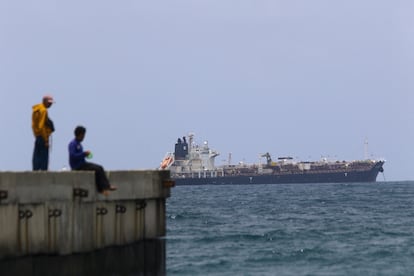
The United States will decide on a case-by-case basis whether foreign oil enters Cuba. This was announced Monday by the White House, which asserted that authorizing a Russian oil tanker to deliver fuel to the island does not represent a change in Washington’s policy of maintaining an energy embargo against Havana since January 29.
The permission granted to the Russian oil tanker does not represent “a formal change in sanction policy” according to White House press secretary Karoline Leavitt. “As the president said last night, we allowed this ship to reach Cuba in order to provide humanitarian needs to the Cuban people,” she stated at her weekly press briefing.
“These decisions are being made on a case-by-case basis,” added Leavitt, who declined to specify whether the administration in Washington would authorize more fuel shipments to the island in the future, given its desperate situation and the frequent, widespread, and prolonged oil shortages.
With fuel rationed, the energy crisis has triggered serious problems in hospitals and limited mobility within the island, given the precarious state of public transportation. The country, separated from the United States by 90 miles of sea, is on the verge of economic collapse and immersed in a humanitarian crisis due to a lack of all kinds of products. Mexico and other countries have sent ships with humanitarian aid to the island to try to alleviate the shortages caused by the U.S. embargo.
The presidential spokesperson reiterated what has become a mantra among U.S. foreign policy officials and what Secretary of State Marco Rubio — the son of Cuban immigrants — constantly invokes: “Cuba’s non-functional economy cannot be fixed unless they undergo dramatic political and leadership change, but there has been no formal change.”
The arrival in Havana of the 700,000 barrels of oil carried by the Russian vessel represents a significant lifeline. This fuel is expected to allow the country’s power plants to operate for a week. Most of the Caribbean nation’s plants run on fossil fuels, despite the Cuban authorities’ efforts to promote solar energy, precisely to reduce their dependence on foreign sources.
Mexico now wants to join the effort to send hydrocarbons to the island. President Claudia Sheinbaum stated on Monday that her administration is “working” with the Cuban government to resume shipments. The last oil tanker to dock in Cuba was the Ocean Mariner, carrying 80,000 barrels of crude oil and operated by Petróleos Mexicanos (Pemex), on January 9.
After Trump threatened tariffs on countries sending oil to Cuba, Mexico canceled its scheduled shipments for January and February. Sheinbaum said at the time that she would find a way to help the island and opted for humanitarian aid, of which Mexico has already sent more than 2,000 tons. The Mexican president added that this type of assistance would continue as long as it did not jeopardize Mexico’s trade relations.
Sheinbaum has said she has not yet made a final decision on resuming shipments, which take, on average, four days to reach the island once they leave Mexican ports. Mexico became de facto the only country still sending oil to Cuba after the United States intervened in Venezuela and halted shipments that Nicolás Maduro’s government was delivering to Havana.
Mexico has delivered hydrocarbon shipments to Cuba since 1993, although always in very small quantities. It was in 2024, a month after Sheinbaum’s government took office, that the volume of shipments increased significantly. The latest available data, from the reports that Pemex regularly submits to the U.S. Securities and Exchange Commission (SEC), indicates that Havana was receiving approximately 17,200 barrels per day from Mexico.
Sign up for our weekly newsletter to get more English-language news coverage from EL PAÍS USA Edition









































