
The debate over fracking in Mexico: Energy sovereignty versus environmental risk
Mexico is preparing to enter the gas extraction market with this method, which has sparked intense debate both within and outside the government. EL PAÍS brings together the views of six specialists on this technique — voices both defending and criticizing it
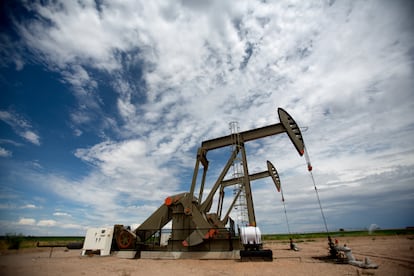
The government of Claudia Sheinbaum has decided to make a radical shift and change the course of Mexico’s energy policy in favor of fracking, or hydraulic fracturing, a technique that was banned for six years by her predecessor, Andrés Manuel López Obrador.
This paradigm shift — based on the idea that Mexico should stop depending on natural‑gas imports from the United States — has sparked debate both within and outside of Morena, the ruling party. Internally, the new energy direction breaks with a long‑standing taboo established by López Obrador.
Externally, the discussion is more complex, divided between those who see fracking as a necessary tool for advancing energy self‑sufficiency and those who argue that the promised progress does not justify the environmental and community damage the technique will cause. EL PAÍS brings together the voices of six well‑known specialists on the subject — three in favor and three against — to assess what is at stake for Mexico beyond dogma.

Alfredo Guzmán, former deputy director of exploration at Pemex: “We have an impressive wealth of gas”
Fracking in Mexico is not new; it’s something that has been done in the oil industry since the 1960s. Northern Mexico has enough natural gas, in both tight and permeable rock formations, to meet the country’s needs and have surpluses for export. All that’s needed is for the authorities to authorize the projects to extract it. If we don’t do it now [fracking], we’re going to leave the gas underground. Right now, we have an impressive amount of gas. Millions of dollars could be earned if we used and utilized this technology, as the United States is doing. In the U.S., fracking has multiplied its natural gas production because it’s a safe technique.
I know that people are concerned about the use of drinking water being injected into a well, and they would have every right to be — especially in places where we have little water — but that is not the case, because what is used is congenital, residual water from the same reservoir, and the additives are injected 3,000 meters underground and do not affect people.

Beatriz Olivera, spokesperson for the Mexican Alliance Against Fracking: “It seems that the president is only listening to the industry and the promoters of fracking.”
Of all the environmental impacts, the most thoroughly documented involve water, earthquakes, and methane‑gas leaks, which will worsen the climate crisis. There are also social and health impacts. Water is what mobilizes people the most, what worries them the most. A report from the U.S. Geological Survey estimates water consumption ranging from 5.7 million liters to 60 million liters — the equivalent of 24 Olympic‑size swimming pools or the annual use of more than 1,600 people. It’s an extremely alarming figure, as is diverting water to fracking instead of human consumption or other uses such as agriculture.
Treated water can be used; it has been done in some wells in Texas, but it’s expensive, and the industry prefers to minimize costs to maximize productivity. It requires filtration treatments, bacterial control, and salt reduction. Seawater is another option; it’s much more expensive and hasn’t been used in Mexico. Claims that less water will be used must be proven. There’s also the issue of groundwater contamination. More than 750 chemicals are injected, depending on the manufacturer. When this chemical cocktail is injected, leaks and seepage occur into aquifers and groundwater. There are also radioactive substances. In Mexico, there is no regulation in any of these cases.
Researchers from the Autonomous University of Nuevo León filed a complaint with the Environmental Cooperation Commission, documenting a direct correlation between earthquakes recorded in Nuevo León from 2006 to 2015 and fracking in the Burgos Basin. Another impact is methane gas. No one can guarantee there won’t be leaks, no matter how many pipes are lined. This will directly affect greenhouse gases that cause global warming. Its potential impact is greater than that of carbon dioxide.
The social harm tends to be underestimated. These kinds of projects usually arrive in rural areas, where Indigenous communities predominate. They fracture the social fabric and create risks for women. The most important thing is to ask people whether they want these projects in their territories and to guarantee free, prior and informed consent — beyond simply holding a consultation. It feels like a betrayal to those who voted for President Sheinbaum, who said fracking would not be carried out. All signs point to steps being taken in that direction. We call on her to listen to the voices of the people. It seems she is only listening to the industry and fracking promoters.

Ariel Valenzuela, former coordinator of well completions and productivity in Burgos for Pemex: “If the United States cuts off our gas supply, it will leave us in the dark”
It is important to emphasize that this technology is not new; hydraulic fracturing began at the Burgos field in 1961. Since then, this technology has evolved substantially, varying in the type and volumes of fluid and proppants used, as well as additives and pumping techniques. Many of these changes have been aimed at making operations more efficient, improving well production, and mitigating the risk of contamination and environmental impact.
In an unconventional fracking operation, approximately 1,000 cubic meters of water are used, and each of these projects involves numerous fracking operations, averaging between 15 and 20 per well, equivalent to about 15,000 cubic meters of water. To overcome this significant challenge, several alternatives can be implemented, such as reusing the water used in the wells. These are large-scale projects, involving many wells, but the cost-benefit ratio is that they significantly develop communities with employment, infrastructure, new roads, and many other benefits. Like everything, they have their drawbacks, which can be addressed, and their advantages as well.
In these fields, production declines are very steep, so maintaining a stable output platform requires an intense level of drilling activity. The average cost of an unconventional well is around $8 million. Projects like these require constant investment — you can’t stop investing, or production begins to fall. Right now, we are completely vulnerable as a country because practically 70% to 80% of our gas comes from the United States; if they decide to cut off our supply, they’ll leave us in the dark. So, if we have that resource right now, why not try to use it? For national security, it should be a priority.

Pablo Ramírez, member of Greenpeace: “People don’t reap the benefits, they bear the negative impacts”
We have witnessed how a country rich in energy, proudly oil-producing, with an industry spanning over 100 years, has ended up being a country where one in three households lives in energy poverty, unable to meet their basic energy needs. We are debating gas, fracking, imported gas, increased production in ultra-deep waters… and I think that, as a society, we should be asking ourselves: and who is this for? We have been led to believe that these kinds of projects are for the good of the people. The reality is that this is not the case. In the end, energy wealth is very poorly distributed. Ultimately, the people don’t reap the benefits, but they do bear all the negative impacts. If what we seek is “energy sovereignty,” the first thing we must consider is how this sovereignty will benefit the Mexican people, and gas clearly will not benefit those households that cannot meet their energy needs, but rather it will benefit a series of megaprojects.
How can we begin to build a model that truly serves the people, one where sovereignty translates into well-being for households? It would have to be a model that puts energy in the hands of those who need it. Renewable technologies are very effective for this. Renewable technology allows us to overcome one of the most significant barriers to access: the gap between generation and consumption. Therefore, we need to bring these technologies to households experiencing energy poverty, thus fulfilling that promise — which is also a debt — to the people: to combat poverty, but also energy poverty.
The problem preventing access to these technologies is the economic barrier. Even though these technologies are becoming cheaper and more accessible, people living below the poverty line cannot access the technologies that would help improve their quality of life. But Mexico has two budgets mandated by the General Law on Climate Change. What this government should be doing is using these budgets effectively — budgets that are currently being allocated to building gas pipelines and the Maya Train, projects that are far from contributing to climate change adaptation and mitigation, much less to the energy transition — and redirecting them toward a model that allows us not only to advance in climate metrics but also to reduce an often overlooked but very important form of poverty: energy poverty.

Alma Porres, former president of the National Hydrocarbons Commission: “Regulations work, and the government should ensure they are followed to provide peace of mind”
The gas we import from the United States comes from unconventional fields. And just as deposits cross borders, so does the environment. If we say we are going to protect the environment, the reality is that right across the border they are exploiting unconventional fields; in other words, our environmental logic doesn’t hold up here. Instead, we should be looking at how to use the most innovative techniques to protect the environment on our side, and how to enforce the strictest regulations to ensure that protection, while also meeting the goals set by this government. Regulations work, and the government should oversee the entire unconventional‑extraction chain to ensure they are followed, so that the public knows it will be done safely.
In conventional well drilling, stimulation is sometimes used to extract hydrocarbons; it’s necessary to fracture and stimulate the formations. But if it’s done properly, and with the new techniques available worldwide, the environmental damage — especially in terms of water use — can be mitigated as much as possible. People say aquifers get contaminated, but that’s completely false, because that’s what the well casings are for. And if contamination did occur, then conventional wells would contaminate too, wouldn’t they?
We need a lot more information to put society at ease. Those of us who have been to the United States [to fracking areas] see the positive side: they become development hubs, there is plenty of work, and everything related to transport, roads, infrastructure… there is major development in the places where this activity takes place. And yes, just as there may be “bad” things, there are also many good things for society, and these development hubs are exactly what is lacking.

Luca Ferrari, researcher at the Institute of Geosciences at the National Autonomous University of Mexico (UNAM): “We must accept that all oil fields are in an irreversible decline and prepare to consume fewer hydrocarbons”
Shale oil and gas (extracted through fracking) are very expensive and have very high socio-environmental costs. In the United States, it has always been on the verge of being profitable; although in many cases it wasn’t, the issue was resolved with subsidies; in Mexico, it is even less so. Nor is it the solution to dependency. Mexico imports between 35% and 60% of its gas, but Pemex uses a large portion of the gas it produces for refining, petrochemicals, and injection into oil wells; very little remains for electricity generation and industry. Excluding the gas consumed by the state-owned company, Mexico ends up importing 90% of its gas from the United States.
With fracking, we can add 4% or 5%. There’s no difference. The big difference is the environmental impact. According to the cost that Pemex submits to the U.S. Federal Energy Regulatory Commission, the cost of a barrel of oil is around $14 to $15. Meanwhile, in Texas, after 20 years with the best technology, shale oil, according to last year’s figures, costs between $54 and $63 a barrel. Where is this money going to come from? They’re going to open it up to private companies; only the Americans will be able to compete. So, what does sovereignty mean? Besides, for it to be even minimally profitable, they would have to subsidize it.
It’s a bad bet any way you look at it, but they’re doing it because they’re fixated on the idea of increasing production to reach 1.8 million barrels of oil — a magic number, I don’t know where they got it from, but, according to their optimistic calculations, that’s the amount of oil Mexico needs to produce enough gasoline and gas for our consumption. It should be 2 million barrels a day. It’s all going to be impossible because we’ve been in a phase of irreversible decline in all our oil fields for the last 20 years. It’s geology, it’s physics, there’s not much we can do. It’s not a political or investment issue; it’s becoming increasingly difficult to find and produce oil.
Economically, it’s not good for the country. Perhaps pressure is at play; the United States has reached its production limits and has increasing commitments to export liquefied natural gas to Europe. Perhaps now it’s in Mexico’s best interest for it to be less dependent. They prefer to sell the gas to Europe at a higher price than to give it to Mexico. There’s no energy sovereignty involved. Within all the negotiations Mexico is conducting with the United States, there may also be pressure to open up fracking because American companies, especially those from Texas, are the only ones that can come and do it; Mexico lacks both the technology and the capital.
In pragmatic terms, there is a financial risk with current gas and oil prices; fracking to extract oil or gas in Mexico is not profitable. Furthermore, there is the political cost and the opposition from local communities. Competing against the laws of physics and geology is a losing battle; this decline must be accepted, and preparations made to consume fewer hydrocarbons. That requires a deep structural shift and a change in lifestyle for the segment of the population that wastes energy.
Sign up for our weekly newsletter to get more English-language news coverage from EL PAÍS USA Edition









































