
Catalonia lab was experimenting with African swine fever virus when the first infected boar was found nearby
Documents sent to Spain’s National Biosafety Commission confirm at least two tests conducted in October and November at the facilities, which are undergoing construction work. Authorities are investigating the possibility of a lab leak
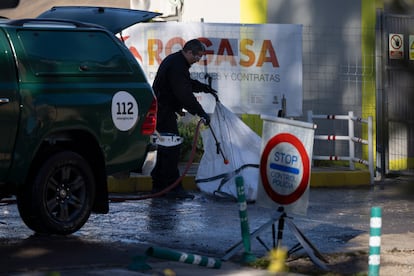
The laboratory under scrutiny over an alleged leak of the African swine fever virus in the province of Barcelona, in northeastern Spain, had planned at least two experiments with the pathogen on the same days that the first infected wild boar was found just a few hundred meters from the facility, according to documents from the Spanish National Biosafety Commission seen by EL PAÍS.
It was the Spanish Ministry of Agriculture that posited the theory of a lab leak on December 5, a week after the discovery of two infected wild boar carcasses near the Animal Health Research Center (CReSA), a bunker-like facility where researchers work with dangerous pathogens in the search for treatments and vaccines. The ministry announced it was opening an investigation to determine whether the virus, detected on November 28, could have been the result of a lab leak. An earlier theory posited that the boars may have eaten the remains of a sandwich made with contaminated foreign meat and tossed into a trash can, where the animals forage for food.
All hypotheses remain open, but the regional government of Catalonia, which oversees the laboratory, is facing an explosive scenario, including direct accusations from livestock associations. “The Catalan government will never admit that the African swine fever virus that infected wild boars leaked out from its laboratory. It would face incalculable financial claims if it did so,” declared the agricultural organization ASAJA on Wednesday.
In Spain, where there are more pigs than people (49 million people compared with the 54 million pigs slaughtered last year), the pork industry is on edge. And veterinarians have warned that there is no effective vaccine, nor will one be available in the near future. Authorities and farmers will have to resort to medieval measures in the face of a plague: isolating the sick and disposing of their carcasses.
A preliminary genetic analysis showed that the virus found in the dead animals was “very similar” to a viral strain found in Georgia in 2007, and which presumably arrived there on a ship from southeast Africa, triggering the current European pandemic, from which Spain had thus far escaped. This new variant of the virus does not resemble any known strains circulating in nature, which is why the ministry proposed the theory of a possible laboratory leak, though without mentioning CReSA, which is located in Bellaterra (Barcelona).
The documents reviewed by EL PAÍS reveal an initial experiment, planned for October and November, to test a prototype vaccine on 15 pigs, using an intramuscular injection of a genetically modified Georgia/2007/01 strain of the virus. Risk management experts refer to the Swiss cheese model, in which security systems are like layers with holes that, when stacked, make it difficult for a threat to breach all the barriers. In Bellaterra, there could have been several holes aligned in a row.
The first carcass of an infected wild boar was found on November 28, just a few hundred meters from the CReSA facility, which has been criticized for lacking double fencing and which was undergoing construction work since September 15, as this newspaper revealed on Wednesday. Documentation submitted to the National Biosafety Commission now confirms that the laboratory was working with the virus during those same days.
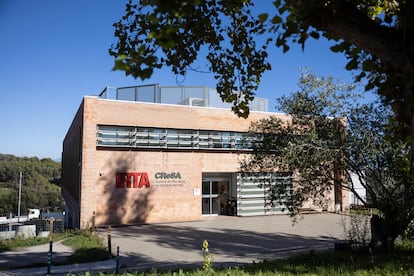
The preliminary report for the CReSA experiment emphasized that the work would be carried out “in biosafety level 3 facilities, to eliminate any possibility of the viruses spreading into the environment.” The 26-page document detailed the measures to prevent a leak: mandatory showers for researchers, absolute double filtration of exhaust air, chemical decontamination of effluents (animal urine and feces), disposal of remains by alkaline digestion or incineration, and collection of waste by authorized waste management companies. “All these containment and control barriers guarantee that the virus will not spread to the outside, and therefore, there will be zero environmental impact,” asserted the document, signed by virologist Xavier Abad, head of the Biocontainment Unit at CReSA.
The October and November experiment was led by Fernando Rodríguez and Jordi Argilaguet, leaders of the African swine fever group at CReSA. Their team has developed a prototype vaccine based on a strain of the virus isolated in the eastern Spanish province of Badajoz in 1971 and now genetically modified. In these types of trials, it is common practice to then expose vaccinated pigs to an aggressive version of the virus, such as Georgia/2007/01. Neither CReSA, nor the Institute of Agrifood Research and Technology (IRTA, a Catalan public company that oversees CReSA), nor the Catalan Department of Agriculture have responded to this newspaper’s questions about these experiments, which were carried out around the same time that the first infected wild boar was found near the facilities.
The virus is 100% fatal in pigs and wild boar, but completely harmless to humans. The report from that first trial stated that staff would work wearing gloves and surgical masks in all cases. The unpredictable human factor is precisely one of the more common causes of laboratory accidents. CReSA itself dismissed a technician for sexual harassment in 2018, after he tried to kiss a female colleague inside the high-biosecurity experimental unit, according to a ruling by the High Court of Justice of Catalonia.
In November, a second trial with the African swine fever virus began in Bellaterra, conducted by CReSA staff. This time, the objective was to test two vaccine prototypes developed by a team led by the virologist Yolanda Revilla, from the Severo Ochoa Molecular Biology Center in Madrid. The researcher herself explained by phone that her experiment, which involved 20 pigs, doesn’t align with a potential outbreak at the end of November, “neither in terms of timing, virulence, nor genetic sequence.” Her vaccine candidates are based on an attenuated version of a virus isolated in Armenia in 2007 and genetically modified. The pigs were exposed to a virulent form of the virus, also from Armenia, on December 3, and the animals are still alive, according to the virologist.
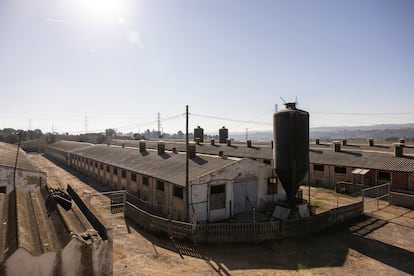
The documentation on Revilla’s experiment submitted to the National Biosafety Commission includes a warning: “The African swine fever virus is relatively resistant in the environment. The stability of the virus under different environmental conditions has been the subject of numerous studies; most of them were carried out in the last century and should be reviewed/updated.” Five experts consulted by this newspaper, however, emphasize that this virus is not easily transmitted through the air, but rather through direct contact between animals or through cannibalism, which is common among pigs and wild boars. Three of these researchers cannot explain how such a virus could escape from a high-security laboratory, unless someone deliberately took it out.
The Polish Ministry of Agriculture has also suggested the possibility of sabotage, either internal or perpetrated by Russia, after finding an infected wild boar with a rope tied to its leg in a Polish region previously free of the disease. In 2007, a British laboratory, the Pirbright Institute, suffered a foot-and-mouth disease virus leak and initially reported possible sabotage, but it was later demonstrated that there was a leak in its pipes, combined with construction work that facilitated the spread of the pathogen throughout the region on truck tires. In Spain, a court in Cerdanyola will investigate the origin of the African swine virus outbreak. To date, genetic analyses carried out at the European Union’s reference laboratory, the Animal Health Research Center (CISA-INIA) in Valdeolmos, Madrid, have not been conclusive.
Revilla also finds the leak hypothesis unlikely, despite the fact that the first infected animal showed up a few hundred meters from the CReSA lab. “We shouldn’t assume, until there is conclusive proof, that there has been a biosecurity failure. There are many other hypotheses. The virus in the outbreak doesn’t resemble the 28 groups sequenced in the databases after the Georgia virus emerged in 2007, but not all the strains circulating in the world right now are included,” the virologist emphasizes.
Revilla also doesn’t understand all the jokes surrounding the other theory that has been heard these days, about the virus arriving in Barcelona in contaminated food from a foreign country, possibly a sandwich made with imported sausage and thrown in a trash can, then devoured by wild boars that feed on human garbage in the Collserola Natural Park area in Barcelona. “How did the outbreak that began in the 1970s in Sardinia arrive there? In first-class food on an airplane,” she notes. “It’s not a hypothesis to laugh at.”
An expanding virus
The current global crisis began in 2007 when, allegedly, the crew of a ship from Southeast Africa left contaminated food waste in the port of Poti, Georgia. The plague entered the EU in early 2014, via Lithuania and Poland. Since then, the disease has spread relentlessly from east to west, at a rate of about 66 kilometers (41 miles) per month, according to a study led by epidemiologist Marta Martínez Avilés from the Animal Health Research Center in Valdeolmos, Madrid.
Sign up for our weekly newsletter to get more English-language news coverage from EL PAÍS USA Edition









































