
Latin America’s Afro capital looks to rewrite its own past
In Salvador de Bahía, one of the 16th century’s primary slave trafficking ports, Afro-tourism has become a pillar of the economy, even as the Black community continues to be its most vulnerable

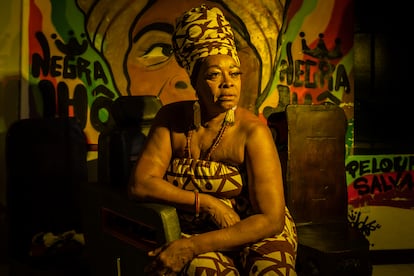
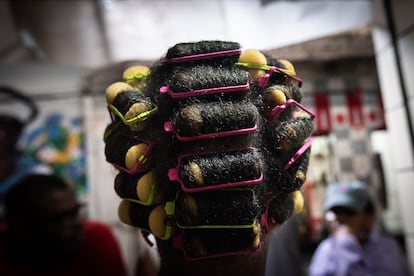
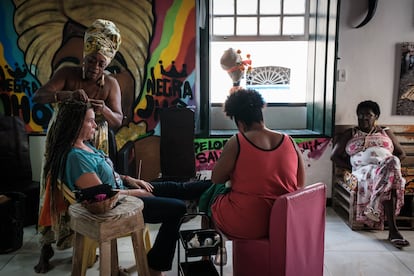
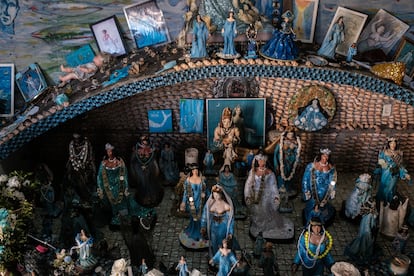
Valdemira Telma has put down roots on a corner in Pelourinho, perhaps the busiest neighborhood in the Blackest city outside of Africa. From the heart of Salvador de Bahía, she shouts hoarsely while leaning out of a window, “Seja bem vinda, meu amor! (Welcome, my love!)” This is her hair salon, but it is no average beauty parlor. Valdemira appears, dressed in a light yellow dress with brown African designs that covers her from chest to ankles. Around her neck hang a pair of long necklaces made of colored beads, symbolizing the orixas, the Yoruba deities who protect her. A huge ring adorns each of her middle fingers, which she uses to braid the hair of her female clientele. Valdemira Telma, better known as La Negra Jhô, is the queen of one of Brazil’s most traditional communities. But it wasn’t always like this — not for her, nor for the neighborhood.
She is now over 60 years old, but since she was a child, Telma knew that she would suffer. This was confirmed when her mother died when she was just five years old. Back then, she was known as Jhon, typically a man’s name, in their quilombo, a Brazilian community founded by formerly enslaved people and their descendants. Her aunts assumed responsibility for the little girl they called narizona (big nose), bocona (big mouth), who they said looked like a little boy, a man, a monkey, because her hair never grew. But the young Telma never cared. When she is asked how today, more than a half-century later, she has become an icon of African beauty in the city, she responds that it’s because that is what caused her pain during her entire life. Telma turned into a kind of chameleon who camouflages its wounds. “They say that African hair is difficult. What they don’t know is that in truth, it is strong hair,” she says. From her wounds was born La Negra Jhô.
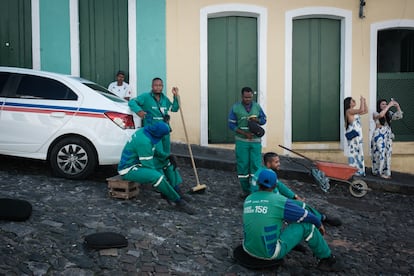
Much of the American continent’s Black history starts with the founding of São Salvador da Bahia de Todos os Santos, the first capital of Brazil. Blood once flowed down the cobbled slopes of the Pelourinho neighborhood, where thousands of tourists now admire the beauty of what today is a designated World Heritage Site. Its very name, which in English means “pillory,” is a legacy of that pain. Pelourinho was a place of punishment, where enslaved people who began arriving, kidnapped from Africa in the mid-16th century to work on sugar cane plantations, were subjected to torture. Today, the heirs of that past are rewriting history via what is known as Afro-tourism.
Salvador de Bahía is one of the country’s most important tourist attractions. Millions of visitors come every year, drawn by its paradise-like beaches, colonial architecture and the city’s food scene. But what makes this destination stand out is the chance it offers to connect with the Afro-Brazilian culture that has long been established in this northeastern part of the country. Here, 80% of the population identifies as Black, a statistic that has led the city to claim the title of “Salvador Capital Afro.”
Isabel Aquino, a former official at Salvador’s Department of Culture and Tourism and one of the boosters of the project, explains that economically and historically, the Black population has not been the protagonist of the city. “They are not the owners of the restaurants, of the hotels, of the tourism agencies or operators. Their products and services are almost always brokered by a tourism professional, who is usually white and conservative,” Aquino tells EL PAÍS. Until recently, the people who make Afro-Brazilian culture flourish have been used as tools, displaced from the management of their own businesses.
According to official numbers, in 2022, Afro-descendants represented more than 80% of the state’s workforce. Paradoxically, they also formed more than 85% of the unemployed. Twenty out of every 100 Black women have no formal employment. That’s why the Salvador Capital Afro project, which is run by the city government, promotes an Afro-tourism in which Black people are the ones who tell the story.
The Black money movement
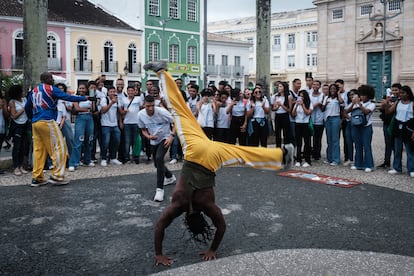
“This is the first time that the city has embraced its African heritage as its most important asset. It’s not the beach or the carnival, but rather, the culture that makes Salvador a unique city in Brazil,” explains Sueli Conceição as we walk through Pelourinho. She is one of the officials who for years has been dedicated to telling visitors about the city’s Black history.
To this end, Conceição designed Rolê Afro, a series of Afro-centered tours and experiences in the city. “The tourism industry, forged by white people and big businessmen, has never looked at us carefully. It has never included us as managers or negotiators. Today, we are talking about Black money, empowerment, the prominence of Black people, training, equity and gender,” she says. One of the routes she designed, which focuses on Black heroines, pays homage to the legacy of women who have marked, and continued to mark, the course of history.
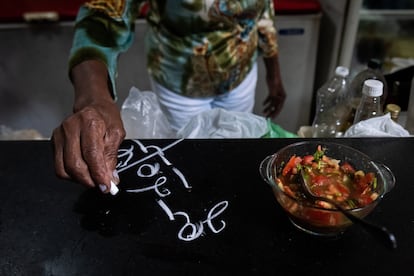
The tour starts in front of a nearly 10-foot statue of María Felipa de Oliveira, who was a key player in the resistance to the Portuguese occupation in Brazil during the fight for independence at the beginning of the 19th century. Her monument, which was erected in 2023, stands on the shores of the ocean, facing the island of Itaparica. Next, Conceição leads visitors through the history of the Bahianas, a group that is important to Salvador’s identity and who traditionally dress all in white, in wide skirts, blouses and turbans. In the streets of Salvador, Bahianas prepare the classic dish acarajé, a dough made from beans, shrimp and palm oil. During the era of slavery, selling food allowed those who had been forcibly brought from Africa to buy their freedom via the so-called alforría.
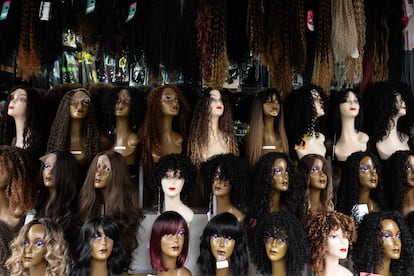
Our heroine tour also includes an obligatory trip to the La Negra Jhô’s salon. Today, the streets of Pelourinho are full of women who braid hair, but Telma played a key role in the promotion of African beauty beginning back in the 1980s, at a time when wearing one’s hair braided or in a natural afro was frowned upon. Accustomed to defying convention, she paved the way for the rise of an aesthetic that had long been stigmatized.
Such history is what makes the Salvador Capital Afro project more than a marketing slogan. The project is an attempt to design and apply a public policy of reparations. Maylla Pita, the director of culture in Salvador and the head of the campaign, explains that its goal is the acknowledgement of the historical suffering of Brazil’s Black communities, in the last country to abolish slavery on the continent. The legacy of this tragedy is the denial of basic rights to the people who, today, make up 55% of the country’s population.
Between 2017 and 2018 Salvador’s municipal government, teaming up with representatives from civil society, held a series of town halls, which were meant to facilitate direct conversations with Black communities. “We brought together more than 200 Black leaders, from entrepreneurs to tourism agencies, artists and cultural administrators, to generate a document that, today, is known as the City of Salvador’s Afro-tourism development plan,” says Pita. One of the first problems that was identified was the sustainability challenges posed to Black businesses, which, according to the official, were rarely surviving more than three years at the time. “There was a lot of difficulty when it came to financial management, production capacity, access to business platforms,” says Pita.
This, in a city that was considered a premiere global creative destination, a place where the creative economy plays a dominant role. The question was, what was happening with the Black population that was keeping them out of cultural and tourism circuits? Pita says that considering the inequality that has so deeply impacted the city’s history, reparative policies were needed to guarantee access to basic social rights.
Social stratification between Blacks and whites is apparent in Salvador’s daily life. It’s easy to see that the Black population faces greater vulnerability when one looks at the data on educational levels, school drop-out rates and literacy.



A segregated city
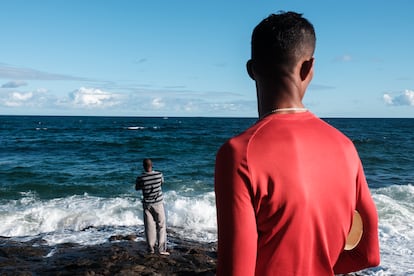
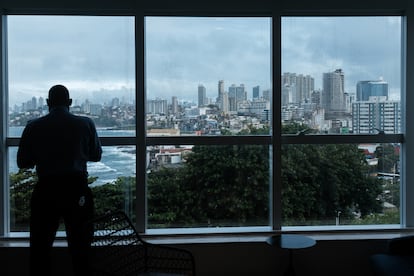
“Salvador is a segregated city where those who have a lot of money earn a lot; but those who don’t have anything don’t earn anything,” says Eldon Neves as we walk the labyrinthine streets of the Gamboa neighborhood. The area is home to a fishing community, and stands facing the sea, in full view of the luxury buildings that surround it. “When you look at Salvador from above, you see the upper city, which stretches from Pelourinho and back to the upscale area, the Corredor da Vitória, where property is the most expensive by square foot. There, all the public services are functional. But on the other side, the lower city, you find precarity,” says the 33-year-old.
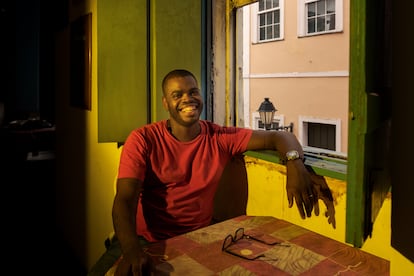
Neves is a museologist and cultural administrator, the son of educators and activists. Today, he is also one of the protagonists of Afro-tourism, promoting the motto “memory is future,” and is bringing us into a part of the city with the goal of reconstructing its Black history far from the rhetoric of tourism officials. A voice like his carries weight, particularly when one considers that a report published in 2024 identified Salvador as the Brazilian city with the highest number of violent deaths among men. It found that 65% of the city’s men who die from firearm wounds were Black.
On his tours, Neves emphasizes the role that the African diaspora played in the founding of Brazil and its independence movement. There were the Black revolts of the 19th century, with their demands for equality, freedom and brotherhood. That struggle seems to continue to this day. But now, that battle has moved to economic spaces that have historically left the Black community on the margins. “Entrepreneurship means making the impossible possible. And Black people didn’t enter the business world with the motivation to get rich, but as a means of survival,” he says, guiding us through the San Joaquín market in the pouring rain.
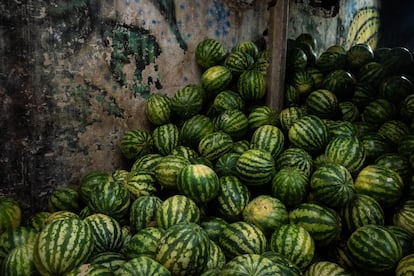
“We are in the biggest market in Salvador, where 99.9% of the businesses are owned by Black people,” says Neves. Sprawling across 10 city blocks, the market is a maze in which the city’s essence and history can be found in a concentrated form. Its atmosphere is impregnated with the scent of dried shrimp, palm oil, herbs, fruits and Bahianan cooking pots. Our guide doesn’t miss the opportunity to highlight how, after the abolition of slavery in 1888, Brazilian markets became areas of communal business and a source of survival.
A few feet from the market stands Liberdade, considered the Blackest neighborhood in the city. It is an area that dates back to the 19th century, where troops marched to celebrate independence from the Portuguese crown. It was also a quilombo, where people who were once enslaved settled down. Today, it is one of the most populated areas, and has been recognized by the Ministry of Culture as a national territory of Afro-Brazilian culture. “It is a space of resilience and of resistance,” says Neves. Among its hills, cobblestone streets and modest homes is the first movie theater for Black people, and the headquarters of Ilê Aiyê, the first Afro-Brazilian carnival group in Bahía.
The end of slavery did not mean the inclusion of Black populations in Brazilian society, nor that their civil rights were guaranteed. Racism was so ingrained that during the dictatorship (1964-1984), the military-run government removed the question regarding skin color from the census, and repressed Black movements that denounced racism in the country. Such were the factors leading to Ilê Aiyê’s 1974 founding of its space for art, music, dance and celebration as a political statement.
Fifty years later, it is precisely those Black communities who are the engine of the economy, of the identity, of the creativity that defines Salvador. And thousands look to travel to the port city, now considered the hottest destination in Brazil, which for centuries was the site of the suffering of thousands of Africans who had been taken from their lands. Today, the grandchildren and great-children of those individuals continue to build the Afro capital of Latin America, and admire the Black beauty so fiercely defended by La Negra Jhô.