
More than 9,000 children were hospitalized for acute malnutrition in Gaza in October alone
The UN has denounced Israel for continuing to restrict the entry of aid while a storm is expected that could worsen the already catastrophic humanitarian situation in the Strip
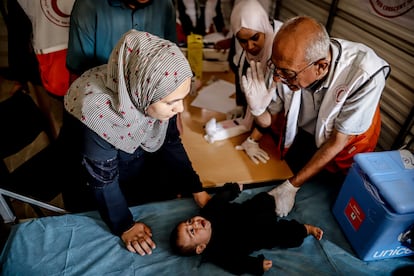

The ceasefire that came into effect in Gaza on October 10 has not completely silenced the gunfire. At least 386 Palestinians, including 70 children, have been killed in sporadic Israeli attacks in the past two months, according to Palestinian figures. The Israeli siege of the Gaza Strip, launched in October 2023, has led to other consequences. The United Nations Children’s Fund (UNICEF) has issued warnings about one of them: acute child malnutrition. In October alone, more than 9,000 Palestinian children had to be hospitalized for this reason, according to the latest UN figures. Both UNICEF and other UN agencies point to one culprit: Israel, which continues to prevent the entry of sufficient aid to alleviate the damage caused by two years of bombing and the blockade of vital supplies.
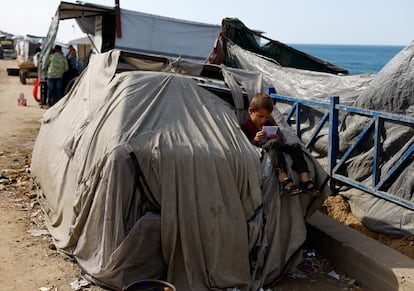
In a video address from Gaza Tuesday, UNICEF spokeswoman Tess Ingram warned that while the immediate threat of famine has lessened for most of the territory’s 2.1 million inhabitants, the inflow of supplies remains far below the needs of a traumatized population, many of whom have been left homeless and are living in makeshift shelters as winter weather intensifies.
The Gaza Strip is also bracing for a storm dubbed “Byron” in the coming hours, which threatens flooding and strong winds that could leave hundreds of thousands of Palestinians without even the flimsy shacks in which they currently take shelter. Early Wednesday morning, strong winds began battering the makeshift tents scattered throughout the Palestinian territory.
The spokesperson for the UN children’s agency emphasized the figure of 9,300 children who received treatment for severe acute malnutrition in a single month in October. Ingram noted that, nevertheless, this “shockingly high” number is lower than the 14,000 children treated for the same condition in August. However, she stressed that the current figures are still far higher than those recorded during the period prior to the ceasefire, last February and March, before Israel imposed a total blockade on the entry of supplies, which was only eased with the start of the truce, which marks its second month this Wednesday.
“In Gaza hospitals, I have seen several newborns weighing less than one kilogram, their tiny chests rising and falling as they struggled to stay alive,” Ingram said before offering another statistic. In October, around 8,300 pregnant and breastfeeding women were hospitalized for acute malnutrition. This “pattern” indicates that, in the coming months, many more low-birth-weight babies will be born in the occupied Palestinian territory where Israeli attacks have killed more than 70,000 people.
So far in December, an average of only 140 trucks carrying aid have entered the country daily, in convoys organized by the UN and the International Organization for Migration. This figure falls far short of the commitment of 600 trucks per day established as part of the ceasefire. While the quantity of supplies is far from meeting the enormous needs created by two years of war, the type of aid authorized by Israel is not always the most urgently needed.
Israeli authorities prohibit a long list of supplies, either because they claim they could have a “dual use” — that is, they could be used for military purposes — or because they label them as “luxury.”
In late September, before the ceasefire, the UN Under-Secretary-General for Humanitarian Affairs, Tom Fletcher, stated in an interview with CNN that Israel had banned the entry into the Gaza Strip of high-calorie, high-protein therapeutic foods used to treat acute childhood malnutrition. A month earlier, the United Nations had officially declared a famine in northern Gaza.
These supplements, such as one called Pumply Nut, consist of a paste made with peanut butter, milk, oil, sugar, vitamins, and minerals. When acute malnutrition develops, especially in children aged under five, simply starting to eat normal food again is not enough; these supplements are essential to reverse the condition. Israel banned the import of this fortified paste, claiming that peanut butter is a “luxury” food.
According to data released Wednesday by the Hamas Government Media Office in Gaza, only 13,511 aid trucks out of the 36,000 stipulated in the ceasefire agreement have been authorized to enter Palestinian territory, representing a compliance rate of 38%.
According to that source, fuel deliveries “were limited to 315 trucks” out of the 3,000 agreed upon.
Storm Byron
In its latest situation report published on December 8, the United Nations Office for the Coordination of Humanitarian Affairs (OCHA) denounced another breach of the ceasefire agreement: the entry of materials for shelter.
“UN and INGO partners have only been able to bring in 14,600 tents for 85,000 people, which increases to 48,600 tents when considering also bilateral donations, while 1.3 million people remain in need of urgent shelter assistance for the winter,” the document emphasizes, noting how “most INGOs remain blocked from bringing in relief and nearly 4,000 pallets of shelter materials have been rejected.”
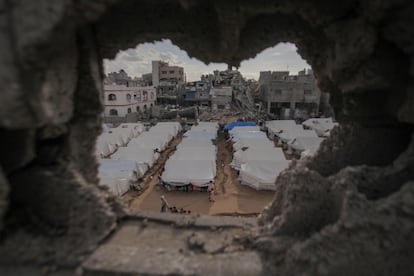
The report notes that Storm Byron is expected to reach the region in the coming hours, bringing torrential rains that could cause widespread flooding, something that has already happened this fall in Gaza. Nearly 850,000 people — almost half the territory’s population — are currently sheltering in 761 reception centers, “which are especially vulnerable to flooding,” OCHA adds.
The Israel Meteorological Service has warned that up to 200 millimeters of rain will fall in the region between Wednesday and Thursday, with half of that amount concentrated in just a few hours, according to the newspaper Haaretz. Winds could reach 80 kilometers per hour.
These forecasts include the territory of the Gaza Strip, where the risk is much greater due to the massive displacement of the population and the destruction of drainage and sewage systems, increasing the risk of epidemics. Some of the hundreds of thousands of people sheltering in tents have even had to pitch them on the beach for lack of a better place.
Sign up for our weekly newsletter to get more English-language news coverage from EL PAÍS USA Edition









































