
Lombok hotel horror: The 72-year-old murdered in her room for $180
The veteran traveler was suffocated to death at the Bumi Aditya, a modest lodging that had become her second home after long stays there. Now her loved ones want answers from the staff


Matilde Muñoz Cazorla, 72, was murdered in a hotel. But it could also be said that she was killed at home. Because the Bumi Aditya, a modest two-star lodging in a beachside area of the Indonesian island of Lombok, had become like home after she had spent long stays there.
“When she wrote to me, she said she was at home, in her home in Lombok,” says Aarti Fernández, a fellow adventurer of Muñoz Cazorla, a Spanish woman who had turned travel not into a pastime but into a way of life. Her birthplace (Ferrol) and her city of residence (Palma de Mallorca) were merely stopovers to refuel, rest, and greet family and friends. Matilde — Mati, to everyone who knew her — had rented out her apartment in Palma to supplement her pension (she had been a flight attendant) and keep traveling through Asia as she pleased.
Mati was not a fan of overcrowded spots, a paradox these days that affects both the occasional tourist and the seasoned traveler like her. That’s why she found her place not in Hindu Bali but in Muslim Lombok, in a hotel without frills (it had a pool, but spartan rooms), reached by a path flanked by palm trees and lush vegetation.
The Bumi Aditya is not a fortified resort or an all-inclusive wristband complex: it sits modestly in the middle of a village, among low houses, a few meters from the local mosque and less than a mile from Alberto Beach, on the Senggigi coast. It was there, under the sand, that the police found her two months after her death — the same time her family of fellow women travelers had spent searching, worried because she had stopped posting on social media and had gone silent.
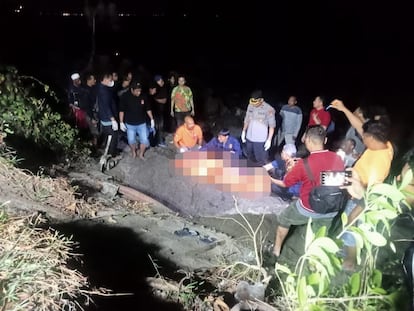
Although her lifeless body was moved to the beach, the murder was committed in the most intimate space of a hotel that Mati’s nomadic spirit perceived as a home, a safe place, a refuge: room 107. In the early hours of July 2, according to the investigation, two men entered the bungalow through the window while the woman slept. They stole €156 ($183) and suffocated her with a towel, according to West Lombok police chief Yasmara Harahap. The autopsy, carried out on Thursday after several delays caused by difficulties finding a forensic expert, is expected to reveal more details about her death. The family is considering the possibility of having her cremated in Lombok and her ashes brought back to Spain.
Hotel robberies
The crime has raised questions about the actions of the staff at the Bumi Aditya. How is it possible that no employee saw the thieves enter the room? Why did the assailants know (or suspect) that the woman was carrying cash — the equivalent of three million rupiah? If the body remained on the premises for a month and three weeks (police say it was not moved to Alberto Beach until August 24), did no one notice the stench? And above all, did no worker wonder what had happened to a guest who, according to her friends, had been staying there for a month and had paid another 20 days in advance?
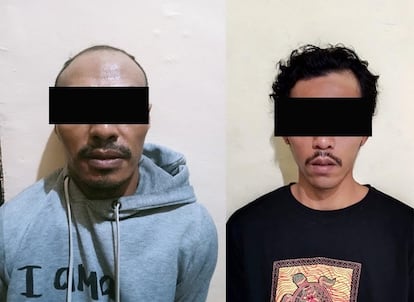
Some answers came when Indonesian police revealed the identities of the two men arrested for the crime: S. U., 34, an employee of the establishment, and H. R., 30, who had also worked there years earlier until he was fired for allegedly stealing from another employee. That theft was caught on surveillance cameras, which later stopped working and were never repaired. Although they have changed their story several times, police say, the two suspects eventually confessed to the crime and their motive: money.
In recent months, the hotel had received a surge of negative reviews on booking platforms, some of them reporting thefts that guests attributed to the lax oversight of staff — or even to their collusion. Either the woman never saw those reviews, or she ignored them. Nor did she pack her bags and leave when, a month before her murder, “her friend Ana was also robbed at the hotel,” says Aarti. “She felt totally at ease and went to bed happy. If she had suspected anything, she would have left,” adds the woman, one of the spokespeople for the support group.
Suspicion falls on the hotel’s accountant
Friends and family believe the hotel’s involvement goes beyond the actions of a single employee. They point to the accountant, N. H., known as Mala, for behavior they consider suspicious. The first red flag was that when Mati tried to pay cash in advance for her stay, Mala suggested she instead make a bank transfer and keep the money herself —precisely the €156 that was later stolen.
The second was that Mala sent the victim’s friends, who had begun to worry about her silence, a supposed message from her on July 6 (she had already been dead for four days). The message, written in uncharacteristically broken English full of spelling errors, claimed she had suddenly left for Laos. Authorities later confirmed that Mati had never left Indonesia.
The thieves also sold the phone they had stolen from Mati’s room — a move that proved their undoing. Police traced it to the buyer and eventually tracked down the two men: the hotel employee was arrested in the village of Dusun Loco, and the former worker while visiting a relative in a hospital in Mataram City, the island’s capital. The accountant has neither been arrested nor is under investigation.
According to ABC journalist Joaquín Campos, who traveled to Lombok and is also acting as the family’s representative there, Mala has family ties to a member of the local police force. That connection, he suggests, could explain why she has so far been spared scrutiny in an investigation into premeditated murder and aggravated robbery. Lombok police have not responded to this newspaper’s request for comment.
While the hotel remains empty and its website inactive, Mati’s circle is demanding answers. They want the investigation to dig deeper into what they suspect was a plot against her, and they want Spain’s Embassy in Jakarta — which they accuse of inaction — to get directly involved by sending someone to Senggigi.
Spain’s Foreign Ministry, for its part, told this paper that diplomats had been on the case “from the first minute,” when they were informed of the woman’s “disappearance” on July 26. The embassy, they said, “has been in contact with the family,” instructed them to file a formal complaint, and carried out numerous steps in what was considered a disappearance case until the body was found on August 30. “The embassy has been in daily contact with all competent institutions to facilitate international police cooperation and follow up on the case,” they added.
Deeply critical of the authorities’ role, Aarti grows emotional when speaking of Mati, whom she met four years ago in India, where they shared a room. “It was her first country, she was crazy about it. But the places she visited later started to get more touristy, uglier… And since she liked the local vibe, when she arrived in Senggigi she felt at home,” she says of a woman who was an early advocate for animal rights, a vegetarian, and a yoga practitioner. This Thursday, September 11, Mati would have turned 73.
Sign up for our weekly newsletter to get more English-language news coverage from EL PAÍS USA Edition









































