
Julio César Chávez Jr.: Addiction, scandals and the weight of a legendary name
The son of Mexico’s boxing legend finds himself behind bars in Los Angeles — the latest twist in a life marked by scandal, recovery, and inner turmoil
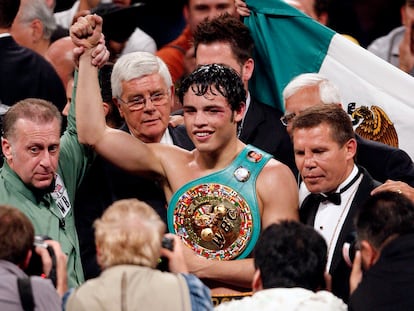

The name Chávez continues to make headlines in Mexico. Ever since Julio César Chávez propelled his family into the spotlight by becoming the Great Mexican Champion — as he’s known in his home country — the troubles surrounding the family have never really ceased. The five-time world boxing champion’s life was marked by wild parties, substance abuse, addictions, and ties to drug traffickers in Culiacán.
Now rehabilitated and widely regarded as a symbol of both athletic greatness and personal redemption, his son Julio César Chávez Jr. has inherited the family’s pattern of scandals, with repeated run-ins with the law, struggles with addiction, and a high-profile marriage to Frida Muñoz — the widow of one of Joaquín “El Chapo” Guzmán’s sons. His latest misstep, an arrest in Los Angeles over visa-related irregularities, has exposed open investigations in Mexico related to arms trafficking, drug offenses, and organized crime, adding to a life already marked by controversy.
Junior, as the family calls the eldest son of Julio César Chávez, was born in Sinaloa in 1986, when his father was nearing 50 undefeated fights and was the pride of Mexico. Junior would be carried into the ring in his mother’s arms to witness his father year after year defending his World Boxing Council titles in the lightweight, light welterweight, and super featherweight divisions.
Chávez was a national sports hero, admired by everyone — including the drug traffickers of the time. In interviews, Julio César Sr. has admitted he was invited to parties in Culiacán where drugs, alcohol, and women were plentiful, and where the most infamous names in the drug trafficking world were in attendance. “The Arellano Félix brothers, ‘El Güero’ Palma, Amado Carrillo ‘The Lord of the Skies,’ El Chapo Guzmán, ‘El Azul’ Esparragoza, Ismael ‘El Mayo’ Zambada…” he listed in a conversation with YouTuber Yordi Rosado.
Julio César Chávez was living in Culiacán when his boxing career took off — and when his downward spiral into addiction began. He recalls trying cocaine for the first time after his legendary fight against Héctor “El Macho” Camacho, when Junior was just six years old.
That moment marked the start of a decade riddled with scandal for the Chávez family: the champion’s substance abuse, his first professional defeat, the loss of his world title, and rumors of a romantic affair with actress Salma Hayek. Junior and his two brothers, Omar and Cristian, lived through a bitter divorce between their parents, one marred by allegations of domestic violence and their father’s repeated relapses into drugs and alcohol.
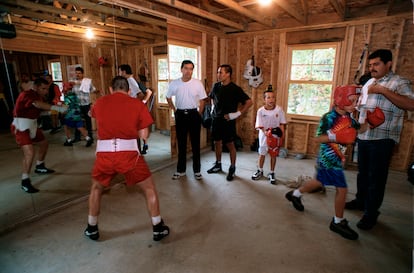
Despite all this, Junior and Omar wanted to be boxers. The eldest of the brothers made his professional debut at the young age of 16, despite their father’s resistance — he knew all too well the dark side of the sport. His first suspension came not long after. In 2009, at age 23 and with several wins under his belt, he was banned for nine months and fined $100,000 after testing positive for furosemide, a banned diuretic often used by boxers to lose weight. It was the beginning of a long and unhealthy relationship with diet pills.
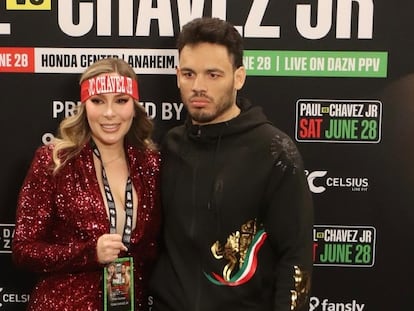
That initial setback didn’t stop him from eventually becoming the WBC middleweight champion, a title he claimed in 2011. His father, ever-present at his fights, would cheer him on from the front row — sometimes offering harsh criticism of his performances. Omar, meanwhile, was making his own way in the ring, though he also made headlines for his partying and alcohol abuse. Around this time, Frida Muñoz began posting pictures of herself on social media wearing a red headband with Junior’s name on it — the same one she wore to his fights to show her support.
Muñoz — who was married to El Chapo’s son Edgar until his 2008 death in a shootout with a rival gang — soon began a relationship with the boxer. They now have two children. Junior has also raised Frida Guzmán — Edgar’s daughter and El Chapo’s granddaughter — who, at 19, is trying to make a name for herself in regional music. “[Ovidio Guzmán] is the uncle of my daughter, who has been my daughter for a long time. I know him well, and he’s a good person,” the boxer said during an online broadcast.
Junior’s career stumbled again when he tested positive for marijuana. His boxing rivals complained to the press that he routinely avoided drug tests and joined the growing chorus of critics within the sport. Eventually, the World Boxing Council forced him into an indefinite suspension until he completed a stay in a rehabilitation center.
After a year of inactivity, he returned to the ring, but his performance was lackluster. He suffered several defeats and continued to struggle with his addiction to pills and cocaine. His relationship with his father also deteriorated, culminating in a bitter confrontation when Chávez Sr. forced him into the rehab clinic he had founded in 2017 — which is still active today, treating fentanyl and gambling addicts.
In 2019, his troubles piled up: he was arrested in Los Angeles for driving under the influence, Mexico opened an investigation into him for possession of weapons and drugs, and he was knocked out in a match against Daniel Jacobs. Years later, he would confess on television that he had spiraled into a dark period where he abused amphetamines like Adderall and anti-anxiety medications such as Xanax to sleep. He had cut ties with his father and brothers. “When you leave rehab, you’re resentful. Then you hear what people said about you, and you relapse,” he admitted on the family reality show Los Chávez. Around that time, he began livestreaming drug-fueled videos in which he insulted his father or accused his wife of kidnapping their children.
It was during this same period — six years ago — that Mexico’s Attorney General’s Office launched an investigation into him for organized crime and arms trafficking. In 2023, the case led to an arrest warrant, confirmed on Friday by Mexican President Claudia Sheinbaum. When asked why the warrant hadn’t been executed earlier, she explained it was because Chávez had spent most of his time in the United States.
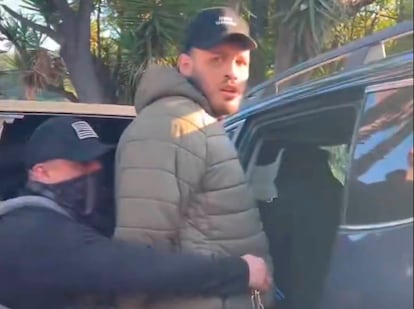
Meanwhile, Instagram became the battleground for his tumultuous marriage, with public video exchanges between him and his wife. He threatened divorce over her repeated absences while he was in rehab. When Mexico finally issued the arrest warrant for organized crime and illegal arms trafficking, Junior relocated to Los Angeles and applied for permanent residency through his marriage to Muñoz, a U.S. citizen. In early 2024, just a few months after moving, police arrested him for possessing undocumented firearms. He spent three nights in jail.
The launch of the family’s reality show coincided with what his father and siblings describe as the lowest point in his life. “I was afraid he would kill himself,” Chávez Sr. admits grimly on camera. In the show, the entire family opens up — his sister Nicole shows her life as a TV personality, while Omar battles alcoholism. Junior appears only briefly but uses the platform to continue his rehabilitation process in the U.S., attending meetings and undergoing regular drug tests. “It’s not like in Mexico, where they just lock you up,” he said bitterly in an interview with Telemundo.
In the middle of last year, he gave several interviews alongside his wife, claiming to be clean and back in training, determined to put the gloves on once more. Just before his arrest last Wednesday, he fought influencer Jake Paul — and lost. “I’m proud, honestly,” his father told the media, “because after going through such difficult, complicated years, getting back in the ring means he’s conquered some of those demons.”
His arrest by U.S. Immigration and Customs Enforcement — on charges of providing false information during his residency application — marks yet another chapter in the Chávez family saga. Junior is now set to be deported to Mexico, where he will face pending charges and a legal process that promises to keep the Chávez name in the headlines.
Sign up for our weekly newsletter to get more English-language news coverage from EL PAÍS USA Edition









































