The responsibility of democracies toward global health
Regardless of the outcome of the U.S. midterm elections and Spain’s general elections, democracies’ responsibility toward global health must not be called into question
I had to be dismissed by the Trump administration in 2025 before I truly understood how fragile the fabric of our society in the United States had become. Values we had long regarded as universal — such as ending world hunger, HIV, malaria, and neglected tropical diseases — suddenly became political bargaining chips. I never imagined the day would come when my country would abruptly and recklessly cut off supplies of medical equipment, emergency food, and rape kits destined for some of the world’s poorest people, with a death toll that is hard to calculate.
I joined the U.S. State Department as a young Foreign Service officer because I wanted to contribute, like many others, to noble causes. There I witnessed the essential work carried out by the U.S. government’s international development agency, USAID, in Central America to save lives. Joining that agency felt like the natural next step. I embraced the ideals, values and principles I believed were rooted in our society and embodied by USAID. I wanted to reach out to those who had been less fortunate than we were. In other words, to give my life a purpose.
After the Trump administration decided to dismantle USAID and, as a result, terminated my post, I began to question my country’s commitment to the very ideals that had led me to serve there. How could some stand by as something so noble and inspiring was destroyed just to flaunt their political loyalty? Had my government stopped believing in the moral duty to help those in need? I found an answer when I arrived in Bilbao to lead the Anesvad Foundation.
After the Trump administration decided to dismantle USAID and, as a result, terminated my post, I began to question my country’s commitment to the very ideals that had led me to serve there
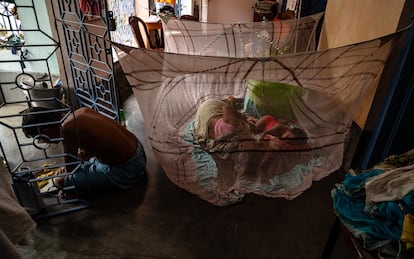
Arriving in Spain was reinvigorating. From the outset I was inspired by the team, partner organizations, donors and, above all, the Foundation’s purpose: tackling cutaneous neglected tropical diseases. In my first four months in the role I was deeply moved by what I saw in Cameroon, which reminded me of my years working for USAID in West Africa. Many school-age children, especially girls, cannot attend class because of disabling diseases. Pregnant women face higher risks of complications or even death during pregnancy or childbirth. Undergoing prolonged antibiotic treatment during pregnancy, if they are lucky enough to access it, can cause side effects and pose risks to the fetus.
This is a reality that hits vulnerable and marginalized populations. When communities have to cope with preventable diseases, their economic opportunities shrink, and when conditions go untreated, barriers to healthcare persist. Allowing people to be condemned to disability or death is immoral and dehumanizing.
That is why, at the Anesvad Foundation, we are strengthening operational research to find innovative solutions that improve prevention, diagnosis, treatment and control of these diseases. We are also bolstering our partnerships to frame them as human rights issues, as shown by our advocacy for the United Nations’ first human-rights resolution on neglected tropical diseases. And at a time when some states are retreating from their global health responsibilities, we reaffirm our commitment to multilateral cooperation through strategic agreements and collaborative frameworks.
I recognize that, in the current economic context, leaders must also address urgent domestic priorities. Reconciling so many needs is no easy task. I see the need to guarantee decent, affordable housing and how economic inequality continues to hinder social mobility and the autonomy of new generations. We cannot settle for temporary fixes: governments must tackle these crises comprehensively and in a coordinated way. But addressing needs within our borders and taking on responsibilities beyond them are not mutually exclusive options. A democracy must be able to do both.
Faced with the void left by the U.S., I am deeply inspired by the example of Spanish society: its compassion, its multilateral vocation, and its capacity to look beyond its borders. I am moved that it still turns its gaze to places where survival is a daily struggle, aware that what happens there affects us all. I am also moved that, even amid so many hardships, people are willing to contribute from their own pockets to fund solutions against some of the world’s most neglected diseases.
Faced with the void left by the U.S., I am deeply inspired by the example of Spanish society: its compassion, its multilateral vocation, and its capacity to look beyond its borders
That civic support matters. Private donations cannot and should not replace the responsibility of states, but they can sustain research, support organizations working on the ground, and demonstrate that a society exists that will not accept these diseases remaining neglected. Those who want to defend global health can do so by supporting specialized organizations, demanding verifiable public commitments and ensuring neglected tropical diseases do not vanish from the political and financial agenda.
In light of my experience in Spain, I believe the country can keep a torch burning to guide others. I trust that this example and others will prompt the U.S. to reflect, react, and once again be a beacon of hope. Spain is not immune to polarization or deep disagreements, but it has maintained a will to cooperate and a perspective beyond its borders that deserves to be preserved.
That commitment should not depend on the political stripe of the next government. Cooperation policy and the defense of global health require continuity, predictability, and ambition. Backtracking now would not only leave millions of people vulnerable to preventable and treatable diseases; it would also undermine Spain’s international credibility, its alliances, and its ability to exert influence in an increasingly interdependent world.
The U.S. midterm elections on November 3 and Spain’s general election on November 29 place both countries before decisions that transcend their borders. For the U.S., they represent an opportunity to begin rebuilding trust and reconciliation with the world. For Spain, they should serve to reaffirm that addressing the needs of our society is compatible with continuing to defend human dignity, multilateralism, and the right to health. Whatever the outcome at the ballot box, that responsibility should not be in doubt.
Sign up for our weekly newsletter to get more English-language news coverage from EL PAÍS USA Edition