
How the new US vaccination schedule for minors works
The CDC has not removed any vaccines from its schedule, but has adjusted the profiles for which certain immunizations are recommended
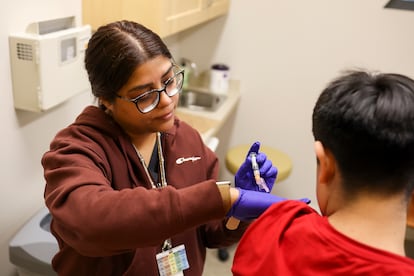

The Centers for Disease Control and Prevention (CDC) has adjusted the childhood vaccination schedule in the United States by modifying recommendations for certain immunizations, such as hepatitis A and B. Under the changes, some vaccines are no longer generally recommended and are instead targeted to at-risk populations. In addition, the CDC incorporated a shared clinical decision-making approach between physicians and parents in specific cases.
The measure responds to a memorandum from President Trump published in December asking the Department of Health and Human Services to research how developed countries structure their schedules and evaluate the scientific evidence supporting those practices in order to make adjustments to the U.S. model. For its new guidelines, the CDC has followed Denmark’s vaccination plan. “After an exhaustive review of the evidence, we are aligning the U.S. childhood vaccine schedule with international consensus while strengthening transparency and informed consent. This decision protects children, respects families, and rebuilds trust in public health,” said Health Secretary Robert F. Kennedy Jr., known for his anti-vaccine ideology, in a statement.
In response, the American Academy of Pediatrics (AAP) described the changes to the vaccination schedule as “dangerous” and “unnecessary.” “The United States is not Denmark, and there is no reason to impose the Danish immunization schedule on America’s families. America is a unique country, and Denmark’s population, public health infrastructure, and disease-risk differ greatly from our own,” said AAP President Andrew D. Racine.
New criteria for minors
The CDC is keeping the same vaccines on its schedule, but has modified the guidelines that determine who should receive them, now divided into three categories.
Immunizations Recommended for All Children
The vaccines recommended for all children include immunization against measles, mumps, rubella, polio, pertussis, tetanus, diphtheria, Haemophilus influenzae type B (Hib), pneumococcal disease, and chickenpox. Meanwhile, the human papillomavirus (HPV) vaccine requires only a single dose, according to the new CDC guidelines.
Immunizations Recommended for Certain High-Risk Groups or Populations
In the case of high-risk populations, the recommendations apply to vaccines against respiratory syncytial virus (RSV), hepatitis A and B, dengue, and meningococcal disease, including serogroups ACWY and B. The criteria include unusual exposure to the disease, underlying comorbidities, or the risk of transmitting the disease to others.
Immunizations Based on Shared Clinical Decision-Making
According to the adjustments made by the CDC, it is not always possible for public health authorities to clearly define who will benefit from immunization, so it has been established that in certain cases, doctors and parents are best placed to make the decision. This category includes vaccines against rotavirus, Covid-19, influenza, meningococcal disease, and hepatitis A and B.
Which vaccines are still covered by insurance companies?
According to Dr. Mehmet Oz, administrator of the Centers for Medicare and Medicaid Services (CMS), all vaccines will continue to be covered by insurance companies, as none have been formally removed from the vaccination schedule; rather, the recommendations have simply been adjusted. “No family will lose access. This framework empowers parents and physicians to make individualized decisions based on risk, while maintaining strong protection against serious disease”, he stated.
Sign up for our weekly newsletter to get more English-language news coverage from EL PAÍS USA Edition









































