
Jury finds ‘El Chicle’ guilty of murdering teenager Diana Quer
José Enrique Abuín Gey could be sentenced to the equivalent under Spanish law of a life sentence for the abduction and murder of the Madrid native in 2016


After an 11-day trial and three-and-a-half days of deliberation, on Saturday the jury in the Diana Quer case found José Enrique Abuín Gey, better known by the nickname “El Chicle,” guilty of murder, sexual assault, and abduction.
Quer was an 18-year-old from Madrid who had been spending her summer vacation in the Galician town of A Pobra de Caramiñal with her family when she went missing on the night of August 21, 2016, as she was walking home alone on a deserted street during the local fiestas.
Today my daughter is smiling from heaven knowing that justice has been done
Victim’s father Juan Carlos Quer
Abuín had been a main suspect in the Diana Quer investigation, but the case had been shelved in April last year for lack of conclusive evidence.
The case was reopened after Abuín was arrested in December 2017 for assaulting another young woman. The physical description provided by the victim led investigators to Abuín.
Following his arrest, Abuín led the police to Diana Quer’s body, which was at the bottom of a water deposit inside an abandoned warehouse in Rianxo, a town in the northwestern region of Galicia. Despite initially confessing that he had strangled her after trying to rape her, Abuín later said that he had accidentally hit her with his car.
It is now up to Judge Ángel Pantín of the A Coruña provincial court to decide whether to sentence Abuín to permanent reviewable prison, the equivalent under Spanish law of a life sentence.
A majority of the nine-member jury agreed that Abuín’s confession should be taken into account as a mitigating factor. Abuín is currently in prison serving two sentences for drug trafficking, and unlawful detention and attempted sexual assault against the victim from December 2017.
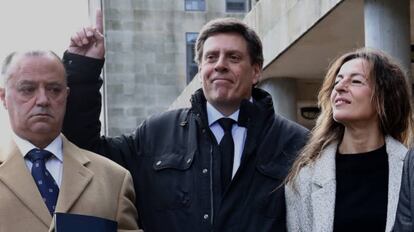
“Today my daughter is smiling from heaven knowing that justice has been done,” said the victim’s father, Juan Carlos Quer, after the verdict was made public.
Quer’s disappearance in 2016 triggered a massive search operation that yielded no results. The teen’s family was subjected to intense public scrutiny by the media, which had a field day with stories of family fights and reports by people claiming to have seen the youth anywhere from Spain to Romania.
English version by Melissa Kitson.









































