Prison for 10 jihadists who were planning Barcelona terror attacks
Before their 2015 arrest, cell members wanted to kidnap and execute a victim in front of a camera
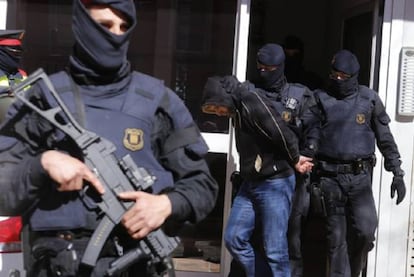
Ten members of a jihadist cell who were planning attacks in Barcelona have been sentenced to between eight and 12 years in prison by Spain’s High Court, the Audiencia Nacional.
The terrorist cell, which was broken up in 2015 by the Catalan police force, had been planning attacks against landmark sites in the city. Its members also wanted to kidnap someone, dress them in an orange jumpsuit, and execute them in front of a camera, the court found in a ruling released on Tuesday.
A group leader suggested attacking the regional parliament
The court’s criminal division has sentenced three individuals to 12 years in prison for leading the terrorist association, while seven others have received eight-year sentences for participating in the group’s activities. The men, aged 22 through 48, did not have prior criminal records.
The cell, which called itself “Islamic Brotherhood, group for the preaching of jihad,” began taking shape in 2014 at the mosque in Terrassa, in Barcelona province. After a period of training, the defendants created a terrorist cell “with the sole aim of observing and serving the precepts ordered by Daesh (Islamic State),” said the ruling.
According to the court, the group had been planning attacks “against institutions such as the police, banks and Jewish interests in Spain, or to join Daesh.” One of the members traveled to Syria in April 2014 and died in Iraq in May 2015. Three more cell members followed in his footsteps but were arrested on the border between Bulgaria and Turkey.
Following these three arrests, group leader Antonio Sáez, who was working at a barbershop in Barberá del Vallés, suggested perpetrating attacks on Spanish soil. Court records document a meeting that was held in February 2015, when Sáez put forward the idea of attacking the regional parliament.
The police raid, dubbed Operation Charon, broke up the cell after a 13-month-long investigation with help from an officer who infiltrated the group. When Sáez made his suggestion, this undercover officer alerted his superiors about the risk of imminent attacks. Most of the cell members were arrested in April, just days after they were seen taking pictures of landmark sites across the city as part of their plan.
English version by Susana Urra.