
King decides not to call new meetings with Spain’s political chiefs
Decision comes after Pedro Sánchez’s failure to win investiture vote last week in Congress
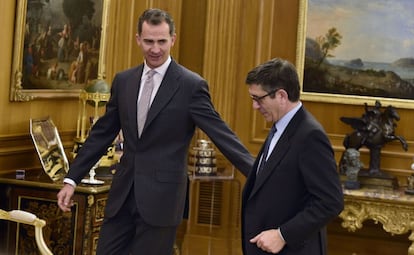
Spain’s King Felipe VI has decided not to call a new series of meetings with Spain’s political leaders, with a view to inviting one of them to form a government. Monday’s announcement comes in the wake of Socialist Party candidate Pedro Sánchez’s failure to win two investiture votes in Congress, which took place over the course of last week.
The press release issued by the Royal Household explains that the king will not begin new meetings “for the present time.”
A two-month period of negotiations has now begun, which will be followed by new elections if no cross-party deal is reached
The note adds that the decision was taken to “allow the political parties to take the steps that they believe to be necessary” in a bid to reach deals to form a government.
The king called on congressional speaker Patxi López, of the Socialist Party, to communicate the decision to the political groups.
Inconclusive general elections on December 20 saw the incumbent Popular Party (PP) win most seats in Congress but fall well short of the majority needed to form a government. Its leader, acting Prime Minister Mariano Rajoy, turned down an invitation from the king to stand in the investiture vote, on the basis that his party did not have the votes to be successful.
PSOE chief Pedro Sánchez, however, did accept the king’s invitation, leading to a deal with emerging center-right group Ciudadanos to try to form a minority government.
That bid failed, however, with Sánchez falling well short of the absolute majority needed for victory in the first vote in Congress on Wednesday, and the simple majority required in the second poll on Friday evening.
A two-month period of negotiations has now begun, which will be followed by new elections if no cross-party deal is reached.
English version by Simon Hunter.









































