Seville court shelves investigation into archeological plundering
Judge rules 300,000 works of art must be returned to their owners
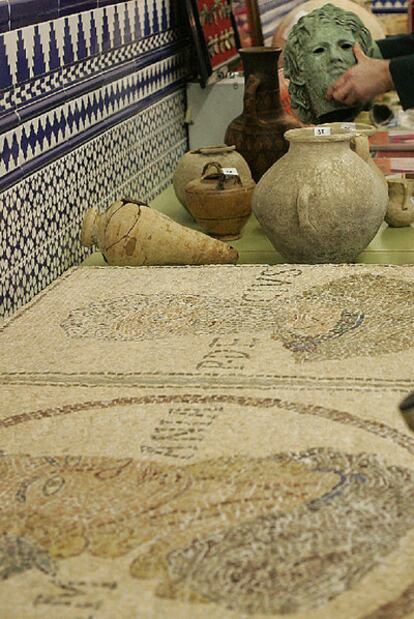
It was the biggest investigation into the plundering of works of art ever carried out in Spain. But now Seville's Provincial Court has ordered that Operation Tertis be shelved and that the 300,000 archeological pieces seized in the probe be returned to their 52 owners. There is no concrete proof, it said, that they were plundered from 31 archeological sites.
The two-year Civil Guard operation had resulted in the arrest of 52 people in Andalusia, Madrid, Barcelona and Zamora. The majority of the works seized were coins, but there were also other Phoenician, Iberian, Roman, Visigothic and Arabic artifacts. The court rejected the appeal of the Andalusian regional government and public prosecutor for the objects to be preserved in museums.
Over the course of 2009, it had exonerated the 52 accused in different resolutions because the sites were no longer accredited and it was not specified when the pieces had been removed. The Heritage Law says all objects and material remains discovered in excavations, earth movements and works are in the public domain.
"You have to be extremely careful in big operations against plundering," said sources from the case. "The law is very poor in protecting national heritage and pursuing those that suck it dry. To top it all, the Penal Code reform [set to come into force at the end of the year] has not touched those articles."