
Venezuelan economy clings to oil and banking to climb out of the abyss
The recovery of the Caribbean country will require new rules and large investments

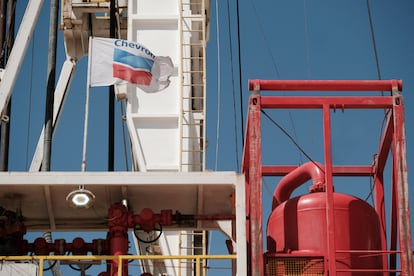
Hopes for a radical and absolute political transition in Venezuela have been replaced by the uncertainty of a cohabitation between the Chavista regime and the forces of the MAGA movement, although this has yielded some positive results in terms of consumption, supply, and prices. Last week, the United States dismantled part of the sanctions that prevented oil companies like Britain’s Shell and Spain’s Repsol from operating in the country’s vast reserves, while the U.S.-based Chevron is preparing to double its production.
This prospect of a hydrocarbons reopening offers glimmers of optimism about the normalization of the country’s battered finances, something that will come in dribs and drabs rather than in a whirlwind and will depend on the flows from oil sales controlled by the Donald Trump administration.
“The United States is going to control a significant portion of the oil flow. We estimate a maximum of 70% of the resources. And they are going to be very incisive about where those flows go, about how they enter the dynamics of the economy,” says Asdrúbal Oliveros, a business consultant with extensive connections in the Venezuelan ecosystem. “On a positive note, we are likely to see less discretion in the allocation of foreign currency,” adds the Caracas-based economist.
This new exchange rate system will operate similarly to the mechanism that was in place until last year with Chevron: a covert dollarization of the economy, in which the government allowed a portion of the U.S. company’s petrodollars to be sold to the banking system and then auctioned off to private importers of priority goods. The mechanism was launched at the end of January with the sale of $300 million.
Amid these initial signs of recovery, a broad and constructive reform of the country’s legal and institutional framework will be necessary, along with substantial resources and considerable political and corporate will to reverse tax, labor, and legal obstacles that increase the risk of expropriations, price controls, and, in general, tight government control. In this context, the following is a review of the key sectors for the recovery of the Venezuelan economy:
Oil and service companies
The oil sector has the potential to drive the rest of the economy. At least a third of the country’s Gross Domestic Product (GDP) comes from oil revenues, and more than 80% of foreign exchange earnings come from crude oil exports, according to analysts’ estimates. Furthermore, it is the sector with the greatest revenue-generating potential, even if Caracas — with guidance from the United States — modifies the oil contracts that currently favor the state-owned Petróleos de Venezuela (PDVSA). The National Assembly, with its Chavista majority, has relaxed the sector’s regulatory framework to allow for greater participation of private companies in the crude oil value chain.
Washington has explained that Venezuelan oil revenues will not go to the country’s public coffers. Instead, they will be managed by the Treasury Department, while the commercial aspects will be overseen by the Energy Department, all under the watchful eye of Secretary of State Marco Rubio. This arrangement has allowed Venezuela to sell its crude oil in open, non-sanctioned markets at prices up to 30% higher per barrel.
Washington’s decision to lift sanctions will be the first step toward increasing production. However, a broader incursion by companies like Exxon or Conoco will require greater legal and contractual guarantees.
The lifting of sanctions will also facilitate the return of oilfield services companies, crucial at all stages of well operation, from maintenance to pumping. Companies such as SLB (formerly Schlumberger) and Halliburton have publicly stated their intention to return to mature fields and the Orinoco Belt.
Financial system
Although central to the exchange rate strategy, the Venezuelan banking sector is quite small compared to its Latin American counterparts. Faced with triple-digit inflation and frozen interest rates, it has lost its role as a financial intermediary. In other words, lending is virtually nonexistent, and its activity is concentrated on operational functions such as payroll disbursement and payment processing.
In this context, the lifting of financial sanctions by the United States is also crucial, as it would allow for the reinstatement of correspondent banks in Venezuela and the reconnection between the local and global financial systems. Washington maintains that the sanctions — targeting Chavista officials accused of narcoterrorism and corruption — were not designed to isolate the country from financial flows, although in practice they have had that effect.
Other leverage mechanisms, such as investment banking, venture capital, and family offices, have also disappeared. A sustained recovery of the economy and the entrepreneurial ecosystem will require capital from these sources.
One positive sign is that holders of defaulted Venezuelan bonds are beginning to prepare to recover some of their investments, a first step toward improving their financial health. “Venezuelan bonds have reacted positively since the United States ousted President Nicolás Maduro on January 3. This nuance makes Venezuela a very different case from other countries in the midst of geopolitical conflicts (Ukraine, for example), as markets are pricing in a long-overdue debt restructuring and higher recovery values,” wrote Greg Hadjian, Latin America strategist at Loomis Sayles, a Boston-based investment manager, in a market note.
Basic services and telecommunications
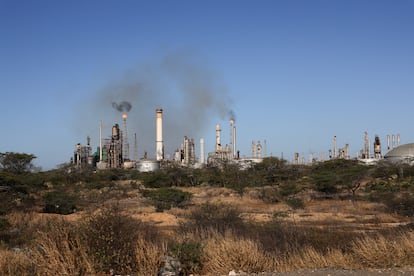
Years of underinvestment and dozens of corruption cases in the electrical grid, roads, and transportation systems have weakened the country’s infrastructure and connectivity. This deterioration has also severely impacted the local refining network. Despite having one of the largest crude oil refining capacities in Latin America and the world, its operation has been unstable due to intermittent power supply and a lack of maintenance.
Jorge Rodríguez, president of the National Assembly and brother of interim president Delcy Rodríguez, is leading one of the most significant legislative reforms Chavismo has seen since Hugo Chávez’s socialist era. In addition to the Hydrocarbons Law, the package includes regulations on mining, foreign trade, socioeconomic rights, digital rights, cybersecurity, the national electricity system, telecommunications, and even artificial intelligence, with the aim of attracting foreign investment.
Oliveros adds that “a characteristic of the Maduro government, and now of Delcy, especially after 2019, when we experienced the deepest moments of the hyperinflation crisis, was a more pragmatic and less ideological approach with the private sector, with which it meets very frequently. What has been more difficult is building a common reform agenda. We will have to see if that happens at this stage.”
Incentives for technological innovation, research, and the development of solutions will also be essential, as will the training of a skilled workforce, following years of brain drain. Analysts warn that the big question is whether the figures in the interim government will have the legitimacy, political capacity, and negotiating skills necessary to reconcile factions with varying degrees of ideology and advance reforms, all without straining the fragile internal harmony under the threat of Trump.
Sign up for our weekly newsletter to get more English-language news coverage from EL PAÍS USA Edition









































