
Inside Mexico’s gay cowboy parties: Tequila, dancing and romance
About a thousand men dressed as cowboys gather in cities across northern Mexico to drink, dance cheek to cheek, and flirt. Photographer Pablo Sáez and writer Guillermo Osorno explore the world behind these colorful, boisterous cowboy parties in a new book
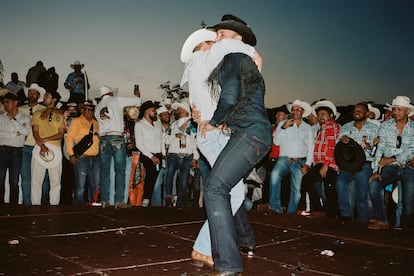

Every spring, hundreds of cowboys make a pilgrimage to cities across central and northern Mexico to take part in a very particular kind of cowboy convention. It is not the sort of gathering where people discuss techniques for raising sardo negro cattle — a Mexican breed of cow — or rope calves. Instead, they dance, eat, flirt, and play. These events are opportunities to meet other men who share the same interests and passions, make friends and, who knows, perhaps enjoy a weekend romance or even meet the love of their lives.
Gay cowboy parties have flourished in Mexico and in the United States as symbols of identity, resistance, and activism. For Mexican journalist and writer Guillermo Osorno, “they are like oases in the middle of the country, far from the capital, Mexico City, where LGBTQ+ visibility does exist.”
In April 2025, Osorno attended one of the largest gay cowboy gatherings, held in Zacatecas. He was accompanied by Spanish photographer Pablo Sáez after a mutual friend, stylist Alba Melendo, recognized the potential of these events. The result of their foray into this world is a portrait of the social and intimate lives of these men in the form of a photography book titled Vaquero (Cowboy).
At the heart of cowboy ritual
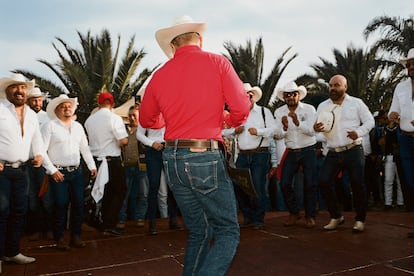
Cowhide, crocodile, or ostrich-skin boots; tight-fitting skinny jeans that accentuate the figure; python-skin belts; shirts with embroidery flamboyant enough for a showgirl; wide-brimmed felt or palm hats. The look is instantly recognizable, varying only in color, fabric, or leather, but always embodying the cowboy archetype. People toast with Tecate beer and caballitos — as tequila shots are known in Mexico — before heading to the dance floor, moving to the rhythms of banda music, faces and chests pressed together, legs intertwined.
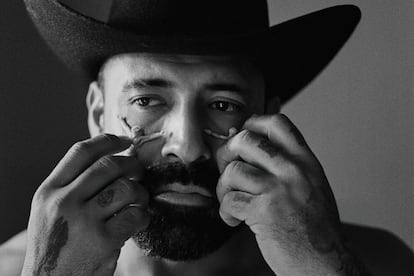
Osorno says these gatherings emerged about two decades ago out of the need felt by gay men in northern Mexico, an industrial and ranching region, to create safe spaces where they could meet one another without fear of judgment and, above all, dress the way they wanted.
“They did not feel represented in a homophobic society that was suffocating them,” the author explains. In those parts of the country, it was far more difficult for gay men to build a sense of community than in Mexico City, where the LGBTQ+ movement was then engaged in a vigorous struggle for equal rights. That effort culminated in the capital’s legalization of same-sex marriage in 2009, a right that was not extended nationwide until 2022.
At these parties, men are free to be themselves because they feel safe. Some, Osorno notes, are activists who have fought for LGBTQ+ rights in places such as Chihuahua, Zacatecas, Baja California, and Ciudad Juárez. “Others come from very small towns and communities where they haven’t come out of the closet,” says Osorno. “They travel up to 200 kilometers [124 miles] to attend one of these gatherings. While back home, they may run a fruit and vegetable stall at the market; at the cowboy party, they are different men, more authentic.”
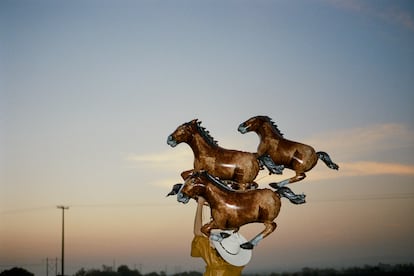
The celebration Osorno and Sáez photographed took place in Zacatecas during Easter Week. The event lasts three or four days and features live music, dancing, and plenty of food. “They also choose the Cowboy Face, which is a popularity contest rather than a beauty pageant,” says Osorno.
The competition echoes the long-standing tradition of crowning local queens and princesses at community festivals. “And on Holy Saturday there’s a horseback parade through the streets of Jerez de García Salinas, a nearby town, where local residents join the cowboys as they ride through town.”
Music is a central part of these gatherings. According to Osorno, the soundtrack is the same one heard throughout the region: cumbia sonidera, a distinctly Mexican style closely associated with the sonideros, roaming DJs and MCs who traditionally hauled massive sound systems and organized open-air dances. The playlist also includes corridos norteños. “Their lyrics tell stories of love, heartbreak, and drug trafficking,” the journalist says.
Tradition and fetishism
Participants have embraced the cowboy aesthetic of their fathers and grandfathers. In this part of the country, jeans, boots, and wide-brimmed hats are everyday attire. “Many come from ranching families,” Osorno says. He adds: “The real cowboys come from New Spain — that is, it was Spain’s conquest of that territory that gave rise to the first cattle ranches and the riders who tended the cows. With the division between the United States and Mexico in the 19th century, they ended up on both sides of the border.” American literature and cinema later appropriated and romanticized the cowboy figure, turning it into a global icon.
Many of the attendees are not cowboys by profession. They are teachers, police officers, nurses, veterinarians... “Others come from humbler backgrounds, running market stalls, but all are very familiar with the cowboy uniform,” he explains.
Adopting the cowboy aesthetic is not only a way of reclaiming their identity. It also carries an element of fetishism, Osorno concedes. It is a symbol of strength, passion, and eroticism that challenges the notion of the cowboy as an exclusively heterosexual archetype. “It is a hypermasculine representation of the man who lives and works on a ranch and faces the forces of nature alone,” the author explains.
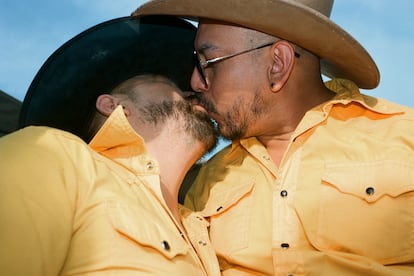
Looking beyond that heightened image of masculinity was one of the main goals of Osorno and Sáez’s photographic project: to discover the people behind the denim and leather boots. “There were some who didn’t want to appear in the photos, but many were delighted to take part,” says Osorno.
The gatherings attract people of all ages and body types, though Osorno notes that it is primarily a world of middle-aged and older men. “Unlike in many other subcultures, age is valued here.” That reality is reflected in the selection of images featured in the book.
It all began in Mexico City...
Osorno first heard about these gatherings from one of the organizers of the event held in León, in the state of Guanajuato, about three hours from Mexico City. “The first time I saw more than 600 men dressed in those distinctive outfits, I was stunned. From that moment on, I started researching,” he says.
In 2025, during a dinner party, he met Alba Melendo, and later that evening they ended up at a small gay cowboy bar in Mexico City. The Madrid-born stylist suggested producing a fashion editorial and recruited photographer Pablo Sáez for the project. What began as a magazine shoot soon grew into a book, prompting them to approach the publisher Casa Siete. In less than a month, they assembled a team and traveled to the Zacatecas party. They also brought Levi’s on board as a partner. “What brand could better represent the cowboy?” Osorno says.
Sign up for our weekly newsletter to get more English-language news coverage from EL PAÍS USA Edition









































