
At home with Susumu Higa, the anti-war manga artist who does not have a phone or a car
Higa is the author of ‘Okinawa, the Wind Speaks,’ a celebrated graphic novel, in which he narrates the post-war period of his region. In this interview with EL PAÍS, he shares his passion for Picasso and his screen-free existence, while examining the traces left by World War II in his homeland
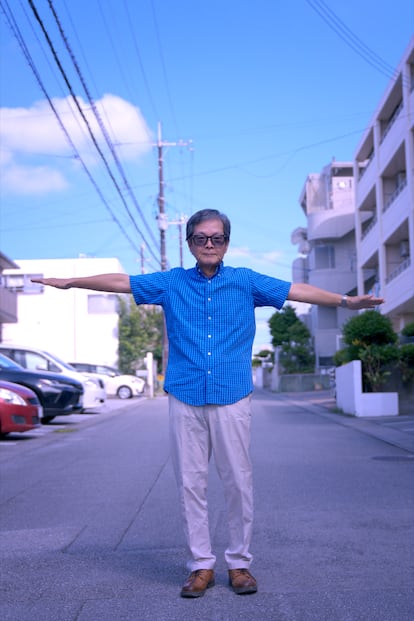
Japanese manga artist Susumu Higa recalls the day in his teens when he discovered Pablo Picasso’s Guernica (1937). The large-scale painting, which depicted the bombing of civilians during the Spanish Civil War, was an epiphany.
“Picasso taught me that social commitment is possible through art. [And], in my case, through manga,” he explains in the living room of his house. It’s a single-story concrete structure in his hometown of Naha, the capital of Okinawa Prefecture.
“It was as if someone had flipped on a light,” he adds, in one of the rare interviews he has granted. His elusiveness, among other reasons, is due to the difficulty of contacting him: he doesn’t use email or a cell phone, nor does he own a car. To speak with one of Japan’s most celebrated manga artists, you simply have to go and see him.
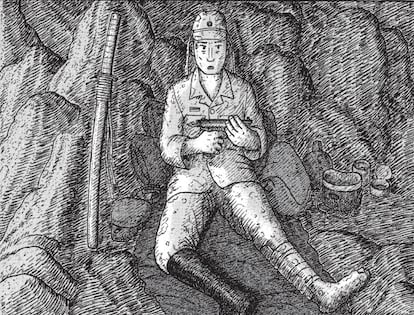
Okinawa, the Wind Speaks (2003) is a graphic novel, consisting of six stories. In it, Higa depicts the collateral damage in the aftermath of World War II, as well as the moral ambiguity that gripped American soldiers, Japanese soldiers and civilians alike. The work was awarded the Grand Prize for Manga at the 2003 Media Arts Festival, the highest official recognition for a manga artist in Japan.
Higa has dedicated his life to illustrating the history of his province. Once an ancient kingdom called Ryukyu, it was annexed by Japan in the 19th century and is now a crucial center for U.S. military operations in the Pacific. More than 80 years after World War II, Okinawa Prefecture is home to 70% of the U.S. military bases in Japan, despite occupying only 0.6% of Japanese territory.
As soon as he sits down with EL PAÍS, Higa asks to be addressed without the title of sensei – Japanese for “teacher” – which is customary when addressing artists, academics, or doctors. “Being called sensei gives me the creeps,” he chuckles, smiling with a knowing look behind blue-tinted prescription glasses.
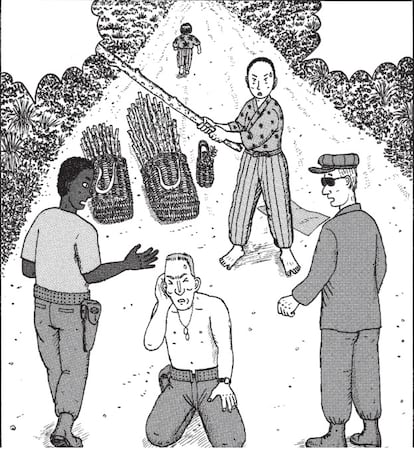
The first of the six episodes in his book – titled Kajimunugatai (translated from Okinawan as “The Wind Speaks”) – tells the story of three American soldiers stationed at an Okinawa base a year after the end of the war. In their free time, they roam the plantations of a neighboring village in a jeep, terrorizing the local women. As the base authorities refuse to punish them, the villagers decide to take justice into their own hands and ambush the soldiers, using homemade traps.
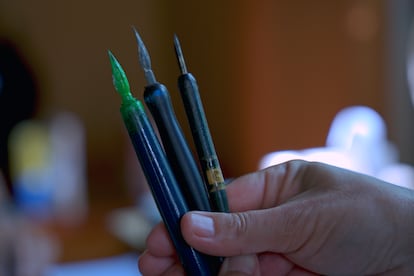
Higa describes himself as a self-taught artist who draws with a pen and black ink. He disdains the conventional works of manga that are more commonly known in the West, with elements such as characters with large eyes and onomatopoeia that fills an entire page. His orthodox artistic method – which involves close-ups to convey psychological tension, medium shots for dialogue and wide shots to highlight the landscape – reflects his preference for cinematic grammar. “I hardly ever read manga. My main reference for drawing is film,” he describes, naming a trio of classic Japanese filmmakers: Akira Kurosawa, Yasujiro Ozu and Kenji Mizoguchi.
Higa was 15 when he bought a book of Picasso’s paintings. He felt the urge to express the contradictions of the occupation of Okinawa in graphic sequences. But he became a civil servant and didn’t start drawing comics until he was 30, when he finally achieved financial stability. He traveled to Tokyo to see exhibitions, concerts and films. “I also devoured books and newspapers to learn the language of society,” he explains.
He read all the published testimonies of survivors of the Battle of Okinawa, the only large-scale military engagement fought on Japanese soil during World War II. Between April and June 1945, more than 100,000 Okinawan civilians perished or took their own lives with grenades issued by the Imperial Army, with orders to avoid being taken prisoner by the Americans.
Several museums in Okinawa are dedicated to the memory of the war. They display survivor testimonies about forced suicides, civilians being used as human shields and the systematic oppression imposed by the Japanese army to delay the American invasion of Japan’s main islands. In Okinawa, the Wind Speaks, Higa shows how Japanese soldiers seized food from the inhabitants, or forcibly evacuated farmers to islands plagued by malaria.
Higa’s works have been translated into eight languages. Many experts compare them to Barefoot Gen (1973-1987), the historical fiction manga series by Keiji Nakazawa, which is considered essential for understanding the consequences of the atomic bombing of Hiroshima. The nuclear explosions that also struck Nagasaki transformed both cities into monuments of peace. In Okinawa, however, militarism remains a daily presence, with fighter jets taking off and landing on runways built in prime locations within its cities.
The local economy is one of the least developed in Japan: today, less than 5% of its income comes from leasing land to the bases and from the direct employment that the sites provide. Back in 1965, this figure was 30%.
All these years later, sexual assault against Okinawan women persists. According to a 2024 article in the American military newspaper Stars and Stripes, base personnel have been implicated in at least 140 cases of rape since the administration of Okinawa was returned to Japan in 1972.
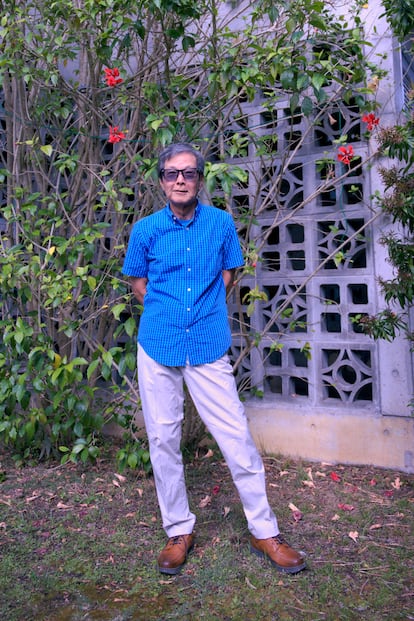
For the photo shoot, Higa invites us into his garden and shows us two emblematic Okinawan plants: a flowering hibiscus and a shikuwasa tree. The latter bears a citrus fruit that helped make Okinawa one of the regions with the highest centenarian rates in the world (until the Westernization of diet and customs). Today, Okinawa Prefecture ranks 36th in male life expectancy among Japan’s 47 prefectures.
Walking through his neighborhood, Higa explains that it was built on land that – until the end of the 20th century – housed an 18-hole golf course and residences with gardens for American soldiers. “Seeing the soldiers watering the gardens irritated me,” he explains. The land was eventually returned to the original owners, including Higa’s family. “The progress of the neighborhood has shown that military bases aren’t necessary for Okinawa’s economy,” he points out.
U.S. occupying forces controlled Japan from 1945 – after their victory in World War II – until 1952. Under an American formula called “residual sovereignty,” Okinawa was technically returned to Japan, but for two more decades, the Americans built bases, imposed the dollar and abolished the Japanese passport for its inhabitants.
“Okinawa is a land at the mercy of great powers. It was ravaged by the United States and betrayed by Japan. Today, we continue to be treated as a military colony,” the author maintains.
Higa has just turned 73. He considers the upcoming release of the Japanese paperback edition of Okinawa, the Wind Speaks to be his “testament.” He walks about 15,000 steps every day, observing the sky above his city. When he sees areas with buildings from the 1960s, he thinks of “the desolation of Ukraine and Gaza.”
He’s concerned about the diplomatic crisis between Japan and China sparked by Prime Minister Sanae Takaichi, who – shortly after taking office in October of 2025 – told parliament that an attempt by China to blockade or seize Taiwan would pose “an existential threat” to her country and would justify a Japanese military intervention.
One of Okinawa’s islands, Yonaguni, is located just 68 miles from Taiwan. According to The Nikkei – Japan’s business daily – by 2030, Tokyo will install a Type 03 Chu surface-to-air missile system there, manufactured by Mitsubishi Heavy Industries.
Higa notes: “If [the situation] only depended on Okinawa, we could get along with China. I don’t want [the Japanese government] to involve us in a war.”
Translated by Avik Jain Chatlani.
Sign up for our weekly newsletter to get more English-language news coverage from EL PAÍS USA Edition









































