
Miami, the one-time ‘Hollywood of telenovelas’ now trying to reinvent itself
For years, the city built up one of the Americas’ strongest industries of Spanish-language productions, creating an ecosystem that brought work and visibility to thousands of actors and creators
Adriana Barraza likes to remember the Miami of the end of the 1980s as she would an old lover: with gratitude, wonder and nostalgia. The Mexican actress, who is today well-known in Hollywood, walked the halls of the city’s first Hispanic studios, right when their industry was beginning to take shape. She remembers this time with surprisingly clarity, as if she could still hear the echoes of those first rehearsals, the frenetic rhythm of shoots and the mix of accents that for many, turned Miami into a starting point on the way to bigger things.
“Everybody knows that in 1988, telenovelas [Latin American soap opera] began in Miami,” Barranza states precisely, having been a firsthand witness to this foundational era. Something new was being born, a meeting point in which Latino stories could be told from the United States, within reach of an audience that was growing quickly.
“If the viewer turned on the television and said, ‘Where is this from?’ you had already lost them,” remembers the actress, who was nominated for an Oscar for her work on the movie Babel in 2006.
The mecca of Latino melodrama
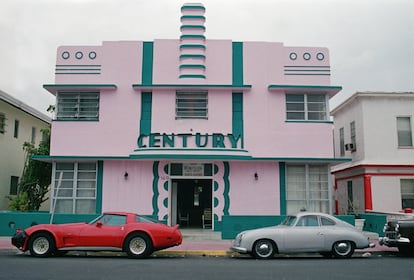
That Miami was a city in transformation. Its migratory growth brought new voices, new talents and new work. Its audiovisual industry was developing through studios that had been founded alongside expanding pathways and neighborhoods where Latino communities were beginning to define social and economic landscapes.
Against this backdrop, three production companies arose that would characterize the era: Venevisión International, Fonovideo and Telemundo Studios. The three produced between seven and 10 telenovelas a year between them, a volume that would leave Miami the primary center of production of Spanish-language productions in the United States. No other place in the country had anything like it.
This generated a job market for actors, directors, technicians, makeup artists, stylists, scriptwriters, caterers… all found their place within Miami’s panorama.
“There was fresh money, very fresh,” remembers Venezuelan director Luis Manzo, who came to Miami to counter the dominant production of telenovelas coming out of Mexico at the time. “The dream was to make a competitive product in the United States,” says the producer of shows like Perro Amor (Dog Love) and Silvana sin lana (Rich in Love).
His Mexican colleague Fez Noriega points to another structural factor: diversity. “Miami enjoyed the tremendous advantage of having actors from all throughout Latin America,” he says. It was a blend that enriched stories and facilitated international distribution. An Argentine would play the villain, a Colombian the male romantic lead, a Mexican the female protagonist… and the public saw it all as believable, because the city functioned as an intersection of identities.
One show followed another. The city’s studios were at work nearly 24/7. Miami was a constant set: residential areas turned fictitious mansions, beaches, offices turned backdrops for scenes at the workplace…
For actors, Miami represented a professional leap, “like playing in Division I,” says Pablo Azar, who arrived in 2005 to record El cuerpo del deseo (Second Chance). He sums things up thusly: “If you made a good telenovela, you earned a very large public.”
At the time, the Hispanic market was comprised of two major players: Telemundo and Univision, the Spanish-language TV channels that continue to dominate the market today. “There was no social media. There were no streaming platforms,” remembers Azar, who fought so that telenovela actors could join the SAG-AFTRA union and have better working conditions. “People saw what they broadcasted. And if you were on a good project, half the Americas saw you,” he remembers.

The city’s attraction was twofold: exposure and stability. “Many actors wanted to go to Miami because they would earn in dollars, and you could live well,” says Azar. The area’s cost of living was moderate, with accessible rents and continuous audiovisual projects allowing one to imagine a well-rounded life in the city.
There were months of regular work, reasonable wages and economic activity that benefited a metropolitan area that was in the midst of a growth period. Miami became, for more than two decades, the biggest factory of non-English-language productions in the United States. Some called it the “Hollywood of telenovelas.”
The market shift
For years, Miami believed that its machinery was unstoppable. But three factors changed the equation in recent times: streaming, increases in cost of living, and the elimination of tax incentives in Florida.
Streaming fragmented consumption and pulverized old habits of daily watching loyalty. 120-episode telenovelas were replaced by shorter and more sophisticated series that required less shooting time and had distributed budgets differently.
Concurrently, Miami has become one of the country’s most expensive real estate markets. “Costs are not as attractive as they were before,” admits Manzo.
And finally, the most important factor: the state of Florida retired the fiscal incentives that allowed it to compete with Mexico and Colombia. For the industry, this was a knockout punch
“[Taking away] the incentives was to blame, 100%,” states Azar. “With them went the shoots. And with the shoots, a lot of the telenovela jobs.” Mexico offered 30% tax incentives; Colombia, 40%; Florida, zero. The results were immediate: Venevisión stopped producing locally, Fonovideo disappeared. Telemundo Studios continued working in southern Florida — and still does — though it has outsourced some productions to the other locations.
At the Telemundo headquarters, which opened its newest studios in 2018, perspectives are more mixed. Javier Pons, chief content officer and director of Telemundo Studios, steers clear of any fatalism. “I don’t think the telenovela has lost strength,” he says. “What is happening is that it is diversifying. I don’t like labels. We have adapted.”
According to Pons, Telemundo Studios has resisted, transformed its model. And it hasn’t just survived — it has grown. “Before, we only did long telenovelas. Now we make long series, short series for streaming, films… we have multiplied our production,” he says. Pons is convinced that the company, which currently produces between three and four projects a year, has not only moved past the era when everything revolved around melodrama, but has also successfully adapted to the new era with formats that better match current audience interests.
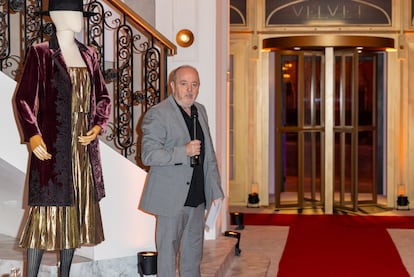
The company, whose parent company is Comcast through its NBCUniversal division, continues to be the biggest producer of Spanish productions in the United States, with 22 studios.
Though Pons doesn’t hide the fact that producing in the United States is more costly than it was a decade ago, he says the natural home of Telemundo remains in the country. He’s still betting on the nation where the brand was born.
“We are committed to producing here, in the United States,” he explains. “Our audience is here, and we owe it to them.” That tie to the Hispanic public — “an enormous and extremely loyal audience” — is, he says, the motor that guides the studio’s creative and strategic decisions.
In addition, Pons says that audiovisual production has a significant economic impact on the region: “When one invests in these productions, the amount of money that enters and the quantity of jobs that are generated is enormous.”
The challenge of tax incentives
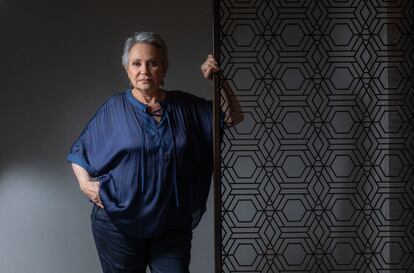
But even Telemundo recognizes that without tax incentives, it will be hard to get back to the massive production that once characterized Miami. A variety of those involved agree with him. Alejandra Palomera doesn’t mince words on the subject: “Incentives are incredibly important. Miami needs incentives, and many of them.”
And Miami-Dade County Commissioner René García, who is in charge of the government office that coordinates, facilitates and — when they exist — manages incentives for audiovisual productions in the area, confirms this perception. “I am trying to bring better conditions for film and television productions, but those incentives have to come from Florida. The state’s philosophy does not include them, and that makes it difficult to compete,” he says.
When he was a state senator, a position he held for over a decade, García ran a local $10 million fund geared towards attracting productions, but he recognizes that this isn’t enough. State-level incentives are the ones that drive large projects, and those simply don’t exist anymore.
Despite the decline of productions in Miami, the telenovela has taken on new life. Streaming platforms have reclaimed the genre, exporting it to new audiences, turning it into crossover content.
In the United States, the Latino community now totals more than 62 million, a gigantic market for any channel. Telenovelas, newly baptized with other names like “super series” and “premium series,” still work, and are still part of the Hispanic cultural DNA. What has changed is where they are produced, not what they represent.
When you ask those who lived through Miami’s golden age of Latino media whether the city can get back its shine, responses vary between prudence and hope.
“It’s necessary that we re-evaluate the telenovela,” says Barraza, who was there at the start of it all. “Of course there is hope,” says Azar, though he conditions this with “as long as the incentives come back”. Palomera thinks it’s possible, with better public policy. And García insists, “Miami is still the perfect place to shoot… but we need support.”
Miami is no longer the absolute capital of Latino melodrama, but it still has its spark. It only needs someone to blow on it. And perhaps — as in any good Latino telenovela — there are unexpected twists still to come.
Sign up for our weekly newsletter to get more English-language news coverage from EL PAÍS USA Edition









































