
The long shadow of the father figure in the films of Rob Reiner
The director made several films that speak about complex family relationships and the weight of a surname
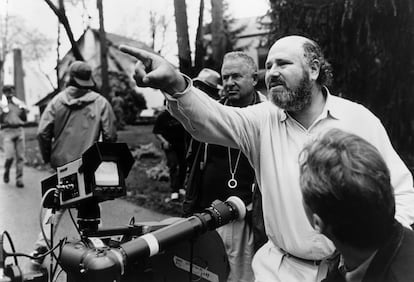

Between 1986 and 1992, Rob Reiner directed five movies that defined that era and had an impact on several generations: Stand by Me (1986), The Princess Bride (1987), When Harry Met Sally (1989), Misery (1990), and A Few Good Men (1992). These five films represent a Hollywood that seemed possible at the time, poised somewhere between the craftsmanship of the classics and the disillusionment of New Hollywood. Reiner was a pivotal figure in an industry that championed values now fading away, values that, in his case, were deeply rooted in his own family: the actor and director grew up in the shadow of his father, the renowned comedian Carl Reiner. This relationship subtly permeates Stand by Me and A Few Good Men, two films that connect with the profound influence exerted by his father.
If The Big Chill (1983)—Lawrence Kasdan’s gem about a group of college friends who reunite after one of them commits suicide—speaks to the lost values of the 1960s, Stand by Me (an adaptation of Stephen King’s novella The Body) managed to capture the loneliness of a new generation that felt out of place and sought its identity in the secret bonds of friendship. The adventure follows a group of boys from a small town in Oregon who decide to search for the body of a missing child, though its underlying theme is orphanhood. None of the four friends feel loved at home, and the search for the body allows them to confront the emptiness they find in their own parents.
Each of these boys—led by Gordie, the narrator and protagonist—represents a different kind of dysfunction. Faced with the emptiness of their family lives, they find solace in their friendship and their games. Stand by Me is a coming-of-age story aboard a train that Rob Reiner masterfully portrayed with humor and melancholy. The film also addresses child abuse, abandonment, and delinquency. Its director believed in cinema as a humanist and popular art form, capable of tackling such difficult subjects, or the endless twists and turns of the male ego (When Harry Met Sally, A Few Good Men), while entertaining the audience.
The journey toward maturity and a sense of self is also the invisible thread running through A Few Good Men, which, with a powerful screenplay by Aaron Sorkin, allowed Reiner to delve once again into the shadow of the father figure. In one of his finest roles, Tom Cruise played Daniel Kaffee, the young military lawyer unable to come to terms with the death of his father, a renowned attorney, and with the weight of his family name. Kaffee behaves like an indolent professional out of a mixture of fear and respect for his family legacy. The character has clear parallels with the protagonist of Joseph Conrad’s novel The Shadow Line. Both are young, inexperienced captains facing a rite of passage that will force them to grow up. Between Stand by Me and A Few Good Men, Rob Reiner also achieved his own creative maturity.
In recent times, the actor and director had become a thorn in the side of Donald Trump and the American far right. One of his last projects was a documentary, God & Country, about the disturbing rise of Christian fundamentalism in the United States. It’s still unclear exactly what happened last Sunday at his home in Brentwood, but Hollywood now adds to its record of tragic events the stabbing deaths of the director and his wife, the photographer Michele Singer Reiner. Following the arrest of their 32-year-old son Nick, who has severe addiction problems, everything points to parricide. In a recent interview, Reiner had expressed his concern about the burden of the family name on his children, but only named two of them, Jake and Romy. When speaking of his own father, the director often recalled how much they loved each other and yet how little they understood each other while he was growing up. The Princess Bride was Reiner’s tribute to his father, who adored the book on which the film is based and had given it to his son as a gift.
In 2015, the filmmaker directed Being Charlie, a semi-autobiographical film written by his son Nick, which directly addressed the latter’s struggles with addiction. The young protagonist goes in and out of rehab centers while his father (a politician aspiring to be governor) is unable to understand his son’s illness. Being Charlie has a strong element of family therapy. In the film, Charlie vents his mixture of guilt and resentment against his parents, whom he blames for his situation and for always keeping him at a distance.
Between 1986 and 1992, Rob Reiner dispelled all doubts about his talent with a creative surge that allowed him to become one of the great innovators of teen movies and romantic comedies. At the time of his death, the world remembers Mandy Patinkin’s famous line in The Princess Bride—“My name is Iñigo Montoya. You killed my father. Prepare to die.” It’s impossible not to see him drifting away into the horizon, just as Chris Chambers, River Phoenix’s character in Stand By Me, did more than 40 years ago.
That film began and ended with the tragic news of Phoenix’s stabbing death, another tragic symbol of that dying Hollywood. He was the hero of that story. “I wish the hell I was your dad,” Chambers told Gordie to encourage him to become a writer. “Kids lose everything unless there’s someone there to look out for them. And if your parents are too fucked up to do it, then maybe I should.” Like his characters, Rob Reiner taught us to cross the shadowy line that separates childhood from adulthood. He did it. Last Sunday, he died in a terrible and senseless way.
Sign up for our weekly newsletter to get more English-language news coverage from EL PAÍS USA Edition









































