
Pablo Milanés, considered one of Cuba’s greatest musicians, dies at 79
The singer-songwriter, creator of songs like ‘Yolanda,’ died in Spain where he had lived for years to receive medical treatment for cancer

Pablo Milanés, considered one of the greatest Cuban musicians of all time, passed away in Madrid, Spain at the age of 79. He had been undergoing cancer treatment for several years.
An award-winning singer, songwriter and guitarist whose career spanned more than five decades, he was the creator of acclaimed love songs such as Yolanda and Ámame como soy (Love me the way I am), which have been covered by many other artists throughout the years.
Pablito, as he was affectionately called, set the poetry of Cuban national hero José Martí to music, and helped found the Nueva Trova movement, which introduced political and social content into popular songs and brought Cuban music into world prominence in the 1970s. He cultivated boleros and other forms of traditional music, and he was the first to rescue old troubadours from oblivion, such as Compay Segundo of Buena Vista Social Club fame.
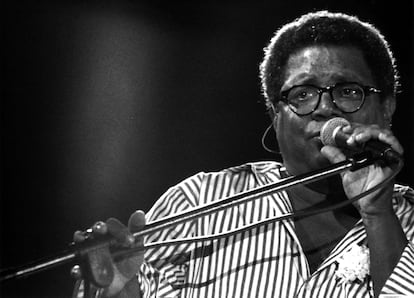
He served as a bridge between generations and styles, and leaves behind close to 60 albums that place him among the most universal names in Spanish-language music. He won two Latin Grammys in 2006, one for best singer-songwriter album for Como un Campo de Maíz (Like a Cornfield) and another for best traditional tropical album for AM/PM, Líneas Paralelas (AM/PM, Parallel Lines).
During the times of the military dictatorships in Chile and Argentina, Nueva Trova became the musical soul of the Latin American left and its revolutionary movement. He supported the Cuban Revolution but was nevertheless sent to the forced labor camps of the Military Production Aid Unit (UMAP), where priests, homosexuals and other “antisocial elements” were interned under the pretext of compulsory military service. Milanés lamented that no one in Cuba had ever apologized to them for that terrible episode that, he said, “was not an isolated event,” but part of a “Stalinist process that harmed intellectuals, artists and musicians.”
Milanés moved to Spain several years ago to receive medical treatment, although he returned to Cuba whenever he could to sing and see his friends. Last summer, when he was already very ill, he traveled back home one last time with his family to offer a memorable concert that was a declaration of love and a farewell.









































