
‘El Niño’ already at record levels and threatens to claim 450,000 lives due to extreme heat alone
A study warns of the phenomenon’s impacts around the world, while the epicenter — the tropical Pacific — continues to warm at a rapid pace

The El Niño phenomenon has not yet reached its peak intensity, which the World Meteorological Organization (WMO) expects to occur at the end of this year, and seawater temperatures in the tropical Pacific area considered the epicenter of the event are already at record levels. The anomaly in that zone exceeded three degrees Celsius in mid‑September and has risen to a level similar to the peak of the El Niño event 11 years ago, in November 2015.
This natural cyclical phenomenon is characterized by a rise in surface water temperatures in tropical latitudes of the eastern Pacific that then shakes many other parts of the planet — for example, by pushing temperatures higher, which are already runaway on Earth because of climate change. And heat kills. A study by Climate Impact Lab, a research center at the University of Chicago, warns that the current El Niño could cause 451,000 heat‑related deaths over the next six months.
Although El Niño began developing in June, researchers calculated heat‑related deaths for the period from September 2026 through February 2027. They acknowledge the final figure may be higher because the effects of this event are expected to last for additional months. In any case, the 451,000 deaths they estimate give a sense of the scale of the problem.
The authors warn that deaths will be concentrated “overwhelmingly” in the Global South. “Over just the next six months, the report projects 66,800 additional deaths across the Sahel in Africa, with nearly half of those lives being lost in Nigeria (31,400),” the study says. Other countries in that region include Sudan (17,500), Niger (10,000) and Chad (8,000). In Southeast Asia, the extra heat is projected to cause 19,400 additional deaths in the Philippines, Vietnam, Thailand, and Cambodia, and 19,300 in Indonesia. Other regions expected to be heavily affected over the next six months include India (15,800) and Brazil (13,300).
Emily Grover‑Kopec, one of the report’s authors, said by email that two factors explain why impacts will be worse in the Global South. First, “seasonality.” “The current six‑month forecast covers summer in the southern hemisphere, when temperatures reach their annual maximum in those regions. By contrast, it covers winter in the northern hemisphere, when temperatures are at their annual minimum in those regions,” the researcher said.
For example, in Spain the study projects only 477 heat‑related deaths linked to this event, of which 362 would occur in September. Madrid, with 130 deaths, would be the region with the most fatalities in Spain and the second‑most affected region in Europe, after Lombardy in Italy. But Grover‑Kopec warns that “the number of heat‑related deaths in the northern hemisphere is expected to grow as we move into spring and summer.”
A second important factor influencing the unequal distribution of deaths between the south and the north is resilience. Grover‑Kopec explains it this way: “Regions with similar climates often have quite different mortality outcomes because of their ability to adapt and avert heat‑related deaths, so poorer regions tend to experience greater amounts of heat mortality than their wealthier counterparts when they face similar temperatures.”
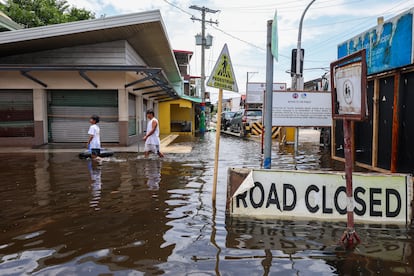
The authors themselves acknowledge that heat-related deaths are only part of the story. “That is in addition to expected impacts from droughts, wildfires, and floods driven by higher temperatures and changes in rainfall patterns” caused by this El Niño event, which “could become the strongest on record.”
Immediate measures
Faced with this prospect, Grover‑Kopec calls for “immediate measures” from governments, such as “early warning systems,” cooling centers for the public, actions to protect outdoor workers, and “expanded healthcare access for vulnerable populations.”
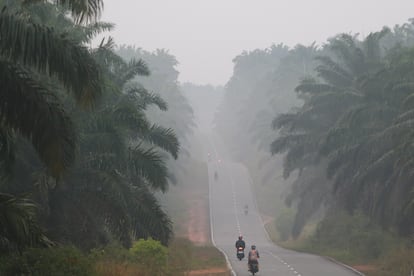
The impacts of this event are already being felt in many parts of the world, aggravating preexisting problems, such as fires in Indonesia caused by the palm oil industry, which uses flames to deforest and clear land for cultivation. The lack of rain linked to El Niño is worsening the uncontrolled fires that have been burning for weeks on the islands of Sumatra and Borneo.
Thousands of miles away, while extreme heat has settled across the Colombian Caribbean for days, California Governor Gavin Newsom on Monday declared a state of emergency in anticipation of El Niño’s impacts. The declaration allows authorities to “move faster to protect communities, stage critical resources, and strengthen readiness before severe weather intensifies,” according to a statement from the state government. It adds that “Governor Newsom is taking early action to prepare California for what is shaping up to be a historic El Niño season, which is forecast to be very strong, even the strongest on record.” “The Pacific is unusually warm, and that warmth can shift storm tracks and load the atmosphere with more energy over the months ahead,” the statement said.
To measure temperature anomalies linked to El Niño and the opposite cooling phenomenon, La Niña, scientists use a reference area of the central equatorial Pacific known as the Niño 3.4 region. According to data collected by the Climate Brink platform, led by climate experts Andrew Dessler and Zeke Hausfather, on Saturday, September 19 an anomaly of 3.07 degrees Celsius was reached in that zone — taking the reference period 2005–2025. That anomaly is similar to the one recorded in November 2015 during the record‑setting El Niño. These two scientists expect that in November of this year, at the event’s peak, it could reach 4 degrees Celsius.
Sign up for our weekly newsletter to get more English-language news coverage from EL PAÍS USA Edition









































