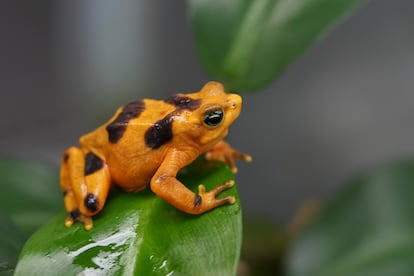
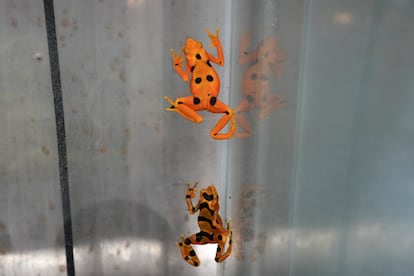
The Smithsonian Institution, through the Panama Amphibian Rescue and Conservation Project (PARC), has bred the species in captivity and has begun gradually reintroducing it into the wild
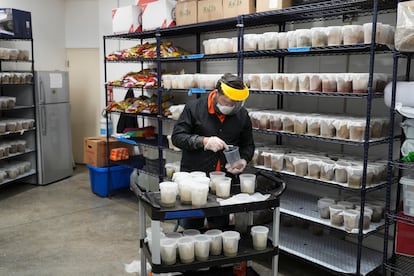
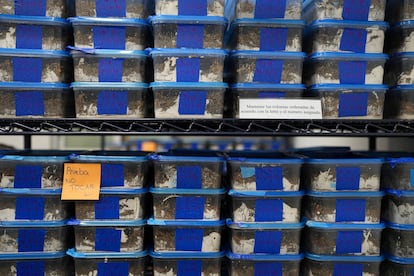
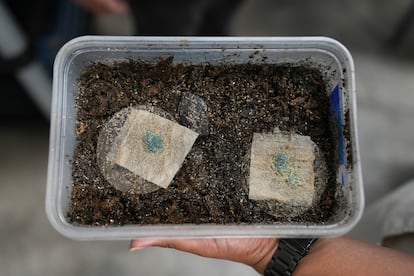
During release trials, individuals of 'Atelopus zeteki' were monitored for 12 weeks using skin tests: only 30% survived, and all tested positive for chitrid fungus (Bd) infection.Enea LebrunPreparing food for golden frogs at the Panama Amphibian Conservation Center (PARC) in Gamboa, Panama, on April 2.Enea LebrunThe PARC insect farm produces species that are part of the diet of the ‘Atelopus zeteki.’
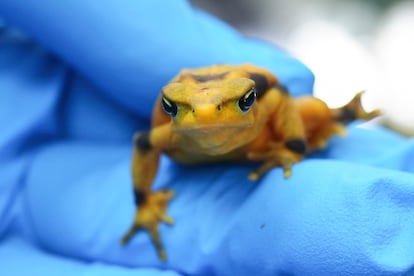
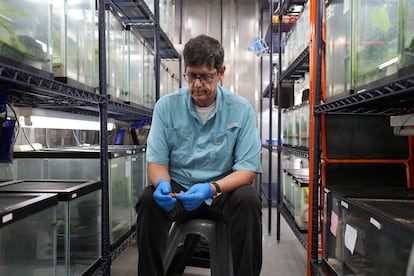
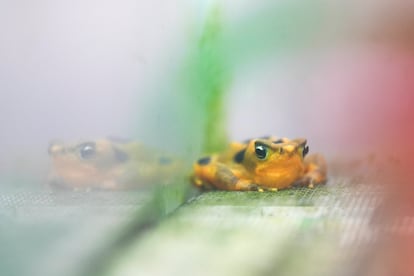
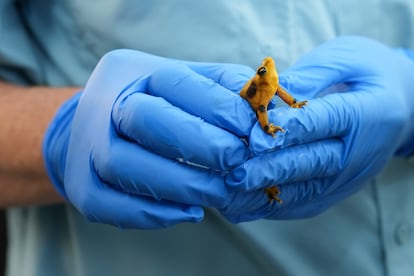
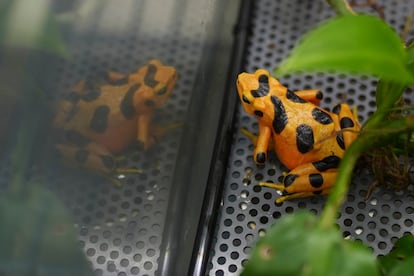
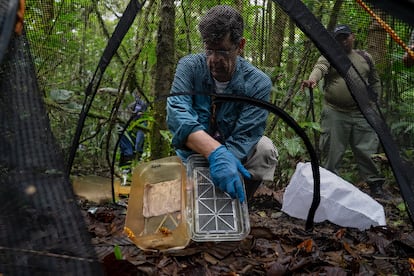
Enea LebrunThe conservation program aims to answer key questions: how to reintroduce the ‘Atelopus zeteki’, at what life stage to do so, and how to address the impact of the chytrid fungus on its survival.Enea LebrunRoberto Ibañez, director of the Panama Amphibian Rescue and Conservation Project (PARC), holds a female ‘Atelopus zeteki’ in its reproductive stage as part of efforts to ensure a successful reintroduction.Enea LebrunGolden frogs belong to the harlequin frog family (Atelopus), which is highly susceptible to chytrid fungus. According to research associate Gina Della Torre, about 41% of the world’s amphibians are at risk of extinction.Enea LebrunRearing fruit fly larvae, used as food for golden frog tadpoles, as part of the Gamboa conservation program in Panama on April 2.Enea LebrunThe species is endemic to Panama and was originally found in the mountainous regions of central Panama, such as the Antón Valley. The chitrid fungus has been the primary cause of the collapse of the 'Atelopus zeteki' population in the wild, affecting its skin and leading to death.Enea LebrunThese facilities are home to more than 2,000 amphibians representing 12 species, including 150 golden toads at various life stages. 'Atelopus zeteki' is a toxic species: its skin produces compounds that protect it from predators. Its color and markings vary from one individual to another, serving as a warning signal in the wild.Enea LebrunRoberto Ibañez releases a group of golden frogs into their natural habitat in August 2025.Ana Endara