Progressives should use COP30 to show democracies can deliver prosperity and save the planet
This year’s summit is being held in a country that has defied both authoritarianism and environmental collapse, a reminder that democracy triumphs where despotism destroys
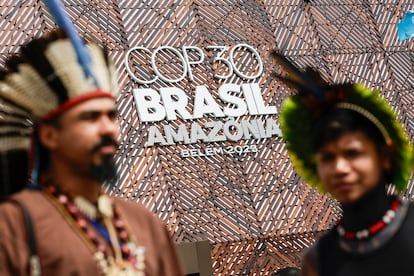
After three consecutive years of climate negotiations hosted by authoritarian regimes, the return of the COP summit to a democracy could not come at a more decisive moment. When world leaders gather in Belém for COP30 this week, they will enter a country that has defied both authoritarianism and environmental collapse, a reminder that democracy delivers where despotism destroys.
Just a few years ago, Brazil was at the brink. Under far-right populist Jair Bolsonaro, the Amazon burned at record pace while democratic institutions buckled under relentless attacks. Bolsonaro gutted environmental agencies, defunded enforcement programs and mocked climate science. By 2021, deforestation in the Amazon had surged to the highest annual level in a decade, and the world feared the rainforest might cross an irreversible tipping point.
Then, Brazilians voted for a different future. President Lula da Silva returned to office, on a promise to restore both the environment and democracy. Within a year, deforestation in the Amazon dropped sharply as environmental programs and control regulations were restored. Brazil’s Supreme Federal Court later convicted Bolsonaro for plotting to cling to power after losing the 2022 election, a rare and powerful reminder that climate integrity and democratic integrity indeed rise and fall together.
Now, as Brazil hosts COP30, it is leading by example. Lula’s government is centering three priorities that embody progressive values: strengthening multilateral cooperation; linking climate goals to social and economic transitions; and accelerating implementation of the Paris Agreement. These are not just diplomatic talking points, but a reminder that democracies can still deliver and lead the green transition.
Progressive leaders arriving in Belém will do so under the shadow of a dangerous global backdrop. Around the world, autocrats and far-right populists are waging a coordinated attack on both climate ambition and democratic norms by exploiting legitimate economic anxieties and turning them against climate action. They cast climate policy as an elite project that kills jobs, raises prices, and weakens national sovereignty, while defending the fossil fuel status quo that profits the few and punishes the many. The goal isn’t just to block climate policy — it’s to corrode faith in democracy itself.
From Washington, D.C. to Buenos Aires to Budapest, this narrative has taken hold. In the United States, Trump has undone key climate initiatives while promising to “drill, baby, drill.” In Europe, far-right parties are rising on pledges to roll back green standards, claiming they protect ordinary people from climate regulations. Even leaders who know better are softening their climate agendas, afraid of losing working-class voters to populist backlash.
The result is a race to the bottom — one that risks undoing the fragile progress made since the Paris Agreement. The far right’s message is deceptively simple: climate policy costs too much.
But it’s false. Clean energy is now the cheapest energy in history. Renewables are insulating households from fossil fuel price shocks. Diversifying energy resources can improve grid reliability and help consumers save money during extreme periods of heat and cold. And every delay in the transition makes inflation and instability worse, not better.
The good news is that people still believe in progress. Polling from Global Progress Action and Datapraxis shows strong demand for bold, risk-taking leadership that can deliver real change in their daily lives. In addition, people continue to believe in democracy and are pushing back on strong-man politics without accountability. People want policies that lower their bills, secure their jobs, and strengthen their communities — and climate action can do those things plus guarantee a future for our children and their children. That’s a progressive mandate waiting to be seized.
COP30 offers progressive leaders a chance to prove that climate action is a driver of growth and prosperity in democratic societies, not a drag on them. The evidence is on their side. In Spain, electricity prices have dropped by 50% since 2018 thanks to solar and wind growth.
Globally, jobs in clean energy grew by 3.8% in 2023, far outpacing the rest of the economy. Renewable energy systems make communities more resilient in the face of extreme heat, storms, and geopolitical shocks.
Like Spanish Prime Minister Pedro Sánchez said at the 2025 Global Progress Action Summit, progressives need to fight far-right narratives with facts, but also with the vision to show that the path to lower costs and greater security is through climate action, not away from it. At Belem, progressives must show that climate leadership is national strength — that it delivers cheaper energy, more jobs, and safer communities, while upholding the values autocrats fear most: transparency, accountability, and solidarity.
Sign up for our weekly newsletter to get more English-language news coverage from EL PAÍS USA Edition