
Torrential rains and a county without an adequate warning system: The lethal combination that devastated central Texas
Cross-accusations between local authorities and weather services muddy the answers to why the event was so catastrophic, while Trump avoids getting involved
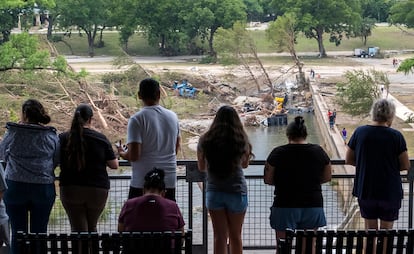

The weather forecast quickly worsened on Thursday afternoon. Shortly after 1 p.m., the National Weather Service (NWS) issued an initial flood warning, predicting up to seven inches of rain Friday morning in south-central Texas, including Kerr County. Less than 24 hours later, nearly double the predicted rainfall had fallen, and the Guadalupe River, which runs along the local foothills, had swelled nearly 30 feet during the early morning hours and burst its banks within hours. It swept away several towns, as well as a number of summer camps and RV parks packed for the Fourth of July weekend, before many could heed the emergency evacuation alerts that must have reached their cell phones while they were presumably asleep. A few days later, there are more than 100 fatalities and dozens still missing.
Since then, cross-accusations between local authorities and meteorological services have muddied the answers as to why a disaster of this magnitude could have occurred, especially in an area where flooding is common. On the one hand, officials from the hardest-hit county and the state of Texas point to forecasts that failed to accurately reflect the intensity of the rains. On the other hand, meteorologists insist that they provided the most detailed and far-reaching forecasts possible, while emphasizing the speed with which the situation became complicated. They also suggest that the response and evacuation protocol fell short of what was needed.
President Donald Trump, meanwhile, has avoided assigning blame, in stark contrast to his attitude when natural disasters have occurred in Democratic territories or under the Joe Biden administration. All he said is that what happened was “a once-in-a-hundred-years” disaster. The president also deflected immediate criticism of the cuts to meteorological services that his administration has implemented, although it is not yet clear whether, in this case, they influenced the poor response.
According to the NWS, it began to rain around midnight, and the first flash flood watch was issued at 1:14 a.m. That warning should have reached local emergency services and media outlets, such as radio and television stations, as well as all cell phones in the vicinity. The alert was updated nine times in the early hours of Friday, with the most urgent one being sent at 4:03 a.m., when the NWS warned of a flash flood emergency. The message urged immediate evacuation to higher ground, away from the banks of the Guadalupe River, due to an “extremely dangerous and life-threatening” situation.
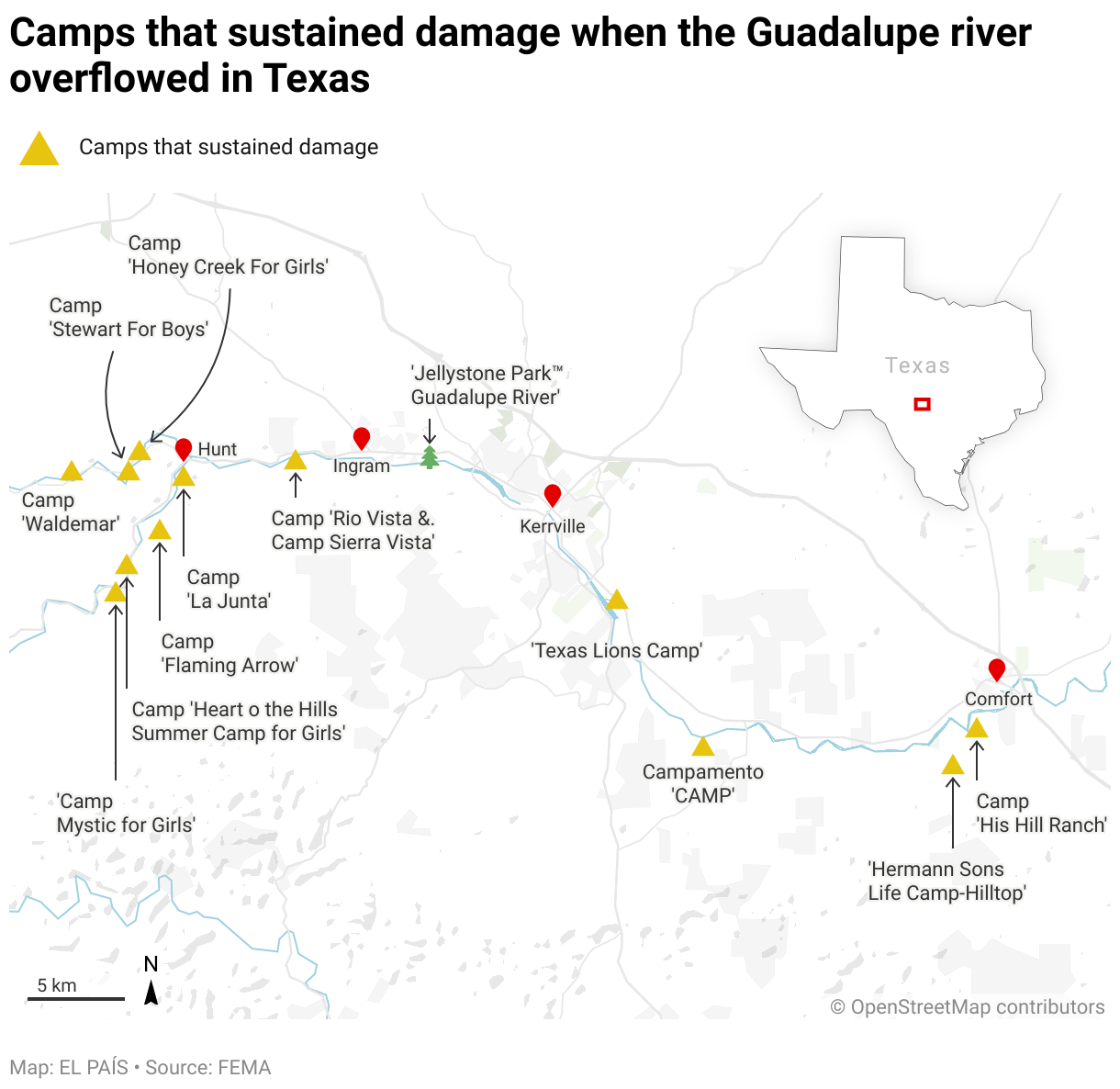
The horrific death toll, which has grown daily, demonstrates that people either didn’t receive the warning or didn’t consider it serious enough. Some experts have speculated that the hilly, wooded terrain obstructed cell phone service. Questions have also been raised about emergency protocols in the hardest-hit camps, and especially why Kerr County didn’t have its own warning system based on upstream water levels, instead of relying on the NWS, which lacks the technological capacity to predict such sudden rainfall events.
County Judge Rob Kelly, the county’s highest-ranking elected official, admitted that installing a system with water-level indicators and sirens, similar to tornado warning equipment, had been considered a few years ago, but was dismissed by residents due to the high cost. In the days since the disaster, some local residents have begun a campaign to finally install it.
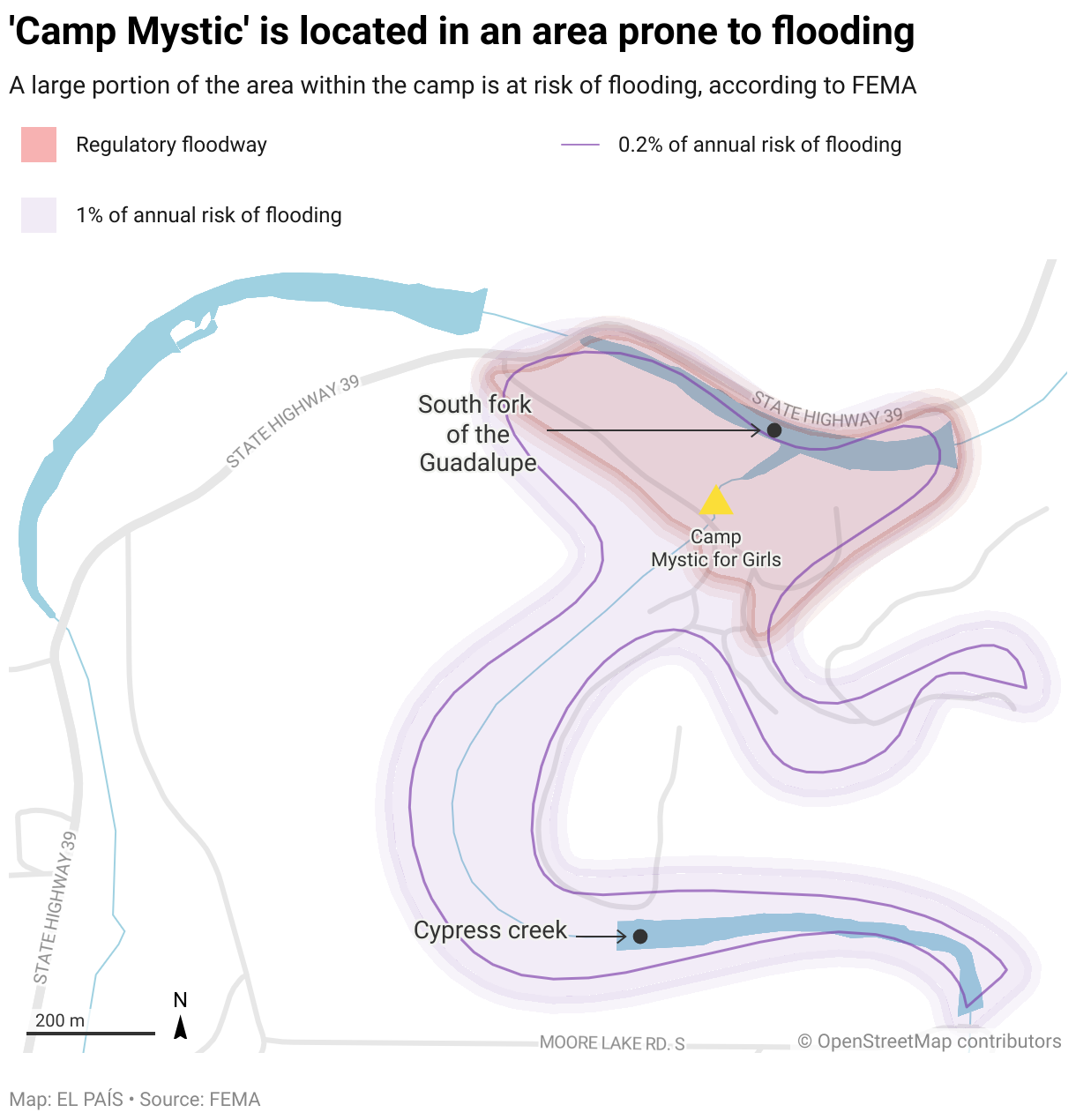
In the area’s main town, Kerrville, City Manager Dalton Rice assured that protocols were being followed, although he has promised a review of what happened. He also offered a simpler explanation: “Unfortunately the rain hit at an inopportune time and right at the most importune areas, where the north and south forks of the river converge.” This is precisely the case at Camp Mystic, where 750 girls were housed. The camp is located in a low-lying area at risk of flooding, next to the South Fork of the Guadalupe River and a creek that feeds it. So far, 27 deaths have been confirmed at the summer camp, including both campers and staff.
The mystery of staff numbers in regional meteorological offices
The flooding occurred amid national concerns about staffing levels at regional weather offices, as hurricane season gains momentum and after the Trump administration laid off hundreds of NWS workers. At the two offices closest to the floods, San Angelo and San Antonio, about a fifth of the positions were vacant, fueling the argument that this affected forecasting capabilities.
But the offices themselves have denied this. Speaking to the AP, one of the workers claimed that they did in fact have extra meteorologists at the time. While the office would normally have two people on duty, that night they had five. “It’s typical of any meteorological office: you staff an event, bring in people, and keep the people you have,” he said, implicitly defending his office’s actions. Furthermore, experts have pointed out that these events are becoming more intense and difficult to predict days in advance due to global warming, as existing models are not designed for these new and changing conditions.
Regardless, the personnel issues go beyond the events of that night. In that same office in San Antonio, one of the vacancies was for alert coordinator: the person who had held that job had been retired early due to Trump’s cuts to the NWS two months earlier, just one of 600 workers laid off or retired from a national workforce of around 4,000. The job entailed working with local officials to plan emergency and evacuation protocols.
Senator Chuck Schumer, a New York Democrat and Senate Minority Leader, wrote a letter to the Department of Commerce, which oversees the NWS, demanding “to open an investigation into the scope, breadth, and ramifications of whether staffing shortages at key local National Weather Service (NWS) stations contributed to the catastrophic loss of life and property during the deadly flooding.” Republicans, for their part, have closed ranks and condemned anyone who questions the events leading up to the disaster, describing it as the “politicization” of a tragedy.
Sign up for our weekly newsletter to get more English-language news coverage from EL PAÍS USA Edition









































