
El Paso airport closed for nine hours after US detects Mexican cartel drones
The transportation secretary said the devices crossed in from Mexico and were neutralized. Aviation authorities initially announced that the measure would last 10 days
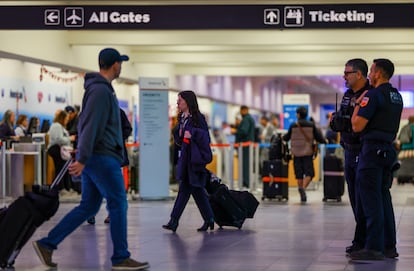

The U.S. Federal Aviation Administration (FAA) abruptly suspended for nine hours on Wednesday all flights departing from or arriving at El Paso International Airport, which is located in Texas, on the border with Mexico. Although no details were initially provided, U.S. Transportation Secretary Sean Duffy explained — once air traffic had resumed — that the measure was a response to an incursion of drones belonging to a Mexican cartel into U.S. airspace, which were neutralized. The FAA’s initial notice, issued around midnight, merely cited “special security reasons” and warned that the airspace closure would last 10 days.
“The temporary closure of airspace over El Paso has been lifted. There is no threat to commercial aviation. All flights will resume as normal,” the FAA announced in a message on social media, again without offering further explanation for such an unusual shutdown. The decision to reopen the airspace was decided after the Pentagon neutralized the devices.
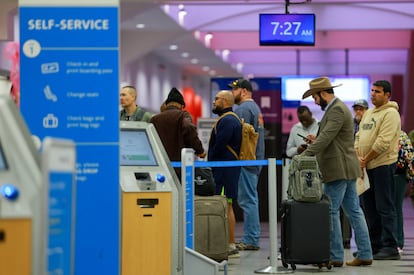
The shutdown threatened to create chaos in one of the largest cities in the United States — home to nearly 700,000 residents, it ranks 23rd by population — and across the country’s air network. The unusual measure had only been applied once before in El Paso, in the aftermath of the September 11, 2001 attacks, when federal authorities closed U.S. airspace after terrorists from the radical Islamist group Al Qaeda hijacked four planes. Three of them crashed into the Twin Towers in New York and the Pentagon on the outskirts of Washington. The fourth, believed to be headed for either the Capitol or the White House, went down in a sparsely populated area of Pennsylvania after passengers revolted against the hijackers.
According to the initial statement released by the FAA on Wednesday, the shutdown of the airport and a 16‑kilometer radius around it went into effect at 11:30 p.m. local time and would remain in place until 11:30 p.m. on February 20. The exclusion order covered all flights in the area below 5,500 meters. Aircraft flying above that altitude would not have been affected.
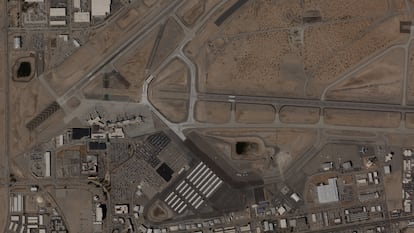
The restricted area around El Paso also included the community of Santa Teresa, in the southern part of neighboring New Mexico. It didnot, however, include Ciudad Juárez, which sits directly across the border from El Paso in Mexico. The Mexican government has not commented on the incident so far, beyond stating that “there is no information” about any incursion of cartel drones into the United States, as President Claudia Sheinbaum emphasized on Wednesday morning.
The initial order said that pilots who violated the ban may be “intercepted, detained and interviewed by law enforcement/security personnel.”
It also warned that the U.S. government “may use deadly force against the airborne aircraft if it is determined that the aircraft poses an imminent security threat.”
In a statement, the El Paso city government acknowledged the flight ban and says it is awaiting “additional guidance.” “In the meanwhile, commercial airlines operating out of El Paso are being informed of the restriction, which appears to be security related.”
“Travellers should contact their airlines to get most up-to-date flight status information,” the statement added.
A total of 3.49 million passengers used El Paso’s airport during the first eleven months of 2025, according to the local newspaper El Paso Times. Major U.S. airlines operate regular flights to and from the airport.
Sign up for our weekly newsletter to get more English-language news coverage from EL PAÍS USA Edition









































