
The latest scam on WhatsApp behind the legal dream: using immigration status as bait
Some criminals pose as consultants or specialists offering shortcuts to obtain residency, work permits, asylum, and even U.S. citizenship
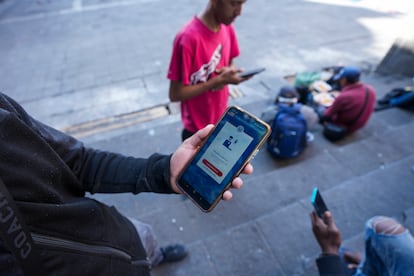

Digital scammers are taking advantage of both hope and fear. The dream of the Latino community in the United States to obtain legal immigration status is bait for criminals through the instant messaging app WhatsApp. The method is detailed in the second of three installments of the report WhatsApp as a weapon: how scammers target Latinos in the United States, by the Digital Democracy Institute of the Americas (DDIA).
“Many scammers are unfortunately tailoring their schemes to exploit Latinos working to acquire legal status, preying on often-complicated immigration processes and pathways for accessing traditional banking, stable housing, health insurance, Temporary Protected Status (TPS) deadlines and full-time employment.”
In this second installment, the DDIA examined more than 18,400 unique suspicious messages that were shared in 3,300 public Spanish-speaking groups on the instant messaging platform between January 1 and September 1, 2025. Hundreds of these messages appear with the caption “forwarded several times,” which is a sign of how fast and dangerous this content can be, the institute points out.
Gaining legal status
Some criminals pose as consultants or specialists offering shortcuts to obtain residency, work permits, asylum, and even U.S. citizenship. These services are mainly aimed at Venezuelan migrants. “I’m not a lawyer,” they say to feign transparency.
According to the DDIA, scammers first fuel fear and urgency by spreading alarmist information about unverified immigration raids or inventing requirements or deadlines that appear official; when anxiety reaches its peak, they move on to offering “hope” and “solutions.”
Job offers
The need for financial stability is the second category that scammers focus on to target Latinos in the United States. The study found at least 83 unique messages related to fake job offers that could have reached 22,000 users on WhatsApp.
Two schemes stand out in this area. The first is remote work opportunities and/or those requiring minimal experience (e.g., remote packager or product tester). The main attraction of these offers is above-average salaries.
The second type involves recruiter training programs: criminals pose as companies in the insurance or energy sectors, promising comprehensive training and flexible schedules, and constantly emphasizing that no experience is necessary—a message that raises suspicion.
Rentals and insurance
On the topic of housing, the institute found that groups on the instant messaging platform have names of specific locations in Florida, such as Davenport, Kissimmee, and Haines City. Scammers share information about cheap room rentals, but request an advance deposit on Zelle or Cash App so that the interested person can view the place.
“Need insurance... Are you worried about your family?” This is the hook that criminals use to offer life insurance or credit repair with plans that are “too good to be true.” The same thing happens with legal assistance in the event of accidents. The study also includes testimonials such as: “He’s trustworthy, speaks your language, and is there to help you,” “Reliable, committed, and always willing to support you,” to build trust in an “agent.”
The study
In the first nine months of 2025, the investigation uncovered at least 4,400 unique messages that appear to promote fraudulent immigration services to the Latino community. According to data obtained through Palver, a technology company specializing in social trend analysis, this content reached more than 31,000 users in 101 groups, making this type of scam one of the most prominent and widely circulated in the Latino community.
The first part of the study was published in November this year and focused on unrealistic discounts, giveaways, and fake stores. Scammers pose as brands such as Shein, Temu, Apple, or Walmart, to name a few, and ask users to fill out forms or play games on an app with the promise of winning a “mystery box” or gift cards. Other topics covered included the sale of smartphones and extremely cheap internet plans, as well as large last-minute discounts.
Sign up for our weekly newsletter to get more English-language news coverage from EL PAÍS USA Edition









































