
Texas debates between prohibition and regulation of THC
The state Senate will vote on new cannabis legislation, following the recent steps taken by several other Republican territories
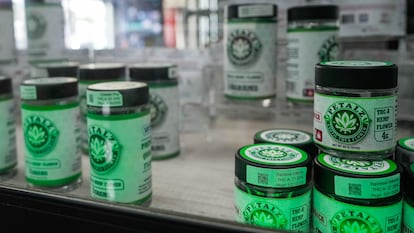
Just weeks after Texas Governor Greg Abbott vetoed a bill banning THC products, state senators have brought the issue back to the table. Lawmakers introduced legislation nearly identical to the one vetoed by Abbott in June, which seeks to ban the sale of hemp-derived products containing “any detectable amount” of THC, the primary psychoactive compound in cannabis. This, in a nutshell, means the state would restrict access to all variants of this chemical, which is responsible for the so-called “high” marijuana produces, joining a growing list of conservative states that have passed similar laws in recent months.
All of this is part of a shift in U.S. policy on this issue. After promoting cannabis decriminalization and legalization for years, there are now attempts to restrict the path, primarily by conservative sectors. However, as the Texas bill highlights, there are divisions within the Republican Party itself on how to address this specific issue.
The measure is headed to a vote in the Texas Senate next, after passing unanimously in a Senate committee. Although the state House is also controlled by Republicans, the bill’s success is less certain there, as representatives are more interested in regulating the substance than eliminating its recreational use. Governor Abbott also prefers regulation, which is why he vetoed the previous bill advancing the ban.
Instead, Abbott has proposed a regulatory model that includes labeling requirements, laboratory testing, age limits for sales, and restrictions on the allowable levels of THC per dose. According to the governor, this alternative would protect consumers without harming the already legally established industry.
The ban contemplated in the new bill includes compounds such as Delta-8 and THCA, which until now have been legally marketed as a result of a legal loophole that has existed since 2018. The loophole in question was created by the federal Farm Bill, which allowed the production of industrial hemp, as long as these products did not exceed 0.3% Delta-9 THC. However, the law did not restrict other cannabinoids like those mentioned above, which can be synthesized from hemp and cause very similar effects in the body. In Texas, these products can be purchased at smoke shops and even gas stations without too many obstacles.
The legislation, identified as Senate Bill 5, proposes to prohibit the production, distribution, sale, and possession of products containing any intoxicating cannabinoid derived from hemp. The measure also includes the possibility of criminal charges for the manufacture or sale of these products, except for those made from non-psychoactive compounds like CBD.
The measure has sparked a debate between those who oppose and those who support the legal use of marijuana. The majority of voters in the state — 53% — oppose a blanket ban on hemp-derived THC products, according to a Texas Politics Project survey released last month. Only 31% of all respondents expressed support for the measure. However, support is higher among Republican voters: 46% back the ban.
Dr. Kevin A. Sabet, president of Smart Approaches to Marijuana, an organization that opposes cannabis sales, believes this new legislation is a logical response to the legal loophole created in 2018. “This is not a Republican or Democratic issue. These bans are a necessary and responsible correction,” Sabet told EL PAÍS.
According to him, what’s sold legally today is just as potent as traditional marijuana and is completely unregulated. “There’s no quality control or accurate labeling, and they’re marketed without age restrictions. The result has been an increase in youth access, hospitalizations, traffic accidents, and diagnoses of cannabis-induced psychosis,” he said.
Sabet claims that emergency room visits by children poisoned by THC have tripled in recent years. He also complains that producers “sell in candy-like packaging, with fruity flavors, clearly aimed at minors.” “Marijuana companies themselves have acknowledged that youth marketing works,” argued the former White House advisor on these issues.
Meanwhile, Heather Fazio, director of the Texas Cannabis Policy Center, considers the new bill a dangerous step backward, as it “criminalizes the simple possession of products that are federally legal and widely available.” “Texans should not be arrested or prosecuted for possessing legal hemp products,” the representative of the organization, which promotes responsible cannabis policies and sensible reforms, told this newspaper.
Fazio emphasized the consequences of the law’s approval: possession of a product containing any amount of THC could be considered a Class C misdemeanor, with a permanent criminal record. Furthermore, if the product is unregistered, the person could face a Class B misdemeanor and up to six months in jail. “This is completely unreasonable. The criminal consequences limit access to education, employment, housing, and even child custody,” he asserted.
The specialist also explained that many small local businesses, such as manufacturers of THC-containing gummies or oils, have invested in a market that has operated legally for more than six years. “These businesses are at risk of being shut down. If we don’t have licensed and regulated businesses, consumers will turn to the illicit market, where there are no safety guarantees or age controls,” Fazio asserted.
A change of course
So far this year, several Republican states have introduced laws similar to the Texas bill. In Tennessee, new legislation bans products containing THC and synthetic cannabinoids, while also eliminating online sales of hemp. This law will go into effect next year. Meanwhile, Alabama passed restrictions on the permitted concentration of THC and the conditions for its sale. Ohio is also currently in the process of amending the law that allowed recreational marijuana use in that state in 2023.
“There are Republicans who truly believe in limited government and individual freedom, and others who only use that rhetoric on the campaign trail. Fortunately, many are beginning to support regulation instead of criminalization,” as Texas Governor Abbott has done, Fazio noted.
In this regard, Sabet emphasized that his organization has already successfully supported similar laws in other states, such as Arkansas. In April 2023, Governor Sarah Huckabee Sanders signed legislation banning intoxicating cannabinoids derived from hemp. According to him, the measure is consistent with the position of the U.S. Drug Enforcement Administration (DEA), which believes that many of these compounds “do not fit the original purpose of the Farm Bill.”
“The idea that these prohibitions undermine responsible use ignores the fundamental problem: these products are unregulated. They are mislabeled, contaminated, and targeted at minors. Public health and child safety must take precedence over commercial interests,” Sabet said. “Children are at risk. Hospitalizations are increasing. Cannabis-induced psychosis is real,” he added.
Fazio, on the other hand, asserted that the ban will not protect young people. “There is no evidence to support the gateway theory. Correlation does not equal causation. Regulation, not prohibition, is the most effective approach to protecting minors and ensuring safety,” he said. “It is unreasonable to arrest someone for a legally purchased gummy bear. Disproportionate punishment protects no one.”
Sign up for our weekly newsletter to get more English-language news coverage from EL PAÍS USA Edition









































