
From hooligans to exemplary fans: The English return to Mexico after 40 years
In the 1986 World Cup, England supporters became violent, reinforcing security measures in Mexico. Today the face of one of the most feared fan cohorts has changed
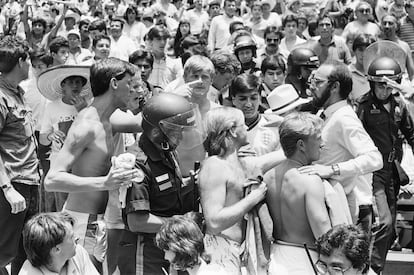

They arrived with shaved heads, polo shirts and tattoos to drink and fight in the streets. It was 1986 and hordes of English hooligans landed in Mexico for the World Cup. They passed through the city of Monterrey flexing their muscles until they reached Mexico City, where they engaged in a number of brawls with the Argentinian fans. On July 5, the England team returns to the Azteca Stadium to play Mexico, but they will be supported by an altogether different type of fan. The hooligans who terrorized Mexico in 1986 now appear to be extinct.
In the 1986 World Cup, England played their group stage matches against Poland, Portugal and Morocco at the two stadiums in Monterrey. In the round of 16, they thrashed Paraguay at the Azteca Stadium in Mexico City. Ahead of playing Argentina in the quarterfinals at the Azteca, the British Foreign Office held talks with the Mexican authorities. The Falklands War had been fought four years before. Adding to the tension were the alleged illegal payments to the Argentinian ultra fans known as the Barras Bravas, as well as the 1985 debacle at the Liverpool-Juventus match in Belgium in which 39 fans died. The English and the Argentinian fans set upon each other as if they were in the second round of the Falklands War, according to Infobae.
The inevitable fights started on June 22. There were clashes in the stands and brawls in the surrounding streets, which the Mexican police contained with the help of members of local gangs, according to one of the many legends surrounding this memorable match. Around 2,500 police were deployed, 25% more than usual, with some dressed as civilians to infiltrate as documented in the book El Partido – The Game – by Andrés Burgo. Soon the British government cracked down on hooligans with measures such as placing seats in the stands to prevent crushes. Then there were life bans from stadiums for violent fans, jail sentences, cameras and increasingly expensive tickets.
On July 5, Mexico and England will play for a place in the quarterfinals in what will be Mexico’s most important game so far. The British Foreign Office has issued warnings to English fans travelling to Mexico City for the round of 16 match. The travel alert warns of an increase in the theft of mobile phones and cases of adulteration of beverages while flagging up the four deaths that occurred during the celebrations in the early hours of July 1, after the Mexican National Team eliminated Ecuador in the round of 32 (2-0). The English team will also keep the location of its hotel a secret to avoid a noisy visit like the one Mexican fans paid to the Ecuador team to keep them up all night before they played.
The extent of the rivalry between the two sides in 2026 is reflected in an exchange on social networks between Oasis frontman Liam Gallagher and Fernando Fher Olvera, frontman of the band Maná. Gallagher predicted a 5-0 win for England on his X account and Fher shot back with, “The singer of Oasis said that Mexico is going to lose to England 5-0. Well, don’t speak too soon, get real, dude! 5 to 0? Relax.”
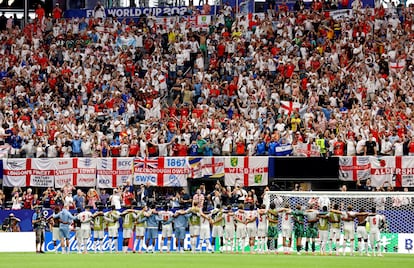
English fans are still passionate, but in different ways. They sing songs such as Wonderwall by Oasis, Sweet Caroline by Neil Diamond and Three Lions by David Baddiel and Frank Skinner and Lightning Seeds. British police have praised England fans who have traveled to the U.S. for their “excellent” behavior during the World Cup group stage. The U.K. Football Police Unit has confirmed that there have been no reports of violence or altercations involving English fans in the U.S., and that only two of the five arrests occurred during a World Cup match.
This is partly due to preventive measures. The U.K. government banned more than 2,000 fans identified as problematic from attending the 2026 World Cup. Authorities applied restrictions to fans considered a risk, stopping them from traveling to the United States, Canada and Mexico, Sky News reported. The measures applied to 1,984 individuals who have a stadium ban order (FBO) in England and Wales and hold British passports which they had to hand over to the police before June 2. Police will hold the passports until the final on July 19. These court-imposed prohibition orders with a duration of up to 10 years can be issued for offenses such as violent acts and disorderly conduct, drug possession and illegal ticket resale.
Forty years on, England returns to the scene of one of its most shameful chapters, but the hooliganism of 1986 is nowhere to be seen. The gangs that turned football into a battlefield have been dismantled. Although rivalry remains, the threat of violence has gone.
Sign up for our weekly newsletter to get more English-language news coverage from EL PAÍS USA Edition









































