
The disease behind most heart attacks starts building up in the arteries in early adulthood
A large Spain-led study to prevent atherosclerosis seeks to better diagnose cardiovascular risk, which affects one in 13 people aged 18 to 29 without symptoms
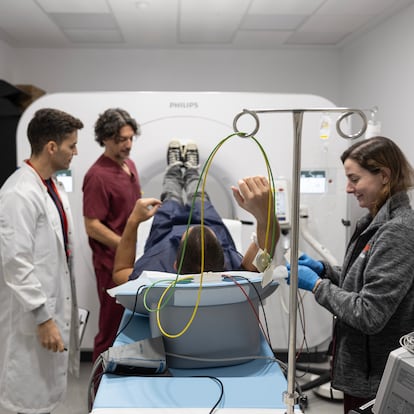

Cardiovascular disease does not appear suddenly. Heart attacks and strokes are the result of years of accumulated damage that causes neither pain nor obvious symptoms, which is why healthy eating, exercise, not smoking and controlling blood pressure are so important. Now, an analysis of more than 16,800 healthy adults in Spain and Denmark suggests that silent atherosclerosis, the buildup of fatty plaques in the arteries that restrict blood flow without causing symptoms, begins much earlier than previously thought and affects more people than expected.
The study, known as REACT, was funded by the Novo Nordisk Foundation and led by Madrid’s National Center for Cardiovascular Research (CNIC). Researchers used advanced 3D ultrasound and CT scans to examine three parts of the body: the carotid arteries in the neck, the femoral arteries in the groin and the coronary arteries of the heart. They found that 57.1% of adults aged 18 to 70, with no history of heart attack or stroke, already had atherosclerotic plaques.
The most striking finding is that the condition begins to appear in early adulthood, a stage of life not traditionally associated with this type of risk. One in 13 participants between the ages of 18 and 29 already showed signs of atherosclerosis in at least one artery. The proportion then rose steadily, reaching 90% among people over the age of 60.
The findings, presented August 29 at the European Society of Cardiology Congress in Munich and published simultaneously in The New England Journal of Medicine, also confirm that men and women experience cardiovascular disease differently. Prevalence was higher among men, at 63.4%, compared with 50.9% among women. In addition, plaques appeared between five and 10 years earlier in men, whereas rates among women rose sharply between the ages of 40 and 60, coinciding with menopause.
Atherosclerosis, the gradual buildup of fatty and cholesterol-rich plaques in the walls of the arteries, lies behind most heart attacks and strokes. Nearly one-third of all deaths worldwide are attributed to cardiovascular disease, a proportion that is even higher in regions such as Europe. The World Health Organization and the World Heart Federation estimate that up to 80% of premature heart attacks and strokes could be prevented by addressing risk factors early, and that is precisely what REACT aims to map with greater accuracy.
The study’s authors propose replacing current risk assessment systems, which rely on indirect indicators such as age, blood pressure and cholesterol levels, with the direct detection of arterial plaque. They argue that screening should begin at an earlier age and be tailored to a patient’s sex. One European risk calculator, SCORE2, failed to identify most of the individuals who already had atherosclerosis on imaging tests. A high-risk SCORE2 classification identified only 1.9% of those who already had silent disease, while even including people at moderate risk still left 66% undetected. Traditional risk models also tend to overlook younger adults who, as this study shows, are already beginning to develop plaques.
The lead author of the study, Borja Ibáñez, says the benefits of changing prevention strategy would be enormous: “We have done preliminary studies with very conservative estimates, and we estimate that we could prevent more than 50% of ischaemic events that occur today: heart attacks, strokes and sudden death, with savings of billions of euros per year in Europe.”
Ibáñez, who is the scientific director of the CNIC and a cardiologist at the Fundación Jiménez Díaz University Hospital, co-led the project with Henning Bundgaard, a professor of cardiology at Rigshospitalet in Copenhagen, Denmark.
To better assess the need for change, the researchers will carry out a second phase of the REACT study to answer a question not addressed in this first phase: does detecting atherosclerosis before symptoms appear, and intervening early, prevent more heart attacks and strokes than conventional cardiovascular prevention?
Ibáñez stresses that it would not be necessary to carry out the full battery of tests used in the trial, which require costly equipment, specially trained staff and, in the case of coronary CT scans, exposure to radiation. “It is not necessary to perform CT scans on everyone; simply a quick vascular ultrasound with low-cost equipment of the neck and leg arteries, the carotid and femoral arteries, can reliably identify the individuals in whom the process has already begun,” he explains. Eighty-two percent of participants with coronary plaque also had plaque in their carotid or femoral arteries.
Ibáñez is aware of the risk of suddenly telling millions of symptom-free young people that they have a disease, but he believes atherosclerosis needs to be viewed differently. “It is very important to make the population aware that this will not be a short-term problem, but a long-term one, and that something must be done,” he says.
Ibáñez draws an analogy with diabetes: “Fifty or 60 years ago, a person who seemed perfectly normal would go to the doctor, get a blood glucose test that read 180 and be prescribed insulin, and the diagnosis was often not accepted until that person was already feeling unwell. Now the diagnosis is received and accepted without it being a terrible drama, and we want to do the same with this disease,” he continues. If that shift occurs, he argues, it will become possible to “intervene, even modestly, at age 30, which will have far greater benefits than waiting until age 50 to begin treatment.”
Measuring cardiovascular risk through the approach tested in REACT would also flag individuals who appear healthy on paper. Some people exercise regularly, are not overweight and eat a healthy diet, yet are nonetheless accumulating plaque. “There are risk factors that are unrelated to lifestyle and are more biochemical, such as cholesterol or blood pressure. Much elevated cholesterol is due, for example, to hepatic production,” Ibáñez says.
Ignacio Fernández Lozano, president of the Spanish Society of Cardiology, says the study does not change clinical practice for now, but “is a cornerstone that will probably change everything over time.” That change will occur if the second phase of REACT confirms that information obtained with the new methods saves lives and prevents cardiovascular problems.
For Fernández Lozano, who was not involved in the research, one of the study’s most important findings is that today’s standard risk scales, such as SCORE2, “do not perform very well at detecting asymptomatic atherosclerosis.” He adds that the results also suggest that clinicians need to “begin to consider a patient with a diagnosed coronary disease as a person with systemic atherosclerosis, and not just focus on the heart.”
Sign up for our weekly newsletter to get more English-language news coverage from EL PAÍS USA Edition









































