
The latest generational war over how we wear clothes: ‘The millennial tuck is creepy’
The way we position our shirt or sweater reveals which generation we belong to, at least on TikTok
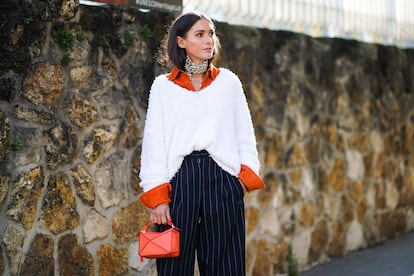

Tell me you’re a millennial without actually saying you’re a millennial. Simply tuck the front of your t-shirt or sweater into the front waistband of your pants, leaving the back loose, and I’ll know you were born between 1981 and 1996. This gesture has been dubbed by Generation Z — with all possible sarcasm — as the “millennial tuck.” Of course, it’s cringeworthy.
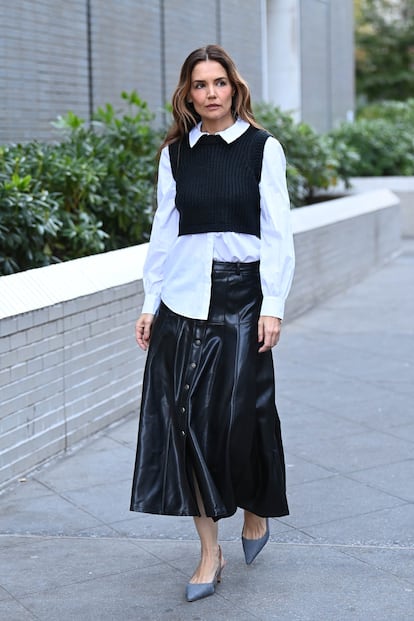
The effect became known during the 2010s as the “French tuck,” a term derived from the collective obsession with style of Parisian women. They began tucking their tops into their trousers in a deliberately nonchalant way, but only at the front. It was actually a styling trick, as it subtly defined the waist, visually lengthened the legs, and transformed any basic look into something purposeful. It was the “if you know, you know” of that era.
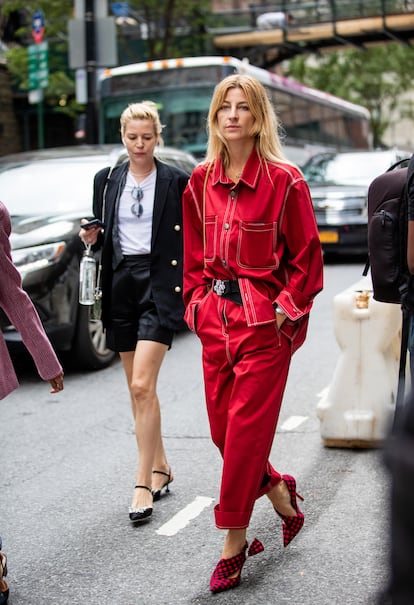
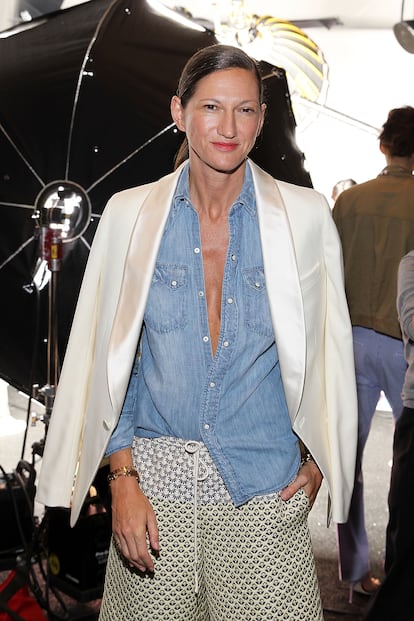
Little details are incredibly valuable social capital in any generation. Small gestures — the side part in the hair, the height of the socks, or raising your hands while dancing were the first to be burned in the fire of digital scrutiny — become generational markers, and the millennial tuck is one of those unmistakable signs of belonging. It was the ultimate trend: made desirable by Jenna Lyons at the helm of J.Crew, Parisian editors led by Emmanuelle Alt, the boom in street style photos, and “it girls” like Olivia Palermo and Alexa Chung, who turned that mix of calculated dishevelment and neatness into a global uniform.
Gen Z, however, finds it downright old-fashioned. They’re posting countless videos on TikTok and Instagram showing the differences between how almost-forty-somethings wear a sweater and how they wear it: untucked, covering their pants up to just above the hip, or rolled up higher than the waist. Loose, baggy, with no apparent purpose, nothing strategically tucked in at the front.
@bobrownn What are the differences between MILLENNIAL (1972-1995) vs. GEN-Z (1996-2012) outfit? 👀 Save this video for these 2 useful shirt hacks! #fashionhacks #shirthack #outfitinspo
♬ La La La - Sped Up Version - Naughty Boy & Sam Smith
But what has struck a chord with millennials isn’t so much the idea of curbing the urge to tuck their clothes into their waistbands — though that’s part of it — but the realization that time is passing and they’re losing (or have lost) their “cool” factor. They’re falling behind, and there’s no greater indicator of being out of touch than noticing it when people tell you on social media. Suddenly, aging isn’t just noticeable in the mirror, but also in the conversations of those who come after them. The biological clock is now public, visible, and hard to ignore. “I read somewhere that if you want to tuck your top into your pants, it basically means you’re old now,” Grace Mandeville commented, horrified, on her TikTok profile.
The detail of how to wear a sweater might seem minor, but it perfectly highlights the generational gap with Gen Z, who prefer loose-fitting clothes and would never tuck their garments into their waistbands that way. Now, that gesture, so ingrained in the way those approaching 40 dress, look, and present themselves, is as outdated as draping a sweater over your shoulders or wearing low-slung jeans was in 2010.
@runswithemily Millenial tuck till i die
♬ Shut Up And Let Me Go - The Ting Tings
Millennials are the first generation to grow old under the constant scrutiny of a hyperconnected world. Every gesture — how one dresses, how one moves, how one presents oneself — can be interpreted as a symptom of being out of touch, and the millennial tuck embodies that almost romantic resistance to disappearing from the center of the cultural narrative.
@ymijeans The battle of the tucks 👀 Which style do your rock the most? #thisorthat #millennial #genz #shirttuck
♬ gimme more - 2000’s sped up songs
Sign up for our weekly newsletter to get more English-language news coverage from EL PAÍS USA Edition









































