
From fishermen’s garb to status symbol: the evolution of the sweater
The arrival of winter has us considering this basic item in everyone’s closet, one that has evolved into both luxurious and accessible versions

Judging from what we saw during the recent holidays, the once-ubiquitous ugly Christmas sweater trend has subsided somewhat. The Bridget Jones cinematic saga played an important role in spreading the look worldwide, but it has proven to be, thankfully, short-lived. What was once sold as the umpteenth ironic interpretation of an everyday object may now be read as an example of the absurd lengths to which the uncritical embrace of market dynamics can extend. In contrast, the tracksuit, once the epitome of working-class chav aesthetic, has taken centerstage after the capture of Venezuelan leader Nicolás Maduro, though it is worth noting that his country’s politicians often sport athletic wear during their moments of triumph and in the midst of electoral campaigns (a style employed even by opposition leader María Corina Machado).
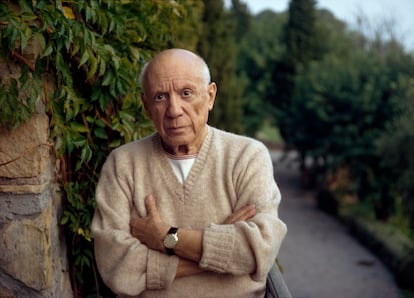
In recent times, the pendulum has swung back to the wool sweater, a practical garment weighted with history and cultural connotations that has never lost its well-established dignity. In a man’s closet, a good sweater — or better yet, several — is essential. And as in all aspects of life, when it comes to sweaters, quality, good design, and the combination of respect for and challenge to tradition are key.
In Europe, a sweater is often referred to as “jersey”, a word that nods to its knitted fabric as well as it being an item of clothing that typically features sleeves, made from wool or other materials. Jersey is also the name of one of the islands in the English Channel where such fabrics came from, used to make both undershirts and outer garments, and primarily to protect the region’s fishermen from the cold. As such, the sweater was originally a utilitarian garment associated with certain working classes.

Since the end of the 19th century, which brought with it more active lifestyles for the bourgeoisie, the sweater has been situated as men’s clothing par excellence for individuals from all walks of life. It was at this point when different varieties began to emerge: fine or thicker knits, with or without sleeves (hello, sweater vests), closed or open (à la the cardigan), with a round neck, V-neck, shirt collar, high neck, turn-down collar, and with different textures and patterns. Its versatility is notable, says Àlex González Molner, whose store Boo, located in Barcelona, offers an ample repertoire of men’s sweaters: “There are a thousand options that vary by the wool, the kind of knit, the shape and the finish,” he shares. “That’s why it’s important to have good sweaters as the base of one’s wardrobe. As quality pieces that are easy to mix and match, they never fail. A black round-neck sweater in Merino wool or cashmere, or a turtleneck, are essential. My advice is to have several in classic colors because they can get you out of any tight spot.” Goyo Otero, owner of men’s clothing store Sportivo, in Madrid, agrees: “We like sweaters so much because they offer comfort, personality, and style when it comes to dressing, and there’s no doubt as to how flattering they are.”
Julie Charvet Robinne, a French woman who lives in Madrid, started her sustainable knitwear brand L’Envers 10 years ago. It sells timeless garments that are knitted to-order in a family-run workshop in Béjar, Salamanca, a city with a long textile tradition. The brand produces pieces for both men and women, so she has an idea of how both groups choose and perceive their sweaters. “I think there are some differences,” she explains. “Women tend to choose knitwear from a more emotional perspective, seeking sensations of softness and comfort. It is something that keeps them warm, but also comforts them. And in men’s case, the relationship is often more functional: they really value durability, the quality of material, versatility, and that it’s an easy garment that works in different contexts. That being said, we see more and more men interested in the history of the garment, in how it is made and by whom. That is leading to more similar perspectives, so gender distinctions are becoming less rigid.”
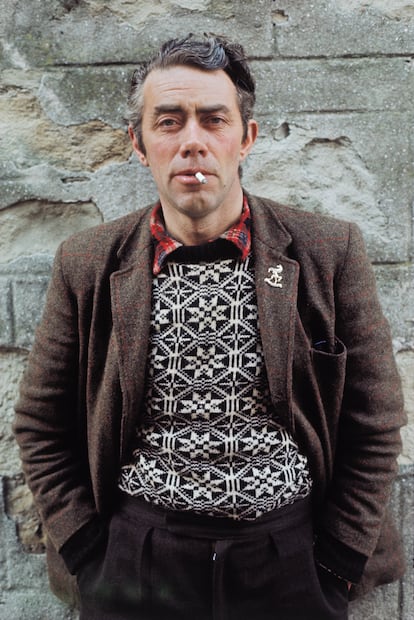
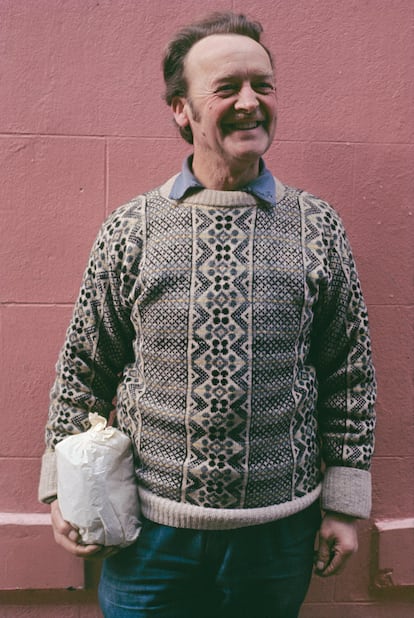
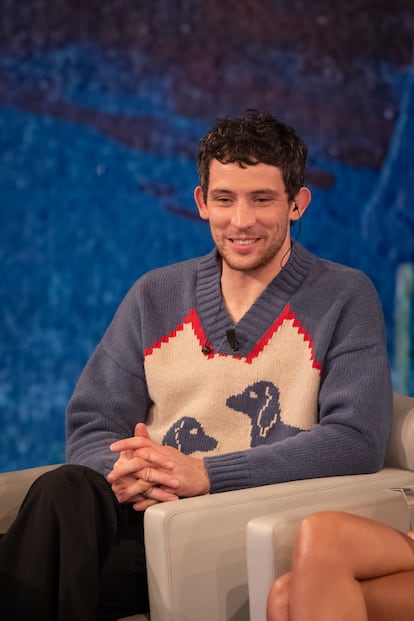
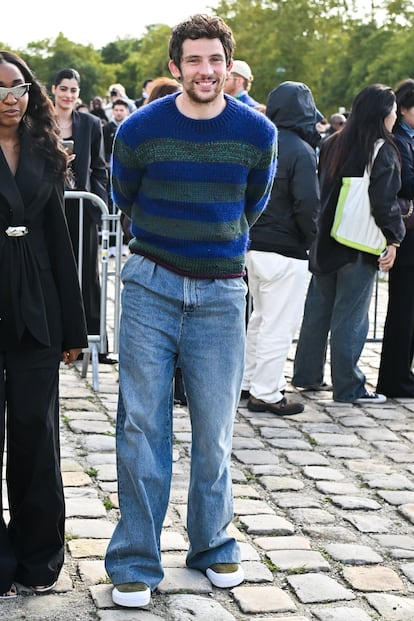
A couple years ago, actor Franz Rogowski’s wardrobe in the Ira Sachs film Passages included a few wool sweaters so original and attractive they nearly distracted from the plot. Contemporary international stars like Jacob Elordi, Paul Mescal and above all Josh O’Connor have also worn particularly attention-getting designs in terms of their cuts and color combinations. But in the street, the most commonly seen sweaters are also the most traditional, worn in basic colors, with smooth knits and occasionally, simple drawings. “I don’t think we are in a particularly daring era when it comes to men’s fashion,” says González Molner. “At best, I see some modern icons like Josh O’Conner taking a chance on intarsia sweaters [featuring a knitting technique that allows different blocks of color to be combined], which I find very entertaining because of their retro and carefree style, or the more classic English versions with dogs or ducks, which bring in humor and a lot of personality.”
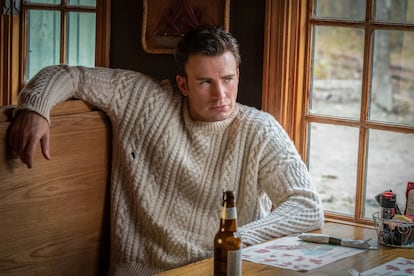
Recent seasons have seen the rise of cable-knit designs, sometimes worn over-sized in contrast to their association with “good boy” imagery. Another version that has come back into style is Aran sweaters, so-called for having originated in the archipelago by the same name on the western coast of Ireland, which can be recognized by their ecru color and combinations of interlacing patterns. Steve McQueen wore the style with particular panache in the 1960s, but its most recent revival comes courtesy of his fellow actor Chris Evans, who wore the look in the 2019 Knives Out film.
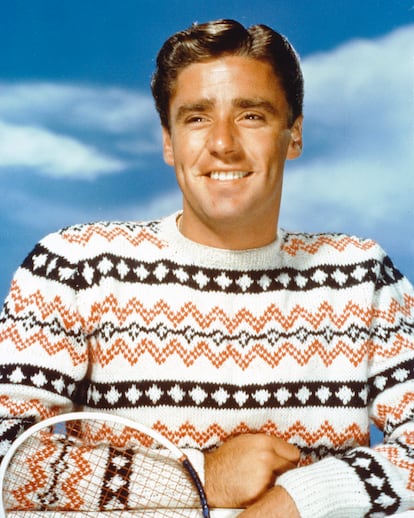
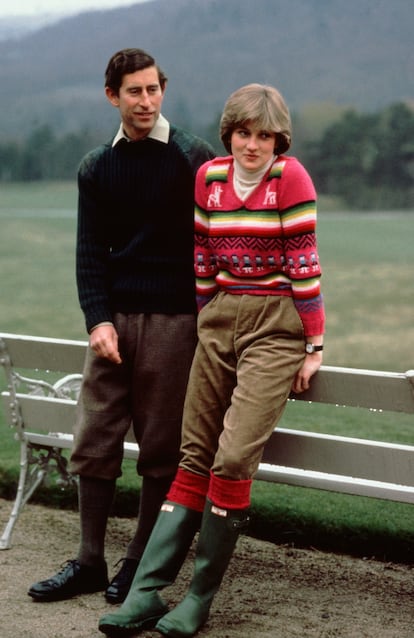
There’s been a similar renaissance of Shetland sweaters, which hail from an island in another archipelago, this one located in Scotland; Fair Isle. In this case, their distinctive element, in addition to the use of wool from local sheep, is a mix of colors and geometric shapes arranged horizontally. According to legend, the iconic British garment is actually of Spanish origin. Supposedly in the 16th century, a boat from the Spanish Armada ran aground on the island, and its crew taught the local population how to knit its patterns. (Although it’s an intriguing yarn, there is no historical evidence to back it up.) Fair Isle sweaters became popular in the 1920s, when the then-Prince of Wales — another enduring icon of men’s fashion who would later become King Edward VIII and later, the Duke of Windsor — was photographed wearing a winning ensemble of sweater, tie, checkered cap and a puppy in his arms.
Francisco Foraster offers a wide range of Shetland models in his men’s clothing store 305, located on Barquillo street in Madrid. “This kind of wool still carries the connotation of being natural, not very sophisticated, and some say it is itchy,” he says. “That’s not true — it’s wonderful.” Sweaters are often considered comfortable, down-to-earth, suggestive of a fondness for order and harmony. But in Foraster’s opinion, they may allow for the communication of other kinds of attitudes: “It can be a punk garment, as when Johnny Rotten of the Sex Pistols wore one, or grunge, like Kurt Cobain’s cardigan he wore for Nirvana’s Unplugged album. It can also represent restraint and elegance, like Dries Van Noten’s navy blue crew-neck sweater. Intellectuals have also used the sweater to identify themselves: the turtleneck is reminiscent of thinkers and writers. And you can always wear a V-neck without a T-shirt, like Chase Gioberti in Falcon Crest, to be a soap opera heartthrob.”
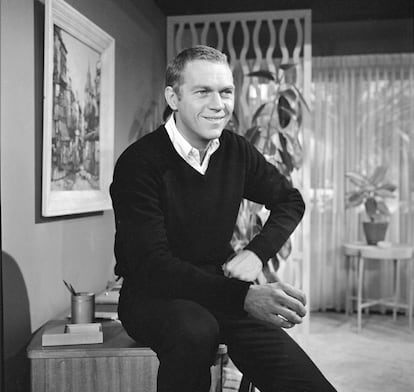
The sweater can also be utilized to communicate status, especially when one opts for knits like light Merino wool (from the sheep breeds that came from northern Africa, arriving in Spain in the Middle Ages, and which today can be found throughout Australia and New Zealand), alpaca, vicuña, mohair (wool from Angora goats, which are quite fluffy and shiny) and cashmere (a very soft wool from goats bred in China, Mongolia, Afghanistan and other Central Asian countries). The latter seems to have become a fetish item suggesting high-end luxury — though it should be noted that its percentage in the composition of a garment can vary, as can its quality. Foraster warns, “It is difficult to find good-quality cashmere, which is triple-layered, or made from three strands of thread braided together.”
For his part, Otero is proposing a return to the classics: “In my eyes this season, the winning sweater is the wool V-neck. There’s no doubt that different types of wool add something extra, and I’m a big fan of Shetland and Tasmanian merino.” Meanwhile, González Molner is placing his bet on “those special sweaters that, just by putting them on, make the look.” His suggestions are as follows: “A rustic Aran-style knit sweater in ecru with cable knitting, or the classic Breton sweater with sailor stripes — so French. They have that timeless, slightly French New Wave feel that always works. Although personally, I love cardigans. I think they’re very elegant and easy to wear. They work just as well with a button-up shirt as a simple T-shirt.”
Finally, Carvet Robinne promotes the responsible and sustainable adoption of trends, particularly when it comes to choosing a sweater. “It’s no longer just about choosing and wearing a garment made from quality materials, but also one with a clear origin and transparent production process,” she says. “It is less and less a question of status and more a decision of conviction, even of politics: a way of supporting a slower, more humane and more responsible fashion model.”
Sign up for our weekly newsletter to get more English-language news coverage from EL PAÍS USA Edition









































