
Early data on the devastating twin earthquakes in Venezuela
The death toll stands at 188, but USGS estimates suggest it is very likely to exceed 1,000 and could surpass 10,000
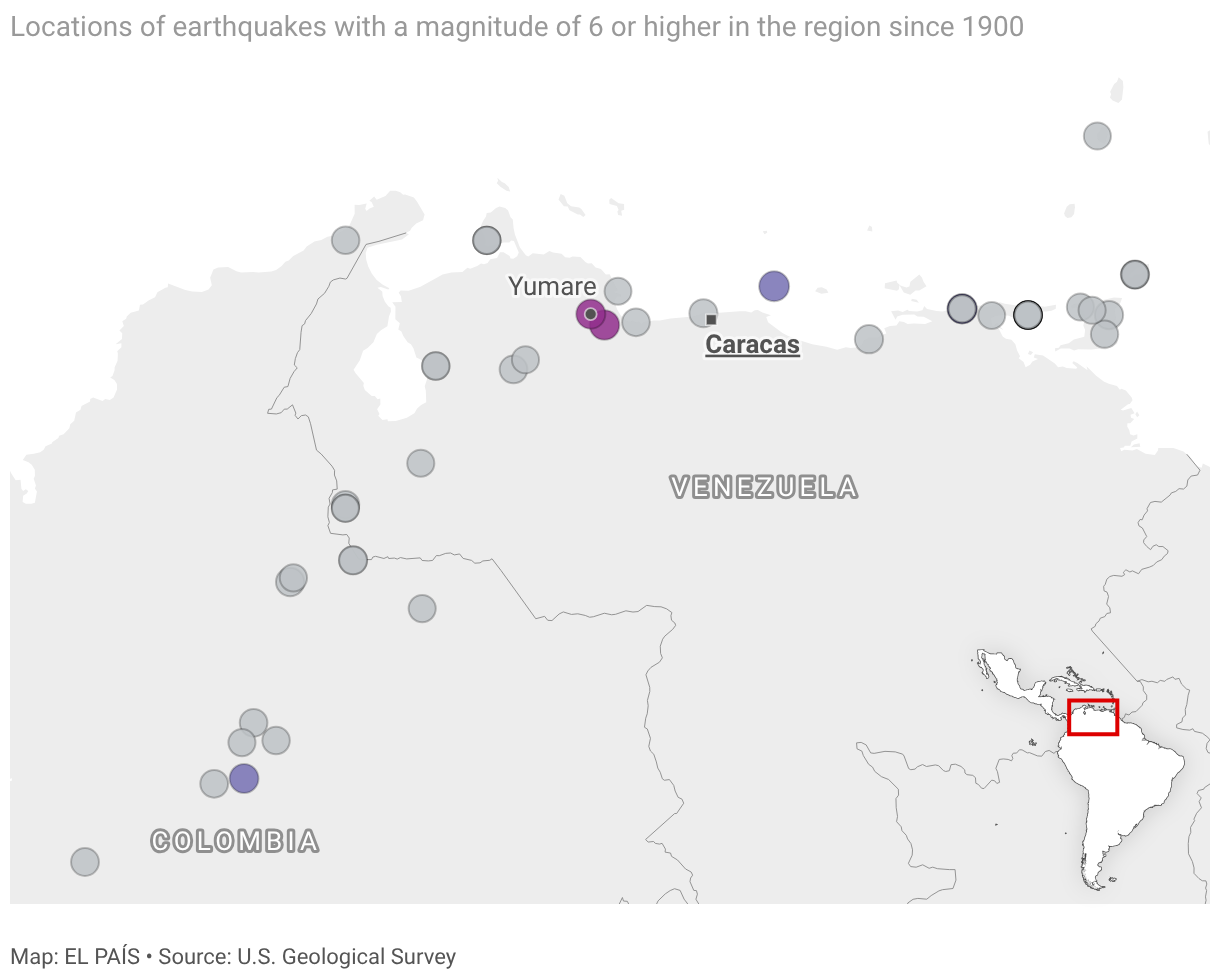
Two strong earthquakes, magnitudes 7.2 and 7.5, struck northern Venezuela at 6:05 p.m. local time. The first tremor’s epicenter was between the towns of Yumare and Montalbán.
But the more devastating quake came 39 seconds later, with an epicenter very close to the first and a magnitude 0.3 higher: 7.5 on the Richter scale. That difference may seem small, but it is not. Magnitude is a logarithmic scale. Measured by energy released, the second quake was almost three times more powerful than the first.
Death toll
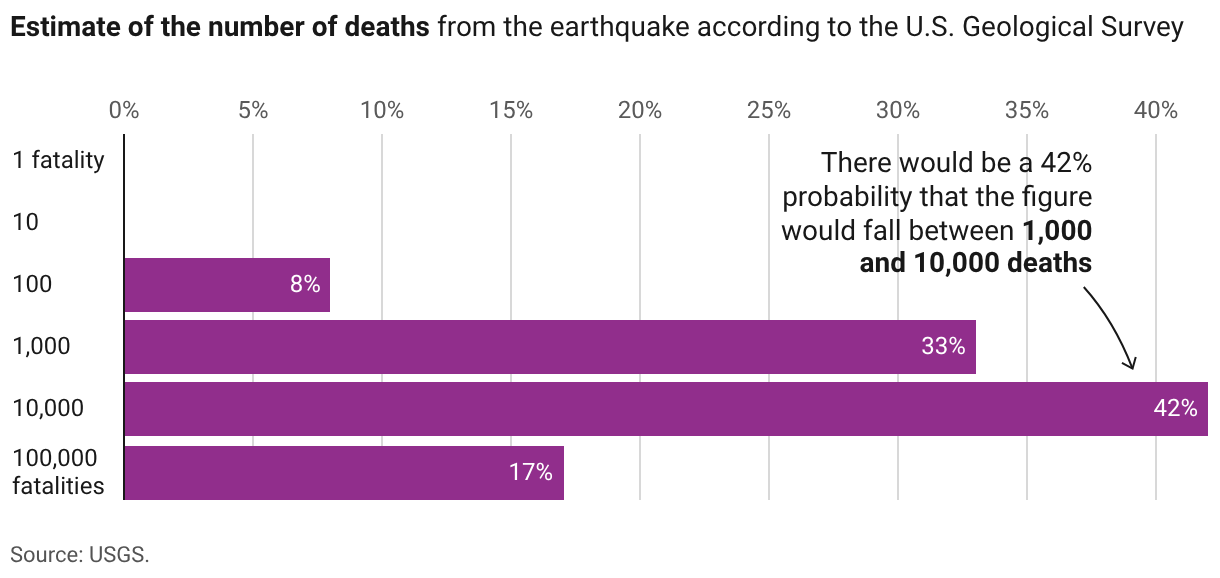
Venezuela’s acting president, Delcy Rodríguez, reported that the death toll from the earthquakes has risen to 188, according to Reuters. However, the final figure could be much higher. The United States Geological Survey (USGS) provides estimates that combine the intensity of the quake with population density in the affected areas. According to its calculations, it is highly likely that the death toll will exceed 1,000 (92% probability), likely that it will surpass 10,000 (59%), and figures above 100,000 cannot be ruled out.
The population in this region lives in structures that are highly vulnerable to seismic shaking, according to the U.S. Geological Survey. The most common types of construction are unreinforced brick masonry and adobe block buildings.
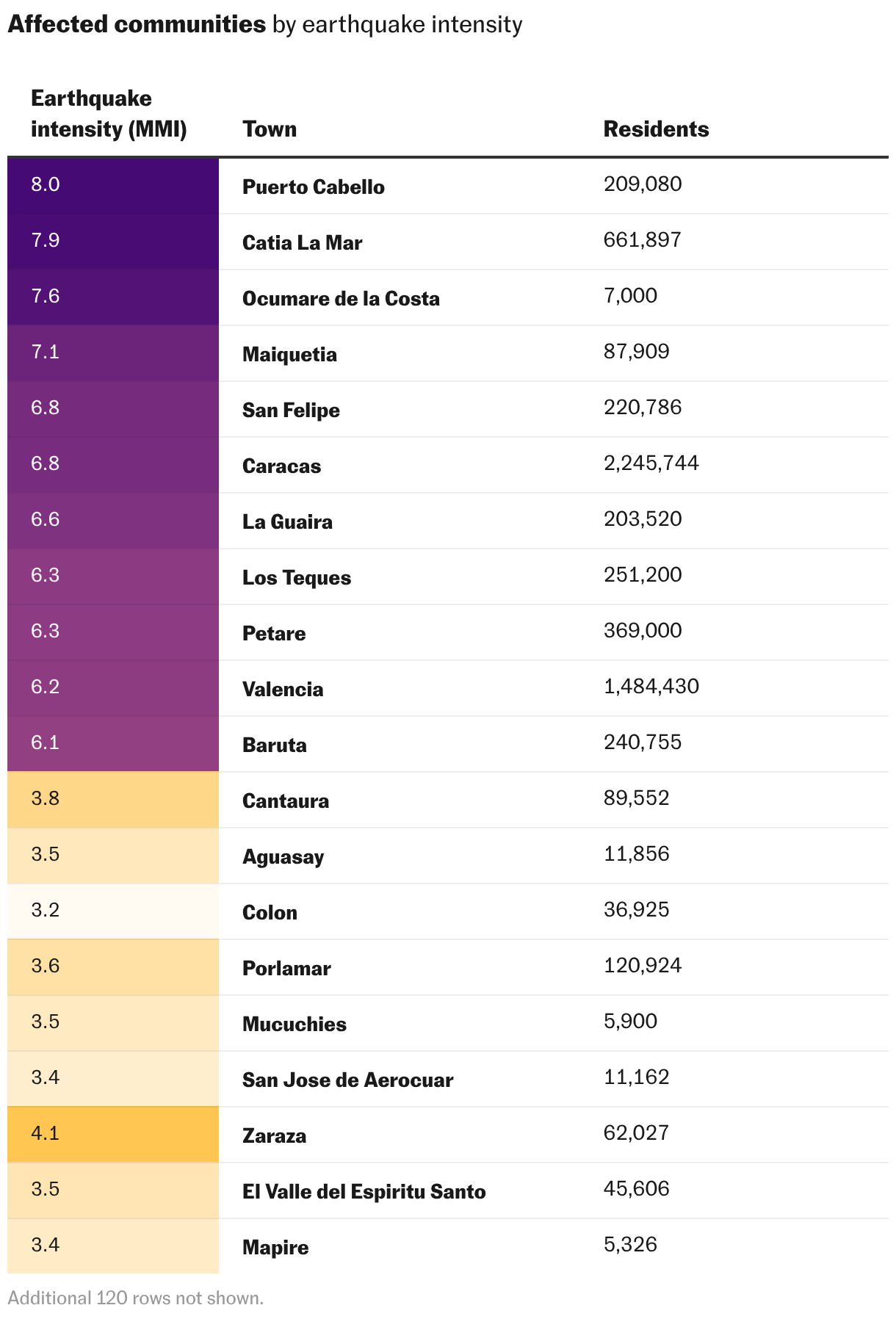
The following table shows population centers with more than 1,000 inhabitants affected by the earthquakes, along with the level of intensity they experienced.
The largest quake of the century in the region
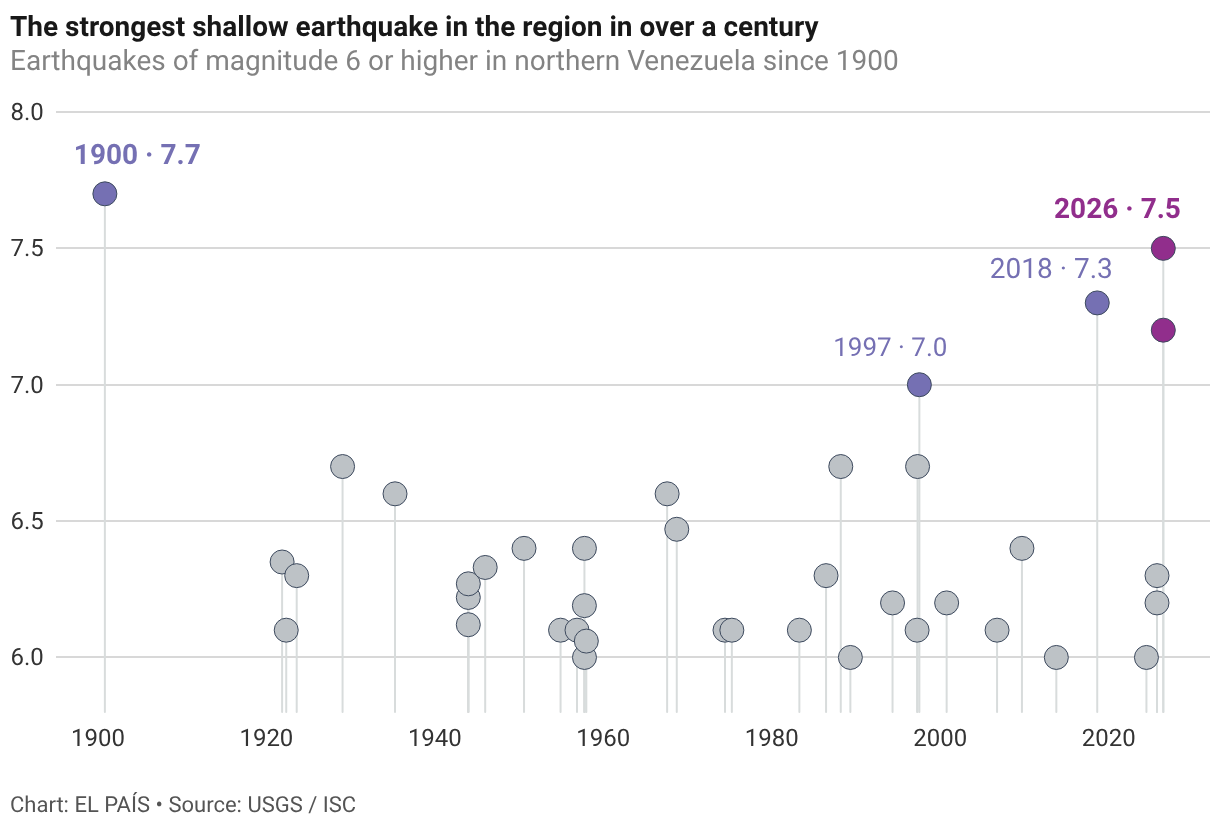
Today’s earthquake is the strongest recorded in more than 100 years in the seismic zone north of Venezuela. To surpass its magnitude of 7.5, one must go back to the 1900 earthquake, which reached 7.7 and struck the central coast — in Macuto, near Caracas — killing around 25 people. In 2018, there was a quake measuring 7.3, nearly as powerful, but it originated at a depth of almost 150 kilometers (31 miles) — too deep to cause major destruction — and resulted in just five fatalities.
A resident of La Guaira, José Rolón, told Spanish Television that the situation amounts to “total collapse.” “There’s no electricity, internet, water — no services at all,” he said.
Only people who, like him, have access to a satellite phone are able to communicate. He described widespread destruction: “The buildings that were there are gone, it’s as if there had been an explosion or a controlled demolition: there isn’t a single building standing.”
The scene is being repeated in Caraballeda, where many structures are also heavily damaged.
Sign up for our weekly newsletter to get more English-language news coverage from EL PAÍS USA Edition