
Vente Venezuela, the Chavista regime’s favorite target
María Corina Machado’s party, the one most affected by the repression, has had up to 200 people arrested
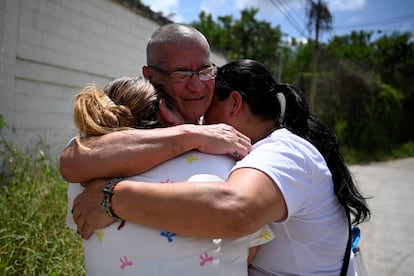
The wave of repression that has gripped Venezuela since the end of the July 2024 presidential elections and up until early 2026 has decimated the largest and most important opposition parties in the Caribbean nation. Most of their leaders are now in exile, in hiding, or recently released from prison. Vente Venezuela, the party founded by María Corina Machado, has suffered the most. The outcome of the 2024 election—in which the opposition challenged the official results and presented the tally sheets that confirmed Edmundo González Urrutia’s victory—made Machado’s party public enemy number one of the regime, along with the members of González’s campaign team, known as the Comando Con Venezuela.
The release of political prisoners announced on Sunday by the Chavista regime consisted mainly of leaders, mid-level officials, and associates of María Corina Machado. These releases were interpreted as a gesture of détente toward the sector of the opposition most feared and detested by the regime. The freedom of key figures from Vente Venezuela seemed to point to an attempt to de-escalate the confrontation with the opposition leader’s inner circle, although this gesture backfired within hours with the re-arrest of Juan Pablo Guanipa, one of Machado’s closest political allies.
Vente Venezuela is currently the Venezuelan opposition party with the most leaders, volunteers, and activists released from prison during this period of partial amnesties. In total, counting the entire post-election cycle, it is estimated that 190 people linked to the party ended up behind bars and have been released in recent weeks, according to data the organization provided to United Nations officials. This figure represents a record for a Venezuelan political party, not seen in decades. The party also has a large, undetermined number of members who have gone underground. This situation, of course, is more widespread: other important opposition movements, such as Primero Justicia, Voluntad Popular, Encuentro Ciudadano, and Acción Democrática, have also had dozens of their members imprisoned in recent years.
In 2025, a veritable legal witch hunt was unleashed against the activists of Vente—as against almost the entire Venezuelan opposition in the country. The Nicolás Maduro government relentlessly portrayed its leaders as members of the “opposition fascism,” politicians operating illegally to conspire against peace. When the opposition, led by Machado and Vente Venezuela, entered the 2024 electoral race, it did so under a pervasive climate of suspicion fostered by Chavismo.
The entire campaign was fraught with incidents, fines, arrests, and bans against Edmundo González’s supporters. The logistical effort of Plan 600K, a deployment of 600,000 people across the country to defend the vote, and the distribution of the so-called “command units,” which allowed the opposition to print and scan all the electoral records documenting González Urrutia’s victory, was, for the regime, the final straw.
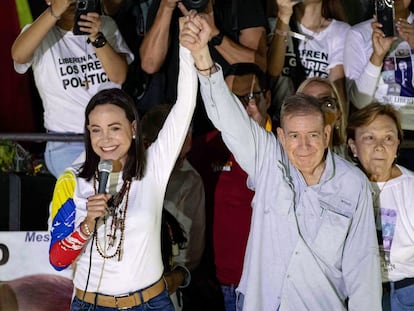
Amid the fury of the ruling party, while denouncing an alleged coup against Maduro, nearly all members of the party’s National Directorate and Machado’s close collaborators were imprisoned—before, during, and after the elections—or sought asylum in embassies or faced legal proceedings. Among them were Magali Meda, Henri Alviarez, Pedro Urruchurtu, Claudia Macero, Omar González, Humberto Villalobos, Dignora Hernández, Catalina Ramos, Luis Tarbay, and Melquiades Pulido. A significant portion of the party’s grassroots structure, its expanded national leadership, and its regional leadership were also prosecuted.
To all of them should be added volunteers, academics, electoral strategists, lawyers, and journalists belonging to the Con Venezuela Command. Among them are political leader Jesús Armas and lawyer and university professor Perkins Rocha [released this Sunday] and the engineer Ricardo Estévez [released last July].
Founded in 2012 with a right-wing liberal orientation, Vente Venezuela was for several years a party in development, an organization working to solidify its structures and become a point of reference in the weak and shifting landscape of the country’s democratic parties. Its founder, María Corina Machado, was always far better known than the organization she led. Vente’s electoral participation in the years prior to this juncture was relatively modest.
Defined by its members as “the party of freedom,” Vente is not part of the Unitary Platform, the coalition of opposition political parties, and has frequently questioned the protocols that underpin the agreements of the Venezuelan opposition, expressing on more than one occasion ethical reservations about some of its leaders.
As an outsider within the Venezuelan opposition party ecosystem, Vente Venezuela took the lead in the democratic movement following the highly contested opposition primary elections in October 2023, in which María Corina Machado’s candidacy—later disqualified by the National Electoral Council—won by a landslide. This circumstance expanded the party’s structure and strengthened its volunteer base.
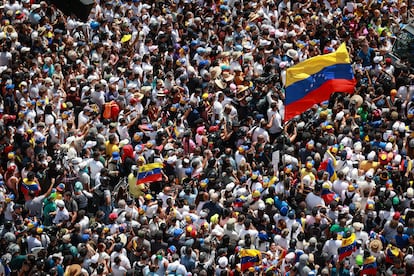
For most local analysts, Machado and Vente Venezuela’s victory in the primaries was the result of the failure of the strategies put forward by the Unity Platform to defeat Chavismo. Most opposition parties accepted the popular verdict and decided to support Machado in her 2024 electoral campaign.
Both Machado’s leadership and Edmundo González’s subsequent candidacy expressed a struggle that represented a break with the legality of the Bolivarian Revolution: rejecting Nicolás Maduro’s mandate while simultaneously accepting the challenge of confronting the regime under its own electoral rules. Vente’s combative tone proved intolerable to the regime.
Today, Machado maintains good relations and some political control over the parties of the Unitary Platform, particularly over those that have been more loyal to her leadership, such as Citizen Encounter, La Causa R and Convergence, as well as over the sectors of Primero Justicia linked to Juan Pablo Guanipa.
At this time, however, the Unitary Platform and its parties remain outside the epicenter of the opposition strategy and the most relevant decisions that Machado makes together with Vente Venezuela to seek the return to democracy in the country.
Sign up for our weekly newsletter to get more English-language news coverage from EL PAÍS USA Edition









































