
From the US to Málaga: the world of chemistry chooses Spain
The North Carolina headquarters of the International Union of Pure and Applied Chemistry (IUPAC) is moving to Europe and will have one of its two offices in the Andalusian city
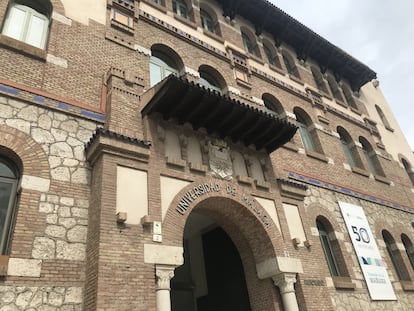
Major scientific decisions rarely make headlines. However, the relocation of the headquarters of the International Union of Pure and Applied Chemistry (IUPAC) from the United States to Europe, with offices in Rome and Málaga, is significant, as it brings one of the world’s leading scientific decision-making centers to Spain and places it in a privileged position in the global governance of chemistry.
For nearly three decades, IUPAC has been headquartered in North Carolina, in the heart of Research Triangle Park, one of the leading scientific hubs in the United States. From there, it has played a pivotal role in shaping international scientific, industrial, and regulatory priorities in collaboration with UNESCO, the World Science Council, and countries around the world.
We may have forgotten, but the IUPAC is part of our personal history. We first encountered it in school. It’s in the periodic table we once learned and in the rules we studied for naming chemical compounds. Because the names and symbols of the elements were discussed and agreed upon by IUPAC experts. The same experts who created the language of chemistry, which allows us to name any substance. But this large scientific organization doesn’t limit itself to establishing names and symbols. Currently, it promotes more than 180 international projects in fields as diverse as chemistry education, sustainability, and the application of artificial intelligence in scientific research. The IUPAC is often described as the United Nations of Chemistry, as it constitutes an important global forum where scientific consensus is reached in an increasingly fragmented world. Its goal is to build consensus based on the best available knowledge and to move research, industry, and public policy towards building more sustainable development.
The fact that this major scientific organization is getting headquarters in Spain represents a great opportunity for the country, but it also reflects an objective reality: the importance of Spanish chemistry on the international stage. Although often overlooked, chemistry is one of the greatest strengths of Spanish science and industry. According to various rankings, Spain ranks around tenth in research in this field and also boasts one of the most robust chemical industries in Europe. The sector generates more than 700,000 jobs, represents 4.7% of GDP, is the second largest exporter, and leads industrial investment in R&D&I. Few activities have such a direct and cross-cutting impact on its economy: 98% of productive activities depend, in one way or another, on chemical products, from food to automotive, from energy to healthcare. Having the headquarters of the organization that sets the rules of the game for chemistry in Spain is a clear competitive advantage, if we know how to take advantage of it, something that requires vision, coordination and ambition.
The choice of Málaga is also no coincidence. In recent years, the city has established itself as a technological hub capable of connecting universities, industry, and public administrations. The arrival of IUPAC strengthens this ecosystem and projects it internationally. Furthermore, it places Spain in a privileged position to act as a bridge between Europe and Latin America. The Spanish-speaking world represents a large cultural and economic community. We share a language, challenges, and, in many cases, strategic productive sectors. The IUPAC headquarters in Málaga can become an extraordinary platform for establishing and strengthening joint projects in research, the use of Spanish in science, and industrial development.
The other IUPAC headquarters, located at the National Research Council (CNR) in Rome, complements the one in Málaga and benefits Spain. This dual structure is possible because Europe is a shared space with a common currency and institutional frameworks, and because of a long history of scientific, economic, and cultural collaboration between the two countries. In this context, the Málaga and Rome headquarters combine their capabilities at a time when science is under attack in other parts of the world.
This relocation was not the result of an impromptu decision. In June 2024, IUPAC invited institutions and cities worldwide to submit proposals to host its international headquarters, after nearly three decades in North Carolina. Numerous cities responded to this call, reflecting the global interest in hosting the world’s largest scientific union. For months, the applications were evaluated through a rigorous process that included an analysis of institutional capacity, political support, infrastructure, legal stability, and long-term commitment, as well as technical visits to the potential locations. The result was a unique solution: a shared European headquarters between Málaga and Rome, chosen for the complementarity of their proposals and the strength of the support offered by their academic and public institutions. In the case of Málaga, the decision was made possible by the collaborative work of the University and the City Council, which successfully developed a solid and attractive proposal aligned with IUPAC’s current and future needs.
In a way, the arrival of the IUPAC in Spain is also a homecoming laden with symbolism. This country already occupied a prominent place in international chemistry at the beginning of the 20th century, during the Silver Age of Spanish science, when in 1934 Madrid hosted the first World Chemistry Congress after the Great War. At that IUPAC congress, Spain opened its doors to the world of science after centuries of isolation. More than a thousand scientists from around the globe, including several Nobel laureates, accepted our invitation. Behind that effort was Enrique Moles, one of the key figures in modern Spanish chemistry, who went on to become Vice President of the IUPAC. He, and many others of his generation, worked to ensure that Spain would play a leading role in the international scientific community. His career, cut short by war, exile, and repression, serves as a reminder of just how fragile and ephemeral that aspiration was. Almost a century later, the return of the IUPAC to our country seems to close a parenthesis that should never have been opened.
That a key institution for tackling the great challenges of our time, from the fight against climate change to the development of more effective and safer medicines, now has one of its headquarters in Spain is not only a recognition of the strength of our chemistry sector, but also a responsibility. If we seize this opportunity, the world of chemistry will not only have chosen Spain, but will have begun to write its future from Málaga.
Sign up for our weekly newsletter to get more English-language news coverage from EL PAÍS USA Edition









































