
Cilia Flores, the power behind the Venezuelan throne
Nicolás Maduro’s wife, who has also been captured by the US, worked behind the scenes to preserve the hegemony of the Chavista regime
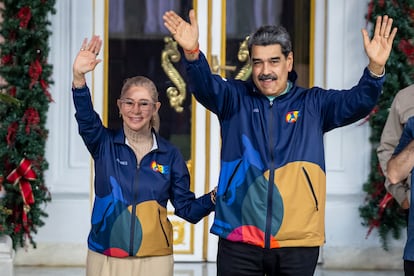
The spectacular capture of Venezuelan leader and strongman Nicolás Maduro by the United States has somewhat overshadowed the impact of the arrest of his wife, Cilia Flores, the nation’s first lady, or “first combatant,” according to the official narrative from Miraflores Palace.
Flores has been one of the most powerful and influential figures within Venezuelan power circles, wielding fundamental influence over the decisions of the Chavista government. She was also responsible for some of the most important measures taken by the revolutionary command in power, both to confront the opposition and to run the country. During Maduro’s 12 years in office, Flores abandoned the public profile she had maintained during Hugo Chávez’s presidency and retreated to work behind the scenes in the corridors of power. Her appearances during these years were infrequent, almost always alongside Maduro.
Born in Tinaquillo, Cojedes State, in 1956, a lawyer by trade, married twice and with three children, Flores entered politics shortly after February 4, 1992, when Hugo Chávez led a military coup against Venezuela’s then-existing democracy. Like other far-left activists of the time, Flores went to Yare prison to meet Chávez personally and offer her services to carry out the Bolivarian Revolution. There she met Nicolás Maduro, with whom she would later begin a romantic relationship. In 1997, they founded the Fifth Republic Movement, the first electoral expression of Chavismo.
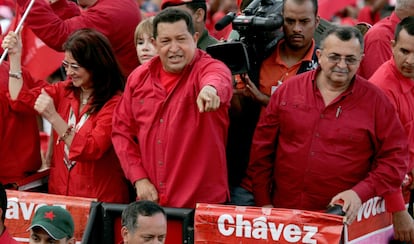
Just as with Maduro, Flores cultivated a very close political relationship with Hugo Chávez, for whom she felt total admiration. She was one of the leading voices of the Chavista cause in the early years of the revolution and had a long and highly controversial parliamentary career. A founder of the United Socialist Party of Venezuela (PSUV) in 2007, she served as Attorney General in 2012 and as President of the National Assembly for four years (2006-2011), succeeding Maduro himself in that position. The two married in 2013, when Maduro assumed the presidency following Chávez’s death.
Over the years, Flores developed enormous cunning to expand her influence in the circles of the judiciary and the National Electoral Council (CNE), promoting figures close to her leadership within the circles of power and forming an enviable network of contacts and allies.
As she began to consolidate power, Flores accumulated enemies and accusations from various fronts. Opposition lawmakers blamed her for inflating the National Assembly payroll during her years as president, and incorporating many of her immediate family members into important positions. They also criticized the extravagant spending and luxurious lifestyles of several of her close associates, including siblings and nephews.
On November 11, 2015, in an intelligence operation carried out by the DEA in Haiti, Efraín Campo Flores and Francisco Flores de Freitas, her nephews, were arrested and charged with attempting to illegally smuggle 800 kilos of cocaine into the United States. The case of the “narco-nephews,” as it became known, became a taboo subject in Venezuela and one of the most uncomfortable ones for the revolutionary leadership.
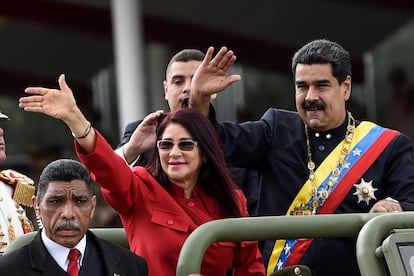
The scandal faded from public view thanks to censorship and political turmoil, but it became a family nightmare for the presidential couple. Both nephews were released by the Joe Biden administration in 2022, in the context of the Barbados talks. The Democratic administration, along with the Venezuelan opposition, maintained a strategy to try to compel Chavismo to hold credible and transparent presidential elections.
Like other prominent Chavista leaders, Flores has been sanctioned by several countries—Colombia, Canada, Panama, and the United States—accused of conspiring to undermine democracy in Venezuela and of having ties to some of the most high-profile corruption cases within the government. Flores has spent years occasionally denying these accusations, calling her critics “mercenaries,” “lackeys of imperialism,” and part of the “Yankee-backed opposition,” as Chávez was fond of saying.
As the controversies surrounding her began to escalate, amidst the country’s social and economic collapse, Flores decided to assume an institutional role, adopting a more apolitical and family-oriented approach alongside her husband. For a brief period, Venezolana de Televisión broadcast a program called “En familia con Cilia” in which the leader addressed everyday topics related to family life and society.
Sign up for our weekly newsletter to get more English-language news coverage from EL PAÍS USA Edition









































