
Israeli recognition of Somaliland stirs up the Gulf
Benjamin Netanyahu has angered many by establishing relations with the breakaway region of Somalia in a move that could reshape the Horn of Africa and the Middle East


Israel’s recognition of Somaliland — the first since it declared its independence from Somalia in 1991 and began functioning in practice almost as another state — has demonstrated its strategic importance in just three days, evident in the countless condemnations (and some significant silences) the move has received leading up to its presentation to the U.N. Security Council on Monday. While U.S. President Donald Trump responded, “Does anybody know what Somaliland is?” when asked if the United States was also considering recognizing it, the wave of indignation has been growing in those areas where its potential implications, including military ones, are most keenly felt.
With access to the Red Sea and about 300 kilometers (186 miles) from the Houthi-controlled area of Yemen, it is also one of the three territories being considered by Benjamin Netanyahu’s government to house Gazans amid Trump’s plan to empty the Gaza Strip of Palestinians and create a “Riviera of the Middle East.”
Somaliland is a 137,600-square-kilometer (53,127 square miles) separatist region with a pro-Western leaning that has been unsuccessfully seeking recognition for three decades. Recently, it launched a diplomatic offensive aimed at the United States (Senator Ted Cruz is among those advocating for its recognition). Last month, in fact, it declared that it would cease recognizing visas issued by Somalia and would require direct authorization for every aircraft entering its airspace, separating it from Mogadishu’s nominal sovereignty.
Last Friday, and quite unexpectedly, Israel became the first country to recognize Somaliland. The formal declaration, signed by Netanyahu and Foreign Minister Gideon Saar, invokes “shared values and strategic interests.” Thousands of Somalilanders celebrated with fireworks, dancing, and the occasional Israeli flag. The celebrations continued on Sunday at a stadium in the capital, Hargeisa.
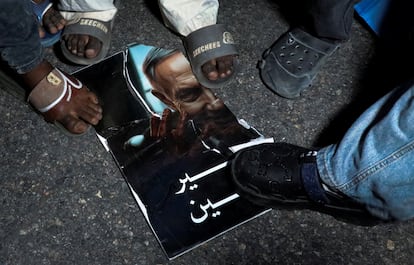
The atmosphere has been quite different across almost the entire Horn of Africa and the Middle East. Condemnations have been as predictable as they have been virtually unanimous, and they continue to this day. In Mogadishu, the Somali capital, thousands of people took to the streets, trampling and tearing down posters bearing Netanyahu’s image. In other parts of the world, the issue has gone largely unnoticed. The European Union, for example, reaffirmed “the importance of respecting the unity, sovereignty, and territorial integrity of Somalia,” but without criticizing the Israeli recognition. The statement merely mentioned it.
Asher Lubotzky is a senior researcher at the Israel-Africa Institute, based in Herzliya, Israel, and an assistant professor at the University of Houston in the U.S. He believes the recognition is “100%” related to the rivalry between Israel and Iran. More specifically, it relates to the Houthis in Yemen, who are allies of Iran. Over the past two years, the Houthis have disrupted maritime trade in the Red Sea and fired missiles and drones at Israel (most of which were intercepted) to protest Israel’s offensive in Gaza. In response, the United States and Israel bombed the Houthis.
“From Israel’s perspective, the Red Sea region has become very important to its national security,” Lubotzky said via video conference. “Before, it neglected or overlooked it because it was relatively peaceful for its interests, which were not numerous. But now, given that the Houthis could attack Israel with relative ease and practically impose a blockade on the Gulf of Eilat and the Suez Canal, it has become a global problem. Israel understands that it is one of its most serious threats, not just a nuisance.”
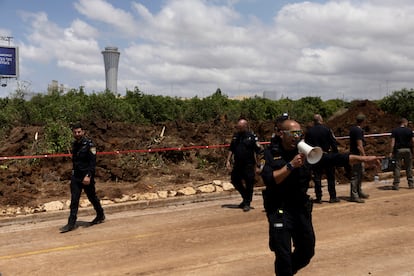
The key, obviously, lies in the trade-offs, which haven’t been revealed. Lubotzky points to “something big” and points out the advantages Israel gains from Somaliland’s location, particularly for intelligence gathering. Unlike in Iran, where it had the support of its Kurdish allies and Azerbaijan, these advantages have been difficult to secure for the past two years. He also notes that Israeli fighter jets needed long flights to bomb Yemen. A military presence (whether in the form of a base or access to one) now opens the door to deploying drones (like those used in Iran) or laser-guided missile interception systems. Geographically, these wouldn’t be useful for missiles (one of which hit the Tel Aviv airport grounds in May), but they would be for drones, precisely the weapons that have most effectively evaded Israel’s defenses. One drone injured more than 20 people when it crashed in a commercial area of Eilat in September.
Response from 21 countries
On Saturday, 21 countries — mainly in Africa and the Middle East — denounced Israel’s recognition of Somaliland in a joint statement. They spoke of “serious repercussions for international peace and security” (especially for the Horn of Africa and the Red Sea) and of Israel’s “total and flagrant disregard for international law.” They also pointed to a possible secret link to an Israeli government plan to depopulate Gaza of Palestinians. Last March, when Israel was unsuccessfully sounding out countries to take in Palestinians (without guarantees they could return in the future) and presenting it as a humanitarian measure, official sources in Israel and the U.S., speaking on condition of anonymity to the Associated Press, said they had approached three governments in Africa. One of them was Somaliland. Three months later, Netanyahu asserted that Israel and the U.S. were “close to finding several countries” that would accept Gazans.
The issue then lost momentum, so Lubotzky believes it was not behind Israel’s recognition of Somaliland. It does, however, remain a topic of internal Israeli debate regarding Rafah, the border crossing between Gaza and Egypt that Israel currently controls. Its reopening “in both directions” is stipulated in the October ceasefire agreement, which specifies that anyone leaving can return. Israel has kept it closed, and on December 3, announced it would open it in the coming days, but only for departures. Cairo protested — fearing it would lead to a refugee crisis on its territory — and the reopening never occurred.
Israeli Channel 12 revealed on Sunday that Netanyahu proposed to his government a day earlier (just before departing for his meeting with Trump in Florida) opening Rafah to two-way traffic, but several ministers — led by the far-right Bezalel Smotrich and Itamar Ben-Gvir — vetoed the proposal. This is the faction that has been pushing for decades for the complete ethnic cleansing of Palestinians, which it now describes as “voluntary emigration.” According to Channel 12, Netanyahu made the proposal under pressure from Washington, which sees the closure of Rafah as the main proof that he is “dragging his feet on the full implementation” of the ceasefire agreement, which is still in its first phase.
Saudi distancing
The three Arab countries that recognized Israel under the Abraham Accords, promoted by Trump during his first term (2017-2021), are not among the signatories of the statement. These countries are Morocco, Bahrain, and the United Arab Emirates, and all received concessions in return. In Morocco’s case, this included Washington’s recognition of its sovereignty over Western Sahara.
Everything pointed to Saudi Arabia being next. It seemed imminent shortly before Hamas’s October 2023 attack, which forever changed the Middle East. Now, Aziz Alghasian, an expert on relations between the two countries and director of research at the Observer Research Foundation think tank in Dubai, believes that the recognition of Somaliland diminishes the already dwindling possibility of Riyadh recognizing the Jewish state in the near future. The move, he writes on the social network X, reinforces the perception that Netanyahu’s government is “pushing a regional order” to its own advantage “at the cost of [Saudi] security.”
Another key country in this matter is Turkey. It has its largest overseas military base and embassy in Somalia, in a relationship that is almost one of patronage. Up to 15,000 Somali soldiers have received Turkish training there since 2017.
For Israel, Ankara is the new major strategic competitor, and authorities and think tanks are increasingly striving to portray it as an archenemy, a kind of new Iran. Lubotzky describes the recognition of Somaliland as a “two-for-one” win: it outmaneuvers Tehran and takes the opportunity to “stick it in Ankara’s face.”
The struggle is evident in two arenas. One is Syria, with which both countries share a border. Recep Tayyip Erdogan’s government played a key role in supporting loyalist rebel militias that helped overthrow dictator Bashar al-Assad a year ago. Ankara now seeks to leverage this influence in various ways. Its economic and commercial presence is noticeable in northern Syria, while Israel insists it does not establish military bases, at least in the south and central regions.
The other is Gaza. Erdogan has repeatedly accused Israel of committing genocide there. Netanyahu has publicly promised that there will be no Turkish troops in the stabilization force whose deployment is planned for the second phase of the ceasefire. Trump, its architect, on the other hand, has a good relationship with Erdogan and enlisted Turkey (which has direct contact with Hamas) for the key phase of the negotiations.
Sign up for our weekly newsletter to get more English-language news coverage from EL PAÍS USA Edition









































