
Lev Tahor, a sect on the run: Tracking the ‘Jewish Taliban’ from Israel to Colombia
The South American country has become the seventh nation to try to stop the group, which has been charged with sexual abuse and trafficking

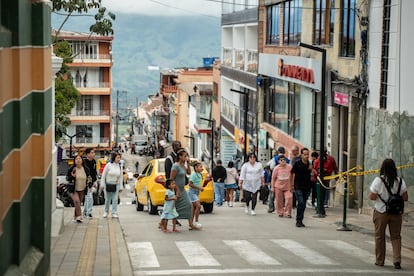
Andrés Orrego saved the man’s number in his cell phone under American Friend. Orrego, who runs a small supermarket in the heart of the northern Colombian town of Yarumal, had liked the foreign stranger’s manners. He made an effort to speak Spanish well, paid in cash with new bills, and was almost always on time. Plus, he bought on a large scale, as if for a crowd: 22 pounds of peanuts, 55 of oranges, 22 of eggplant, 220 of potatoes, 50 coconuts, 75 limes… And then, sure, odder things: a hard-to-find fish, organic wheat flour, pure honey from a specific bloom.
A week after meeting this mysterious man, an incredulous Orrego had to bring his face close to the television screen to believe what it was showing him: that his American friend was the main suspect arrested in an operation carried out against Lev Tahor, the ultra-radical Judaic sect whose leaders have been convicted of abuse and child marriage in the United States. The “Jewish Taliban,” as the group is known, had been looking to settle down in Antioquia, the Colombian department. In Orrego’s town. Next to his supermarket. Colombia, the seventh country through which the group had passed in the last decade, has run into the same difficulties as Mexico and Guatemala once did: it does not know what to do with the sect, nor how to stop it.
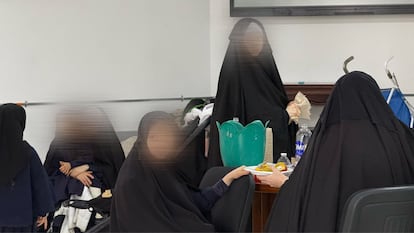
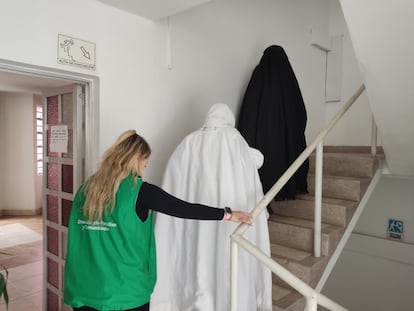
The American Friend — whose name has not been disclosed — was the head of a commune with eight other adults and 17 minors. They lived in a truck stop hotel on the outskirts of town. The little girls wore a tunic that covered them from head to foot, similar to a burqa that only revealed their face. Orrego is one of the few residents of Yarumal who got to know the adults, or at least the four who came to his store to shop for groceries. To the rest of the 45,000 inhabitants, they had gone unnoticed. Neither the neighboring merchants, local youth, nor street vendors had seen them in person before the images of the veiled girls and boys with payot were viewed around the world. Though, in reality, they were being watched by many.
Cristian David Céspedes, the mayor of this farming and cattle town, says that ever since they arrived on October 22 from New York, the seven Jewish families had been under investigation by the Attorney General’s Office. Their history had set off alarms. The sect makes children marry each other in order to have the best bloodline possible, to grow the community, the faithful. Though the mayor says they were merely passing through Yarumal, EL PAÍS had access to audiotapes in which two of the group’s leaders asked for help from a merchant to rent a property where they could set up a community.
But those plans fell apart. In a joint operation, authorities from Migration Colombia — the country’s national immigration agency — and the army raided the hotel on the night of November 23, as the group prayed. They had U.S., Guatemalan and Canadian passports, and five of the minors had been subjects of Interpol Yellow Notices, an alert that warns of the disappearance of people who are possible victims of trafficking and kidnapping.
On Monday this week, Colombia expelled nine members of Lev Tahor, who were “handed over to U.S. authorities” according to Gloria Arriero, director of Migration Colombia. The 17 children, who had been staying in a state-run child welfare center since their rescue in November, were placed on the same flight to New York, escorted by Colombian authorities. They were then handed over to child protection services in the United States.
Lev Tahor’s path to Yarumal had been a long one. The sect, with its extensive record of violations of children’s rights, is originally from Israel. Its members emigrated to the United States in the 1980s and continued their journey through Canada, Guatemala and Mexico. They later moved to Iran, where they sought asylum, before crossing the Atlantic again to Colombia. They are not nomads — they are fugitives.
In 2010, two of its leaders were convicted in New York for kidnapping minors, and forcing them to have sex. From then on, they have removed themselves from the rest of the world, and those who have followed their trail say that some members are currently in Turkey, Romania, Moldavia and North Macedonia. No one knows how they pay for their travel, housing, or the dozens of pounds of peanuts and eggplant. They have always accused their detractors of religious persecution. EL PAÍS reached out to two of their leaders, to no response.
An immortal sect
Despite the criminal trail the sect has left across the globe, the Colombian Attorney’s Office has not opened any investigation against them. “[The minors] entered through a normal immigration point, registered, and are with their parents. There are no signs that they were going to be made to have sex for money or enter into a forced marriage, nor did it seem like human trafficking,” say representatives from the Attorney General’s Office.
For 15 years, Orit Cohen has been warning authorities in Israel, Canada and Guatemala that the sect has little to do with Judaism and that it has “destroyed” her family and those of dozens of acquaintance. “It changed our life. There’s proof, there are charges and convictions, but no one has been able to stop them. It’s very painful for me,” she says in a video call from Rishon LeZion in Israel. “They’re a group of pedophiles. What more do they need to stop them?”
Cohen hasn’t been able to see her brother since 2010, when he joined Lev Tahor. Her brother fathered six children, who in turn had five more during the years they spent in Guatemala. Three of Cohen’s nieces and nephews have managed to leave, carrying emotional scars and testimonies of horror: forced marriages, sexual abuse, and psychological manipulation.
“I had a son there, and they don’t let me have any contact with him. When I escaped, I couldn’t save him,” says Israel Amir, one of Cohen’s nephews who spent nearly nine years under the sect’s control in Guatemala. “There was no possible opposition: if someone didn’t agree, they beat them, isolated them or shut them in a kind of cell where no one could speak to them,” Amir recalls. “If anyone tried to go or even think differently, they punished them until they broke.”
Cohen has become the most visible face in the fight against the elusive organization. It’s David and Goliath battle. Although she says she doesn’t trust authorities or those who claim to defend children’s rights in any country, she hopes Israeli courts will grant her custody of her nieces and nephews still under Lev Tahor’s control.
“It’s impossible to guarantee their safety with their parents, no matter what they say, no matter what they regret doing,” she says. “They are Jewish children and the State of Israel is waiting for them.”
Many minors come under control of authorities, but eventually wind up with their parents, as recently happened in Guatemala. In December 2024, the Central American country’s officials rescued 160 children from a settlement, where they found evidence of multiple acts of violence. A year later, only two of the minors remain in the custody of authorities. The others were returned to their parents or to their extended family by court order, despite warnings from Lucrecia Prera, head of the Children’s Ombudsman’s Office. “Many factors kept us from having a clear picture of what we were dealing with. We don’t know if minors died or if there were abortions or children were buried,” she says.
Prera was deeply impacted by the case of a woman in the community who, at 43 years of age, had 17 children. She also remembers the 29 kids with fake names, and the children with malnutrition who had been coached to not say a word, and a box of bones whose origins were never made clear.
“I’m very sorry to say it, but they always look for countries with weak legislation,” says Prera, who continues to wonder who pays for the group’s lawyers and its dozens of trips from one country to another. Those interviewed for this report share the same suspicion: that Lev Tahor is kept afloat by donations from fundamentalist groups.
Sign up for our weekly newsletter to get more English-language news coverage from EL PAÍS USA Edition









































