
Innocence lost in the forest of the child soldiers: ‘Each leader of the armed group had his girls’
UNICEF estimates that since 2013, some 19,000 children associated with armed groups in the Central African Republic have been reintegrated. Thousands more are still waiting to leave. This is their story, told in their own words
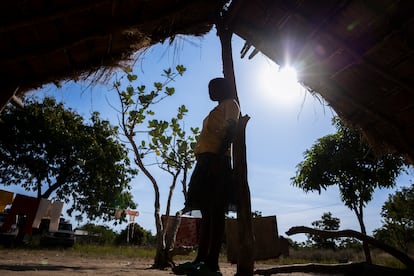

Nadine, 19, was 15 when the rebels took her. She recounts her story, now free, sitting in the doorway of her mud-brick house in the village of Ndow-Kota, in the Central African Republic, while breastfeeding her one-year-old baby, a child conceived within the armed group. One morning in 2021, while on her way to sell cassava at one of the artisanal mining sites in the area, she was detained by Anti-Balaka militiamen. They beat the man who was giving her a ride on a motorcycle, tied him up, and abandoned him in a ditch. They dragged her into the forest. “There they raped me. It was the first time I had ever been with a man. There were five of them, and they abused me,” she says firmly. Beside her, her father, Marc Mapouka, a 67-year-old widower, looks at her and remembers the helplessness he felt that day when news of the kidnapping reached the village. He also described how he thought for years that he had lost his daughter forever.
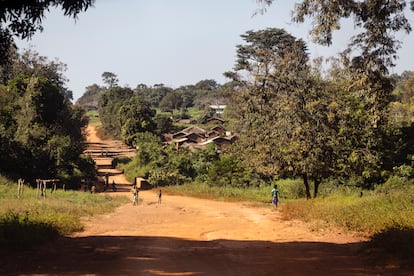
Thousands of children like Nadine have been taken from their communities in recent years by the numerous armed groups vying for control of territory in the Central African Republic (CAR). Forced into the forest, they were compelled to serve as fighters, messengers, or slaves. In their villages, funerals were held without bodies. Their deaths were mourned. It was thought they would never return.
This recruitment continues today, after more than two decades and a certain degree of stability in the center and northwest of the country thanks to new advances in the peace process. In the southeastern and northeastern border regions, the situation remains complex as the conflict in Sudan intensifies. “Children continue to be recruited and exploited. They are abducted by armed groups, mobilized because they see the Armed Forces as a job opportunity, and then forced into recruitment again because the armed groups know where they live. They come and take them away again,” emphasizes Nahla Khiery, UNICEF’s Child Protection Specialist in the country.
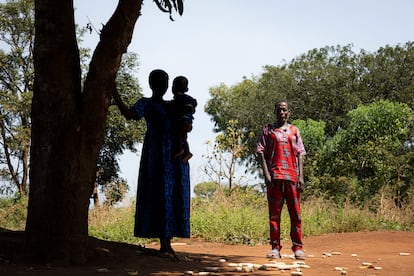
The young people who have managed to return carry the scars of what they experienced during those years. In November, EL PAÍS spoke with six of them. Their names have been changed in this report to protect their identities: Nadine, Mahamat, Emmanuel, Phillipe, Georgine, and Hadija. They also have families who bear, often silently, the trauma of what their children endured. And their stories are repeated and echoed by the young men and women who remain within armed groups even today.
UNICEF estimates that since 2013, the year the Seleka rebel coalition staged a coup in the country, some 19,000 children have been reintegrated. By the end of 2025, it projects that around 2,000 more children will be identified as being associated with armed groups, following the five peace agreements signed this year between the CAR government and various armed factions. These include two of the country’s most active groups: the Union for Peace in the Central African Republic (UPC) and the Return, Reclamation and Rehabilitation (3R) group. The latest agreement was reached at the end of November with the Central African Patriotic Movement (MPC).

“We are negotiating the lists [of minors within their ranks] with the armed groups. We have received one with almost 300 children and we expect more from the [groups] that signed at the end of October and in November,” Khiery explains. However, she warns that this figure of 2,000 children is “a very conservative number compared to reality,” just the tip of the iceberg of a much larger and difficult-to-quantify problem.
I. Recruitment
“I joined to get revenge”
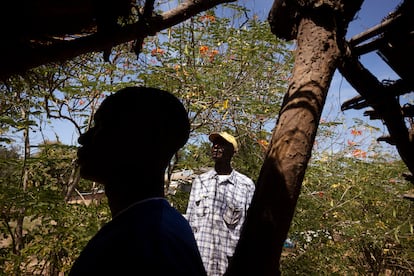
In the village of Ndow-Kota, a two-and-a-half-hour drive from Bossangoa, lives Mahamat, a thin 19-year-old who wears a pink measuring tape around his neck like a talisman, and a patterned blue shirt. He speaks softly while his mother, Germaine Doungou, watches him, never leaving his side, seated in a woven chair — practically the only piece of furniture in their mud-brick house decorated with a wooden crucifix, an animal skull, and a clock. The 57-year-old widow and mother of 10 children whispers words to him in Sango, the national language, to encourage him.
Mahamat recounts that after his father’s death, he began helping his mother sell liquor in the artisanal mines of the area. He was 14 years old. It was there that he first encountered the rebel fighters. “[In 2020] They forced me in. I was weak, I couldn’t resist,” he explains. That was the beginning of a captivity that lasted almost three years, until he escaped in 2023. Hadija, 18, was also forcibly abducted from the mines. Like Nadine, she had gone to sell food — in her case, sweet fritters — to the miners during the school holidays. She was 14 at the time and spent a little over three years with the Anti-Balaka.
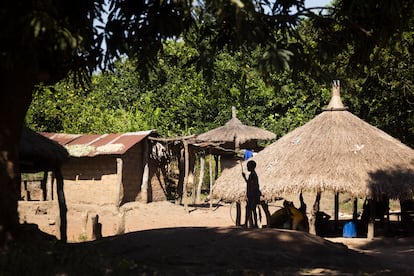
The boss isn’t always the same; sometimes he disguises himself as a volunteer. Seven hours away by car, in Markounda, a humble village just a couple of miles from the Chad border, Emmanuel, now 23, recounts how in 2013 he decided to join the Anti-Balaka rebels. A year earlier, the armed group Révolution Justice (RJ) had killed his uncle and kidnapped one of his brothers. “I joined to get revenge,” he whispers, sitting under a thatched roof next to his house. His responses are short, with few details. “The leader instructed us not to tell anyone the truth about the armed group, so I have to respect that,” he adds toward the end of the conversation.
The leader instructed us not to tell anyone the truth about the armed group, so I have to respect thatEmmanuel, former member of the Anti-Balaka rebels
Phillipe, 18, also a resident of Markounda, was forcibly recruited at age 14, after RJ rebels stormed the village. “They arrived one day, around five in the afternoon, and started shooting. I was at home with my family, and we fled as soon as we heard the gunfire,” he recalls. He hid under a tree to try to remain undetected. “One of them took me hostage and led me into the woods.”
While these young people recount the fear and abuse they experienced during those years, another voice in Markounda recalls how the armed groups operated from the perspective of their leaders. General Abdelgadir Hassan of the MPC speaks calmly in a bar where beer is already flowing freely at 9 a.m. A pistol rests on his left knee. The high-ranking MPC commander, whose group joined the peace agreement just a week ago, asserts that the recruitment of children is illegal and that his group does not practice it.
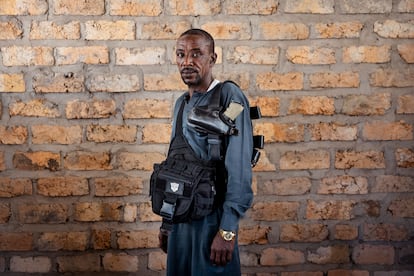
He maintains that the minors who remain within the armed factions do so of their own volition, although he acknowledges that many have been scarred by tragedy and seek revenge for the loss of their relatives. He argues that, during the war, many 14-year-olds wanted to take up arms and avenge their parents. “Now we are in an era of peace,” he adds. “If there are any children among us, we will hand over the list.”
He also shares his own story. He himself was a child soldier in 2002, when at 17 he joined the rebels who overthrew President Ange-Félix Patassé a year later. “Back then, UNICEF didn’t come to ask us to hand the children over. That’s why we stayed with the group, but we weren’t officially recruited,” he says. He was in a military camp until he turned 18, when he received official training and rose through the ranks of the Central African Republic Armed Forces (FACA), before returning to the underground.
No child in a normal environment, with access to education and a livelihood, would choose to join an armed groupNahla Khiery, UNICEF
“It is said that some children join voluntarily and others are forced to. In the Central African Republic, given the country’s context, all children are forced into recruitment,” Khiery states emphatically. “No child in a normal environment, with access to education and a livelihood, would choose to join an armed group. Even when family members are killed and you join to seek revenge,” the expert adds.
The Central African Republic, which will hold presidential, legislative, and local elections on December 28, ranks 191st in the Human Development Index (HDI), ahead of only Somalia and South Sudan. According to the United Nations Office for the Coordination of Humanitarian Affairs (OCHA), 2.4 million people out of an estimated total population of 6.4 million are considered extremely vulnerable. Life expectancy barely reached 57.3 years in 2023, and chronic malnutrition affects 38% of children under five. Furthermore, only a third of children attend school regularly.
II. The Forest
“I was 10 years old and I was in charge of washing clothes, fetching water, and preparing food”
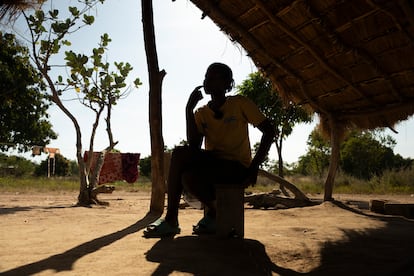
The years “in the forest,” as these young people call the time they spent within armed groups, were lived amid fear, uncertainty, longing for the life they left behind, and the hope of escape. Mahamat began working as a domestic servant for the rebel leader: he did the laundry, cooked for the soldiers, gathered wild tubers in the jungle, or went looking for drugs. If he was late or didn’t do things properly, he was punished with whippings. “They sent me and other minors to work in the artisanal quarries; it was very hard, and they drugged me for that,” he recalls. He spent hours bent over in the blazing sun, sifting through the sand to try to find gold. The drugs, he explains, gave him a lot of stamina, but also made him “very angry.”
The Central African Republic is one of the poorest countries in the world, despite being rich in resources. According to the World Bank, it has more than 470 mining sites that extract gold, diamonds, and oil. “Most are controlled by armed groups and armed forces. Although several groups signed the peace agreement, many are driven by profit. And these mines are their main source of income,” says the child protection specialist. She warns that “children will continue to be used there because they are highly vulnerable” and that they will continue to be recruited by groups “that have no political ideology; they are only driven by the need to make a profit.”
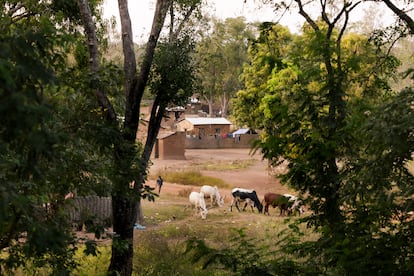
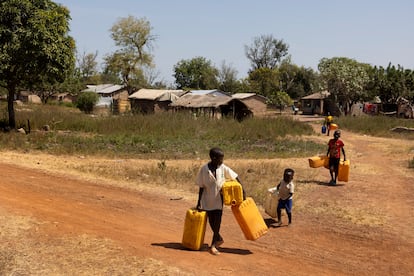
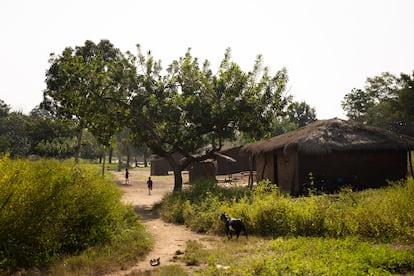
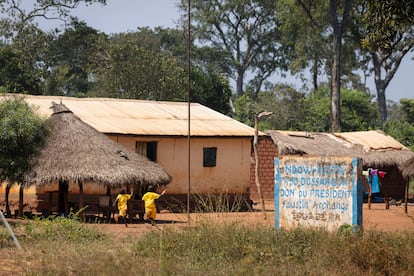
What did Mahamat fear most? “What scared me most were the weapons. They forced me to carry them,” he whispers after a few seconds. And what did he miss most? “Village life, school. Going to the market to sell things with my friends,” he sighs.
During the three years Hadija spent in the jungle, she had to cook, wash clothes, and do housework. “There were other girls like me, many girls, and a lot of surveillance. Each leader of the armed group had his girls and they were forbidden from going to talk to the others.”
— What do you remember from those years?
A silence falls. The young woman looks away, taking a moment to answer. “What scared us most was when we were in the countryside, a few miles from here, and someone warned us that the military was on the road,” she recounts. Hadija remembers running from one place to another, without rest, to avoid being attacked. “I was terrified of the gunfire,” she continues. “If a confrontation was imminent, the rule was to grab the girls and take them somewhere else. The same with the boys who weren’t allowed to carry weapons. Those who showed promise received military training.”
There were other girls like me, lots of girls, and lots of surveillance. Each leader of the armed group had his girls and they were forbidden from talking to the others.Hadija, joven anteriormente asociada a un grupo armado
Girls and teenagers within armed groups are not only used as servants, fighters, or messengers. They are also far more vulnerable to sexual slavery or forced marriage. They don’t always talk about this when they return home, but it’s evident in their silences, in pregnancies like Nadine’s, and in the babies many bring back with them. Georgine, 15, from Markounda, joined an armed group when she was 10. The first thing she states, in a soft but firm voice, is that she didn’t experience sexual violence. “I didn’t know about it because I was underage. I was in charge of washing clothes, fetching water, and preparing food,” explains this teenager, who finds refuge under the light shade of a thatched roof. Her older brother, who was also recruited, remains missing. “I still have some hope of seeing him again,” says her father, Service Valery, 45, a catechist in Markounda.
Khiery, from UNICEF, says that in one of the villages where they work, they have managed to reintegrate 17 girls. Twelve of them are now mothers. Five gave birth after returning, and the other seven in the forest. “That means many girls could have died while they were there, and nothing is known,” she adds. The Central African Republic has one of the highest maternal mortality rates in the world, with 829 deaths per 100,000 live births in 2023, and where less than half of births are attended by skilled personnel.
III. The Escape
“We were afraid to go back”
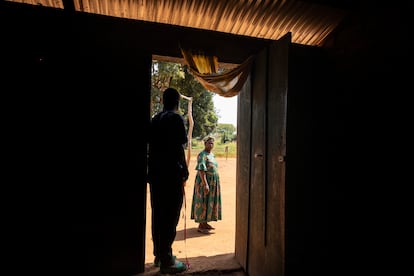
Last year, Nadine had a change of heart. One day, rebels murdered three boys from the village right in front of her eyes. They had gone out hunting, but for the fighters, any man with a weapon was a potential enemy. “They sent me to wash clothes at the river, I saw my chance and escaped. It was difficult because I was in the early stages of pregnancy, and it took me four days to find help to get back,” she recalls, cradling her son. She walked through the forest, slept wherever she could, and drank water from the rivers, until she came across a group of farmers who helped her return home.
Mahamat also fled. In 2023, he took advantage of a commission from a local leader and escaped with several boys. “We were afraid to return; almost four years had passed, and we didn’t know how we would be received,” he says. His mother, standing beside him, recalls the pain of those years in the absence of news, and the funeral they held in the village when they believed he had died.
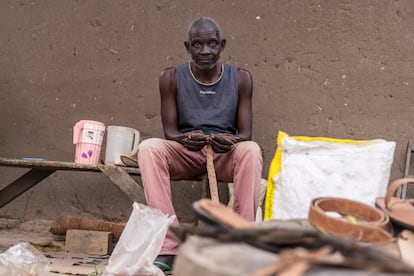
Some escape, while others participate in DDR (Disarmament, Demobilization, and Reintegration) processes to leave the armed groups. This is the case of Jospin, grandson of Sembé Bensaint, a 59-year-old shoemaker from Bossangoa. As he weaves together strips of leather that will soon become sandals, Sembé proudly recounts that his grandson now lives in Bangui, the capital, where he is studying automotive mechanics. In 2024, he demobilized after several years with the Coalition of Patriots for Change (CPC). Not all children leave of their own accord or through DDR processes. Some are expelled by the armed groups themselves, who do not want to be seen recruiting minors.
IV. Returning Home
“I really wanted to live a normal life”
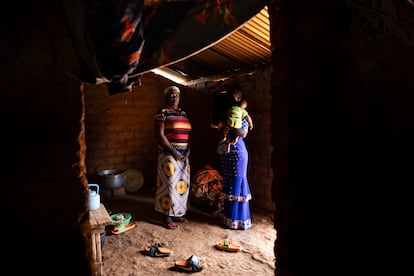
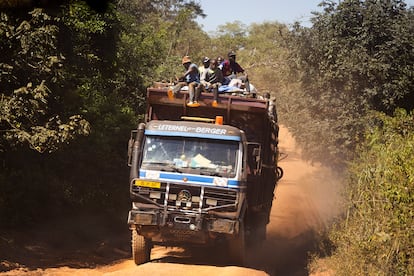
Once they are free — whether they have escaped or been released — they are identified and their stories are verified. That’s where the reintegration process begins. For years, verifying child recruitment has been extremely difficult. The ongoing conflict and lack of access in a country of over 240,000 square miles dotted with remote villages and impassable roads have left countless stories unreported. Armed groups provide lists that only include boys; girls, considered “wives” or servants, remain hidden. In a recent list of 24 children, only three were girls, according to UNICEF. The proliferation of subgroups that disobey core agreements makes the reality even more opaque. And, amid abject poverty, many children remain in armed groups because it is the only way to survive.
The fear of being recruited again

Nahla Khiery, a UNICEF Child Protection Specialist in the Central African Republic, recalls the case of a 14-year-old boy in Alindao, in the Basse-Kotto prefecture, which exemplifies the extent to which armed groups are integrated into the community. "The boy told us: 'I'm happy to have escaped and that you're helping me now, but I'm afraid, because the armed group knows where my house is and they can come looking for me whenever they want,'" the expert explains.
Stigma is one of the first challenges. “Armed groups carry out practices that do not conform to societal norms. If a child has been in that environment and returns, the population thinks that he has participated in those practices or that he is morally or socially ‘tainted,’” explains Dr. Caleb Kette, one of only two psychiatrists in the Central African Republic and coordinator of the National Mental Health and Addiction Prevention Program, by telephone.
“When I returned after the disarmament process in 2024, I really wanted to live a normal life, to reconnect with my friends and the people in town. Unfortunately, some people didn’t look at me favorably, they were suspicious of me,” Hadija recalls with a touch of bitterness. “There were people who looked at me with distrust. I told them: My name is Emmanuel, but I’m no longer Emmanuel ‘the rebel.’ I’m the same person I was before, your friend, your neighbor,” says another boy.
Most of the children are very frightened and relive what they went through. Many are very stubborn and reactive to noises or anyone who exerts authority. They are very alertWilson-Merci Bandassi, clinical psychologist
According to a U-Report survey on community perceptions of children who left armed groups, out of 3,158 people, 34% responded that they are treated well, 33% said they are not, and another 33% “don’t know.” Among those who answered “no” (909 people), 56% said they are perceived as bandits or rebels, 21% said they are feared, and 6% considered the girls to be prostitutes.
In addition to community rejection, they face the mental health consequences of their experience in the forest. “Most of the children are very frightened and relive what they went through. Many are very stubborn and reactive to noises or anyone who exerts authority. They are very alert,” explains clinical psychologist Wilson-Merci Bandassi Mbolifouhefele.
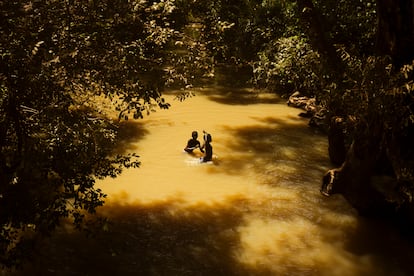
At this point in the conversation, the silences between these boys and girls grow heavier. Their gazes fall to the ground. Words are slow to emerge, and when they do, they often say the same thing: I don’t want to remember, I want to forget what happened there. This silence is also a mandate from the armed group. “The soldiers forbade us from talking about what we experienced in the forest,” Phillipe recalls. Sometimes he breaks that rule and shares it with his friends. “Then, I feel free,” he whispers.
The Central African Republic is a country where the healthcare system is extremely fragile and mental health is “a serious public health problem” for which “there are not enough resources,” says Dr. Kette. These resources are needed, above all, to strengthen the capacities of staff throughout the country, since most cases occur in the provinces, he explains. “Mental health and psychosocial support in the Central African Republic feel almost like a luxury because there is severe deprivation of the most basic needs, and life is extremely painful,” adds Khiery.
"I leave justice in God's hands"

Joachim-Henri Miabe, father of Phillipe (a fictitious name), wipes tears onto his red T-shirt as he recalls the years his son was held captive by the armed group, where he had neither food nor sleep. This 57-year-old teacher, whose firstborn son was killed by the rebels, explains that he lacks the means to pursue them. "They killed my son and kidnapped another. I leave justice in God's hands. Even if one day they were to tell me who killed my son and who took the other, I have neither the means nor the strength to confront those men," he maintains.
The trauma of kidnappings and years spent in armed groups not only affects children but also permeates their families. So does the memory of those who never returned and the sense of injustice in communities where victims and perpetrators live in close proximity.
In Ndow-Kota, a man with a face etched with deep lines and a serene gaze approaches the journalists. He wears a light-colored plaid shirt that contrasts with the red polo shirt peeking out from underneath. On his pocket, a small badge identifies him as chef de village (village chief). He is Jean de Dieu Gamba, 57 years old and father of 13 children. He, too, has a story to tell.
Sitting under a tree, he recalls the day in 2020 when he sent one of his daughters to sell ore at the mine. Like so many others, she never returned. But this time, the story took a different turn: Gamba managed to rescue her. He discovered she was still alive and was able to send her a message telling her to escape if she could. He told her to tell him where she was, and he would send someone on a motorcycle to find her. “I was very lucky; she managed to get away.”
The armed group, he explains, raising his voice, tried to take revenge by kidnapping another of his sons. “My son went with his friends to look for gold, and the armed group took them. ‘This is the chief’s son who doesn’t want the rebellion, and we’re going to show him who we are,’ they said. They took the four boys (three nephews and a son) and executed them,” he recounts. “We found the bodies in the forest after five days. They were half-decomposed; we buried them right there. They were killed in retaliation.”
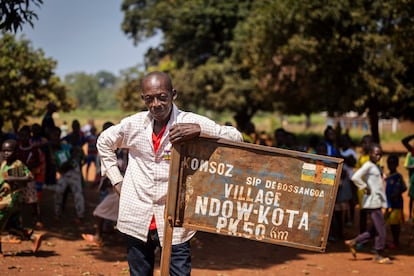
The village chief asserts that the man who ordered the execution, an Anti-Balaka leader, is now a merchant in Bossangoa. “I went to see him and said, ‘I’m not a rebel, nor a soldier, I’m a farmer and I’m innocent of anything. Why did you kill my family?’ He excused himself, saying that it wasn’t really him.” Gamba, resigned, says he no longer expects anything: he entrusts everything to God. “Our sons joined the armed groups because of poverty; they had no other choice but to go to the mines to sell ore. And there they kidnap you and force you to become a rebel. Today, thanks to this training [in sewing], these boys are here in the village,” he adds.
Education is one of the pillars of reintegration. “Most of the children who have been with the rebels, if they are not given work or training, might be tempted to return to the group, because there they had money or could obtain it by force. We need to develop training programs that provide them with employment and allow them to live peacefully,” explains the psychologist.
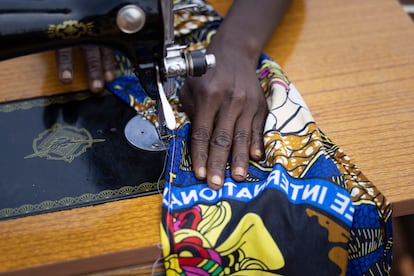
Sometimes, as in the cases of Mahamat and Hadija, it’s a sewing course, offered with the support of Caritas, one of the NGOs working with UNICEF, that allows them to begin healing. “When I’m working, I’m happy and I don’t remember what happened,” explains Hadija. “The training I received lasted four months, but I’d like to keep learning,” she adds. Emmanuel laments: “My family is poor, and I’m afraid that one day I might have to interrupt my studies and not get where I want to be.”
V. The Future
“When I was there, I was like a slave. Now that I’m out, I’m free”
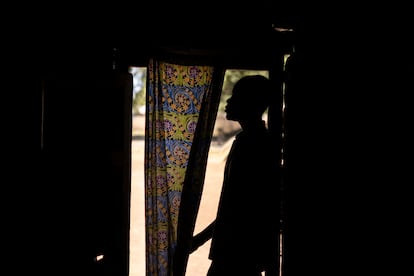
The reintegration process in the Central African Republic lasts six months. “But if you talk to the families and the children themselves, they’ll tell you it’s not enough,” Khiery acknowledges. “For me, it’s not enough at all. For a child to go through a real healing process and be able to let go of what they experienced, they need more than a year. Especially if it’s a girl who arrives with the responsibilities of caring for a baby, which adds to the trauma and stigma she already carries,” she adds.
Added to this limited time is the impact of recent cuts in funding for humanitarian aid, which has resulted in fewer resources for organizations working with these children.
Amid the lack of funds, the uncertainty, the memories, and the silences, Phillipe’s voice rises with hope. “When I was there, I was like a slave. Now that I’m out, I’m free. Free to go to school, to play, to do everything I want.” And he repeats, almost as a mantra, the seven words that could paint a different future for him: “I just want to go to school.”
Sign up for our weekly newsletter to get more English-language news coverage from EL PAÍS USA Edition