
White House announces that Trump-Putin summit in Budapest has been canceled
Russia tells US and EU leaders that it is not interested in a ceasefire in Ukraine
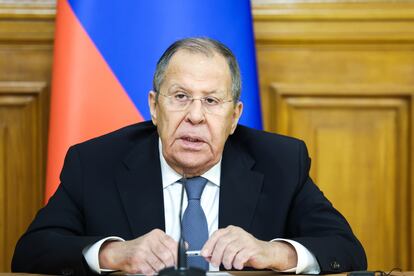

The White House announced Tuesday that, following a conversation between U.S. Secretary of State Marco Rubio and his Russian counterpart, Sergey Lavrov, “there are no plans” for a summit in Budapest in the coming weeks.
The announcement comes just four days after U.S. President Donald Trump had, with much fanfare, revealed plans for a second meeting with the Kremlin leader within two months. The proposed meeting in the Hungarian capital had been agreed upon during a phone call between the two leaders on Thursday, a day before Trump met at the White House with Ukrainian President Volodymyr Zelenskiy, whom he reportedly pressured to cede the eastern Donbas region to Russia, according to the Financial Times. After that summit, Trump called on both sides via social media to agree to an immediate ceasefire and maintain the current front lines.
The Rubio-Lavrov call was intended to prepare the summit Trump had said would take place “within two weeks or so.” The conversation, however, appears to have highlighted differences too large to bridge, although the White House made no mention of any disagreement between the two governments.
“Secretary Rubio and Foreign Minister Lavrov had a productive call,” said a White House official granted anonymity to discuss the plans. “Therefore, an additional in-person meeting between the Secretary and Foreign Minister is not necessary, and there are no plans for President Trump to meet with President Putin in the immediate future.”
Before the cancellation was announced, Trump was continuing to pressure Kyiv to cede Russian-occupied territory in exchange for a ceasefire, while the European Union and Ukraine called in an open letter for an unconditional cessation of hostilities. Moscow, however, opposes such a measure, as its aim is to assert control over Ukraine, either directly or indirectly.
Even before the White House announcement, Kremlin officials had hinted at the possibility the summit might not happen. “We cannot postpone what has not been agreed upon,” Deputy Foreign Minister Sergey Ryabkov said regarding reports of a postponement.
European leaders and Zelenskiy have urged Trump that Ukraine must not cede territory before negotiating peace. Lavrov, however, emphasized that no ceasefire is on the Kremlin’s agenda. “Calls for an immediate ceasefire without addressing the root causes of the ‘Ukrainian conflict’ contradict the agreements reached by Putin and Trump in Alaska,” the Russian foreign minister stressed, noting that Kyiv could rearm during any pause in fighting.
The diplomat insists that Moscow wants to address what it calls the “root causes of the conflict.” In Kremlin terms, this does not refer to the conquest of a specific territory, but rather to the capitulation of all of Ukraine as a sovereign state. At the start of its full-scale invasion in 2022, Putin emphasized that his objectives were to disarm Kyiv, leaving it at Russia’s mercy, and to “denazify” it — a false pretext to replace Zelenskiy’s elected government with a Russian-backed representative, even though the Ukrainian government was recognized by the Kremlin after the 2019 presidential elections.
Russia rejects a pause in hostilities, while Trump is calls for an immediate ceasefire. “Let it be cut the way it is. It’s cut up right now. I think 78% of the land [in Donetsk] is already taken by Russia,” Trump said Sunday after speaking with Putin by phone and meeting with Zelenskiy in Washington in the preceding days. “They can negotiate something later on down the line. I said: cut and stop at the battle line. Go home. Stop fighting, stop killing people,” Trump added.
According to U.S. media, Trump tried to convince Zelenskiy to give up Russian-occupied territories in exchange for an end to the conflict. Meanwhile, The Washington Post reported that Putin offered Trump a partial concession in the Kherson and Zaporizhzhia regions in exchange for Kyiv relinquishing Donetsk and Luhansk entirely.
Officially, the Kremlin maintains that the four Ukrainian regions, including areas it does not control, are part of Russia after Putin incorporated them into the Russian Constitution in September 2022.
“We agreed to keep communication over the phone in order to better understand our positions and determine what actions are needed to move in the right direction,” Lavrov said, expressing surprise at CNN’s scoop and accusing Western media of being “dishonest.”
Putin and Trump agreed last week that the Rubio-Lavrov meeting would prepare a potential summit between the two presidents. Washington treated the summit as a certainty, while Moscow has been more cautious, referring only to a possible meeting.
“The main thing is not the location or the timeframe, but the main thing is how we will proceed on the substance of those matters,” Lavrov said. “The objectives that we agreed upon and reached a broad understanding in Anchorage.”
Putin’s spokesperson, Dmitry Peskov, refused to disclose Russia’s demands or concessions ahead of the possible meeting with Trump. “Of course, announcing proposals cannot take place in this, you know, ‘shouting-from-the-rooftops manner.’ This is still quite a discreet process that must remain so in the interests of the process itself and its effectiveness,” the official said.
Although the future of Ukraine and Europe would be at stake in such a meeting, Moscow refuses to allow Zelenskiy or any European leaders to take part. “It’s probably too early to talk about this. So far, none of these details have been discussed,” said Peskov.
Sign up for our weekly newsletter to get more English-language news coverage from EL PAÍS USA Edition









































