
Hitmen mistook him for someone else and left him paralyzed. Now he has undergone euthanasia
Renato Ortuño has become the second person to legally claim his right to a dignified death in Ecuador
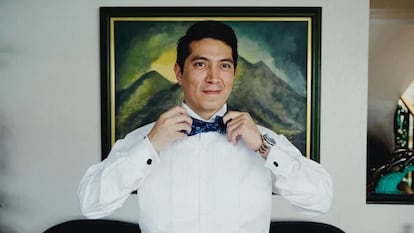
Renato Ortuño didn’t fully understand what it meant to be alive until he left the hospital. Weeks had passed since the attack. A bullet pierced his vertebra at the level of his neck, obliterating his body from the shoulders down, and leaving him with only one certainty: he would never walk again. He also couldn’t move his arms. On June 23, 2023, he was trapped inside his own body. Last Friday, he underwent euthanasia, becoming the second person in Ecuadorian history to do so legally.
Two years ago, Ecuador was experiencing one of the worst crises of violence in its history: 21 people murdered every day. Renato was on the verge of joining that list when some hitmen mistakenly began following him, believing he was someone else who looked similar and who was driving the same car. It was all a huge twist of fate. A chain of coincidences: the vehicle’s model, the color, the license plate, the haircut — all of these factors led to the fatal error. Renato fitted the description of the man they had marked for death.
That morning, Renato left his home in Quito. Behind him, at the same time, someone in another car did the same. He was disturbed by the fact that the gray vehicle seemed to be following him. He watched it in the rearview mirror over the 14 miles he traveled to his office. He didn’t think about death; he never thought about death. He was young, and back then it was just something that happened to other people. When he stopped in front of the electric gate of the parking lot, the hitmen took advantage of this moment of defenselessness. One fired from the passenger seat, the other from behind the car. “There were nine shots, four of which wounded me. One of the bullets passed through my neck and caused a serious and irreversible bodily injury,” he wrote when submitting his request for euthanasia two years later.
Since February 2024, Ecuador has recognized the right to assisted dying. It was a historic ruling by the Constitutional Court following a lawsuit by Paola Roldán, a woman with amyotrophic lateral sclerosis (ALS), which opened the door to dying with dignity in a deeply conservative country. Renato, a 38-year-old lawyer, was well aware of this right because he had written about it in his doctorate and analyzed it as a jurist, never imagining that one day he would invoke it as a patient.
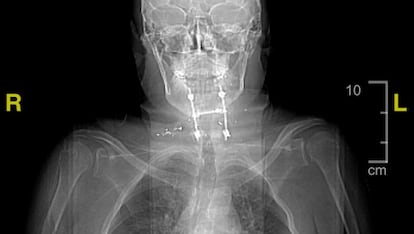
For two years, he tried everything to reverse a diagnosis of quadriplegia. He traveled, sought out specialists, and tried all kinds of experimental therapies. “I have undergone a variety of treatments of all kinds to recover, even partially, my quality of life,” he wrote to the interdisciplinary committee of the Ecuadorian Social Security Institute (IESS), which evaluated his case. But hope was also fading.
He lived in constant pain. Physical, but also emotional and spiritual. The kind of suffering that doesn’t subside with medication or promises. “It’s not just the pain the injuries have caused and continue to cause all this time,” he explained in the petition. “It’s also having given absolutely everything to ensure a recovery, or at least a more or less decent quality of life.”
Through TikTok, without filters, Renato shared the bouts of depression he had experienced over the past two years. He also launched fundraising campaigns in his tireless attempt to recover some of what the bullet took from him. He did so alone, with his wife, family, and friends, in the face of the absence of the state, which didn’t even guarantee the most basic treatments. He tried stem cell implants, neurological stimulation, and intensive physical therapy. Nothing worked. “I went to bed praying to God that I wouldn’t wake up again,” he confessed in one of his most-viewed videos.
The two hitmen who shot him were arrested, but only one has been sentenced. The investigation into the masterminds behind the attack remains bogged down; the only confession those captured have made is that they charged $1,000 for his life. “I realize the hitman is freer than I am, because he’s not trapped in a body,” said Renato, who turned his grief into a public testimony.
Last week, after resisting, fighting, and exhausting all options, he made a radical decision: to choose how his story ends. Not only as a collateral victim of senseless violence, but as a man who reclaimed control over his life. And also over his death. Renato has become the second person in Ecuador — officially — to be granted access to euthanasia since the right was recognized by the Constitutional Court. The first was a woman in Guayaquil with terminal cancer, who also had to battle the system to exercise it.
Institutional fear of euthanasia hinders access. The right exists, but it is still difficult to put into practice. Once Renato made the decision, he announced it on TikTok, in a video that is both a farewell and a declaration of principles. A form of resistance to the pain, abandonment, and silence that still surrounds death with dignity. “I don’t ask that everyone agree with my decision, because we have the right to disagree. I only invite you to reflect, and I ask for your respect. I love you very much,” he said before the camera was switched off. For the last time.
Sign up for our weekly newsletter to get more English-language news coverage from EL PAÍS USA Edition









































