
Morocco begins using ankle monitors to curb prison overcrowding
New penal alternatives like community service look to alleviate overpopulation in prisons, where up to three incarcerated people are crammed into spaces designed for one
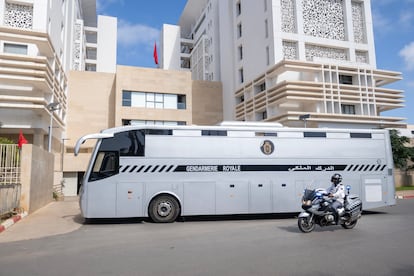

Morocco’s prisons are overflowing, despite the ongoing construction of new facilities, with more than 100,000 inmates at the end of 2024 and an occupancy rate of 160%, forcing up to three prisoners to share a space designed for one. To alleviate this inhumane overcrowding — and simultaneously reduce the prison budget — the North African country has just introduced a system of alternative sentences to imprisonment. These include electronic monitoring devices, community service, and fines in exchange for days in prison for minor offenses, for which tens of thousands of Moroccans end up behind bars each year.
Over the last decade, the country’s prison population has increased by 40%, according to the latest annual report from the General Delegation for Prison Administration and Reintegration (DGAPR), as cited by the magazine Tel Quel. The agency acknowledges that it cannot guarantee sanitary conditions in its facilities due to overcrowding, lack of ventilation, and poor sanitation. Internal security is further compromised by the uncontrolled circulation of weapons and prohibited substances in prisons, while reintegration, education, and training measures remain largely unenforceable.
Morocco admits it is far from having a prison system that meets international human dignity standards. The NGO Moroccan Prison Observatory (OMP) has raised the alarm over the emergency situation in the country’s prisons amid the growing gap between facility capacity and the actual number of inmates. “With prison overcrowding at 160%, the threshold that guarantees humane conditions of detention has been far exceeded,” states the group’s latest report.
Prisoners in the country’s facilities have an average 18.62 square feet, less than half the minimum required by the United Nations for shared cells. Individual bathroom facilities are also lacking. The OMP is advocating for the granting of mass pardons, such as the ones issued by King Mohammed VI on July 30, on the 26th anniversary of his coronation, for nearly 20,000 inmates, as well as the release of prisoners in vulnerable situations due to age and illness.
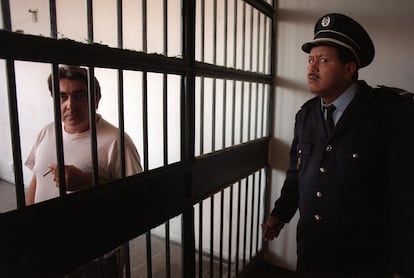
In a bulletin that was issued last Wednesday, the Moroccan Attorney General’s Office noted that short prison sentences have proven ineffective in preventing recidivism, and that their enforcement is costly for the state. The Attorney General’s Office argued that deprivation of liberty should be avoided unless strictly necessary due to the type of crime, and favors the implementation of alternative measures. A court in Agadir in southern Morocco issued, on August 22 — the date the new regulations came into effect — its first ruling substituting a two-month prison sentence and a $58 fine with a daily fine of about $34, capped at $2,000, for the illegal sale of alcohol.
Among the other alternative measures that have been announced, only the ankle monitors have been partially put into effect. Community service has not yet been applied, nor have other substitute penalties (such as bans from leisure venues or mandatory rehabilitation programs), which must be coordinated with public institutions and civil society organizations. Officials from the penitentiary institutions have attributed these delays to summer vacations, according to a DGAPR.
Morocco hopes that such measures will align its penitentiary system with recommendations from the European Council, the European Union and the United Nations, but the Attorney General’s Office admits that initial implementation of the plan will be complex in some of the country’s regions, and that the cost and maintenance of electronic monitoring equipment will limit the scope of its use. In comments made to Tel Quel, Mulay Idris Akelman, the DGAPR’s social action director, warns that the “implementation of alternative sanctions does not depend on the penitentiary institutions alone.”
These measures apply to offenses punishable by less than five years in prison. Community service could be carried out in public institutions and associations that offer social support or charity, as well as in municipal and school services. The new legislation provides for three months’ imprisonment and heavy fines for those attempting to remove the electronic monitoring devices. The cost of the fine, which is based on the convicted person’s income, ranges from $12 to $233 per day of sanction. The government estimates that the alternative measures will lead to annual savings of around $35 million.
Repeat offenders are excluded from the new sentencing system, which will also not apply to crimes against state security, terrorism, corruption, international drug trafficking, money laundering, sexual exploitation of minors, organ trafficking or violent assault.
Minor infractions
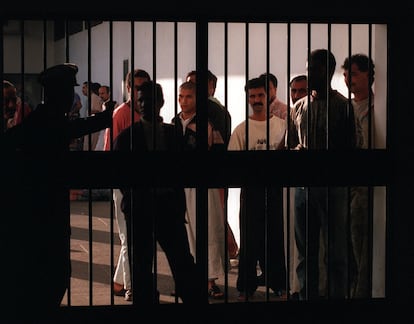
The Moroccan Prison Observatory believes that the introduction of alternative sentences offers an opportunity to alleviate prison overcrowding in Morocco. Prison facilities are in a critical situation, with more than 100,000 inmates housed in prison cells designed for 70,000, according to legal analyst Raby Bukuraych, cited by La Quotidienne magazine. “The pressure is not only due to insufficient holding capacity in prison administration,” says the Casablanca official, “but also to the systematic application of custodial sentences in the case of minor offenses.”
As a result of this situation, prisoners are subjected to harsh detention conditions, exacerbated by the high density of inmates in the cells, concludes the NGO. A study conducted by the Attorney General’s Office and the prison administration indicates that the impact of alternative sentences will remain limited. Simulations of the outcomes show that only about 1,700 people would benefit from the new measures initially.
Sign up for our weekly newsletter to get more English-language news coverage from EL PAÍS USA Edition









































