
UN inquiry concludes war crimes were committed in Ukraine
Mission found signs of torture, rape and summary executions in areas occupied by Russian troops, an investigative body told the UN Human Rights Council in Geneva
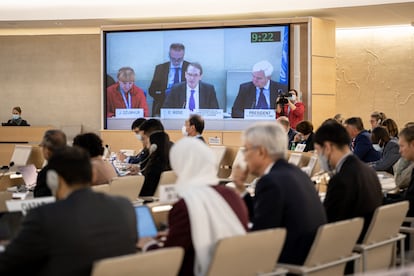
A United Nations-mandated commission on Friday delivered the conclusions of its findings on Ukraine, where it said that war crimes were committed in areas occupied by Russian troops since the beginning of the invasion on February 24.
“We were shocked by the large number of executions perpetrated in the areas we visited,” said Erik Mose, president of the Commission of Inquiry on Ukraine speaking before the United Nations Human Rights Council in Geneva (Switzerland). Created in March, a mission visited Ukraine in June and interviewed around 150 victims and witnesses.
Many of those executed were detained people whose bodies were found with their hands tied behind their backs, and the also presented head wounds and neck cuts, according to Mose. The commission president also denounced sexual and gender-based violence by Vladimir Putin’s soldiers against victims “between the ages of four and 82.” In some cases, relatives of the victims were forced to watch the latter be abused or tortured.
This UN mission also documented cases in which children were “raped, tortured and illegally detained.” In some cases some of them ended up being killed by the Russian soldiers. Several witnesses told members of the mission that they had been subjected to beatings, electric shocks and were stripped naked during the illegal detentions in which they were transferred from Ukraine to Russian territory.
Mose has also highlighted the repeated use of explosive devices in civilian areas, which have affected schools, residences, hospitals and other infrastructure.
Ukrainian authorities estimate that more than 400 people were buried in a wooded area of Izium, a town in northeastern Ukraine, after being killed during Russia’s six-month long occupation. Many of the victims were shot dead, while others showed signs of torture. And in early April, the world was shocked by news of hundreds of civilians found in a mass grave in Bucha, on the outskirts of Kyiv, following the withdrawal of Russian troops.









































