
Woman who lost eye to police rubber bullet urges ban on their use
Ester Quintana has been on medical leave for eight months, living off her father's pension

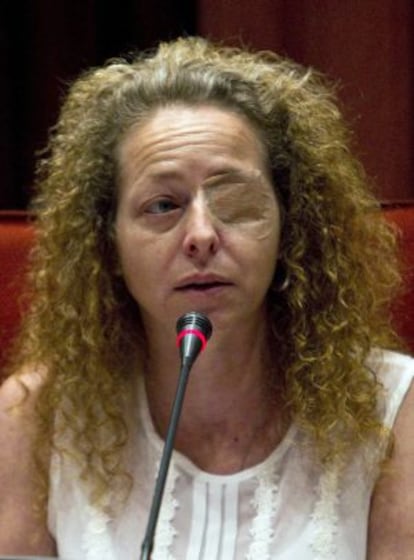
Ester Quintana, the woman who lost an eye during the general strike in Spain last November, on Thursday made an emotional appeal to the Catalan regional parliament. With a patch over her left eye, which she lost after being struck by what was presumably a rubber bullet fired by police in Barcelona, Quintana called for a ban on the use of such weapons.
"What happened to me could happen to anyone - to your son, your mom, your partner," she warned members of a parliamentary committee.
Quintana was also quick to note that her injury was not incurred in a massive riot. "In case anyone still doubts it, when my eye exploded, there was no altercation or public disorder or mass of people gone out of control. I was just trying to get home," said Quintana.
Since the incident, she's been on medical leave for eight months. "I'm dependent on my 87-year-old father, living off his pension," she said. "I don't wish this on anyone."
Quintana continues to wonder why officers would shoot citizens: "Are we at war?" she asked.
The 43-year-old has criticized the manner in which the regional interior department responded to the incident. "They weren't interested in my health, or in learning what happened to me. Not even days later, when it went public in a press conference," she said. "They're only worried about protecting their image."
"How did this happen to me? In any other democratic country, there would be resignations and inescapable responsibilities," Quintana added, in reference to the lack of an investigation into her case.
Quintana thanked fellow citizens for their support while pointing out that her life had changed forever. "We all use our eyes - to take in our surroundings, to watch the street, to read the newspaper, use a cellphone, to walk in the street. Nearly 80 percent of the information we get comes from our eyes.
"The face is the reflection of the soul. I can't see like you any more, nor do I look the same to all of you. I've lost an eye," she continued.
"Are rubber bullets an appropriate measure? Why haven't the victims been compensated in any of these cases?" she asked. "A society in which citizens are afraid to protest can't be a free society. We're asking for a ban. We don't want any more victims of rubber bullets."









































