
Mexico completes its trade shift with the entry into force of tariffs on China and countries without trade agreements
Starting January 1, increases of up to 50% will be implemented on 1,463 tariff classifications
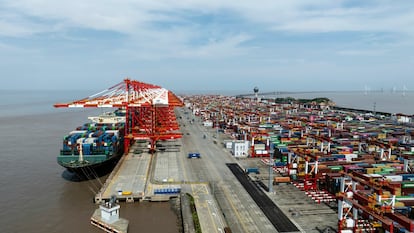

The new year begins in Mexico with a new trade policy. As of midnight, tariff increases went into effect on 1,463 tariff lines from countries with which the Latin American nation does not have a trade agreement, including China, Russia, South Korea, India, Vietnam, Thailand, and Brazil. Although the tariff adjustment approved by the legislature was lower than the one originally proposed by the executive branch, it will affect more than 1,000 goods. The rates to be paid starting Thursday range from 5% to 50%. Among the products subject to tariffs are electric vehicles, auto parts, cosmetics, plastics, steel, cardboard, acetate, textiles, footwear, toys, furniture, appliances, glass, soaps, and other goods. According to the federal government, the tariff increase will generate 30 billion pesos in revenue annually, while the inflationary impact is estimated at 0.2% by the Ministry of Finance. Through the Official Gazette, the Claudia Sheinbaum administration assured Wednesday that all basic food basket products coming from these countries will be exempt from tariffs throughout 2026.
The implementation of this measure, following intense debate in the legislature, represents a turning point for experts in Mexico’s role in international trade. The official decree states that the Ministry of Economy may implement mechanisms to guarantee the supply of inputs under competitive conditions. However, the increase to over 1,000 imports will pose a challenge both for Mexican importers and for trade relations with the countries involved, specifically with China, Mexico’s second-largest trading partner after the United States.
Mexico buys over $129 billion worth of goods annually from China and exports approximately $9 billion to the Asian giant, resulting in a trade deficit for the Latin American country of around $120 billion. This imbalance, which grows year after year, is partly explained by high production levels, low prices, and limited local and regional supply. The trade imbalance between Mexico and China takes on a special significance amid the trade war between Washington and Beijing. Against the backdrop of Donald Trump’s protectionist policies, Mexico’s tariff increase represents a gesture in favor of its northern neighbor’s tariff policies and an attempt at greater North American integration, just months before the USMCA renegotiation begins in July.
The Mexican government has repeatedly stated that the tariff increase is not an attack on any country and is intended solely to benefit Mexican companies and protect 350,000 local jobs. The Ministry of Economy argued that this measure aligns with Plan Mexico — the six-year investment strategy — and will contribute to the reindustrialization of strategic sectors of the Mexican economy, correcting trade distortions and the high dependence on imports. Sheinbaum’s import substitution plan aims to enable Mexican companies to cover 50% of domestic supply and consumption.
Despite staunch defense from the National Palace, Mexico’s tariff wall has raised alarms both domestically and internationally. China was among the first to criticize the measure and called on the Mexican government to reverse it, while also launching its own investigation to assess potential retaliatory measures. South Korean and Indian exporting companies expressed their concern about Mexico’s decision a couple of weeks ago. Domestically, reactions from Mexican businesses range from outright rejection and concern about the impact on costs and supply chains to support for Sheinbaum’s new import substitution strategy, which focuses on local production.
Ignacio Martínez Cortés, coordinator of the Laboratory for Analysis in Trade, Economics, and Business at UNAM (the National Autonomous University of Mexico), indicates that the change in Mexico’s tariff policy represents a turning point in line with the geopolitical changes that Trump has implemented in the first year of his second term in the White House. “From September 25, 1986, when Mexico joined the GATT (General Agreement on Tariffs and Trade), until December 31, 2025, our country experienced a 40-year period of unilateral trade liberalization that transformed it into an exporting powerhouse and an attractive destination for investment, primarily in manufacturing. However, this period ends on January 1, when the amendment to the General Import and Export Tax Law takes effect,” he states.
The expert asserts that although the Mexican government claims this measure is intended to protect domestic industry, the tariff increase is being implemented in the country without a national export policy or a strategic trade security plan. “It is crucial to redesign the strategy in accordance with the national interest, since on issues of great importance such as drug trafficking, trade, security, migration, climate change, and cybersecurity, Mexico has reacted to the Oval Office agenda without a guiding principle based on a long-term national project,” he comments.
Beyond the speeches and rhetoric, starting January 1, it will become clear on the ground which companies will benefit and which will have to navigate the increased costs or the need to switch suppliers resulting from this new trade policy. At stake is the restructuring of production chains in Mexico and the survival of the USMCA, a trade agreement with the United States and Canada that covers more than 80% of Mexican exports and represents annual revenues of over $500 billion for the Latin American country.
Sign up for our weekly newsletter to get more English-language news coverage from EL PAÍS USA Edition









































