
‘They sweated profusely and gasped for air’: The journey of seven migrants who died on a train in Texas
At least 11 people were part of a migrant-smuggling network that had operated on the Texas border since April 2023. They are charged with crimes that could keep them in prison for life
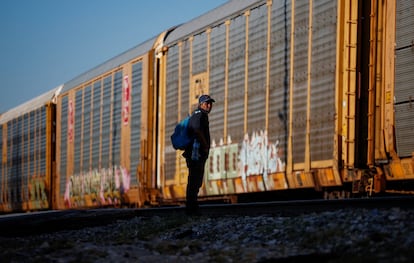

Seven Honduran and Mexican migrants were trying to reach the United States. Their journey began in late April 2026. Guided by a smuggling network, they crossed from the border city of Ciudad Acuña in Mexico into Del Rio, Texas. A few days later, on May 9, they were taken to the tracks where a Union Pacific train was parked. Between 1:18 p.m. and 1:25 p.m. that day, the smugglers broke the lock on one of the containers and helped them onboard so they could continue toward San Antonio. Hours later, all seven died inside the same rail cargo container, suffocating with no means of escape.
The details were laid out in an indictment filed in the U.S. District Court for the Western District of Texas against 11 alleged members of the smuggling network. On Friday, they were charged with conspiracy and aiding and abetting the transportation of migrants that resulted in death. They face a maximum sentence of life imprisonment.
It does not appear to have been the group’s first operation. In the indictment, prosecutor Justin Simmons describes a criminal organization made up of smugglers working in coordination with other trafficking networks. The cooperation allowed them to share routes, use safe houses where migrants were concealed, and rely on drivers who facilitated journeys from Mexico and Honduras into the United States.
Once migrants crossed the southern border through unauthorized points of entry, they were housed in those safe houses or hidden in the dense vegetation along the Rio Grande near Del Rio. Then, as happened with these seven migrants, they were loaded into freight containers on trains in Del Rio to continue deeper into the United States.
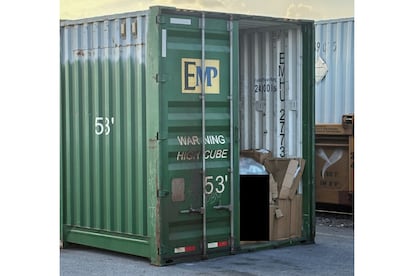
Only these four Mexicans and three Hondurans did not survive the trip because of the extreme temperatures that day.
The trip cost each trafficked person — or their families — between $1,500 and $10,000, which they paid to smugglers in Honduras, Mexico and the United States.
From the inside
On May 13, Webb County Medical Examiner Corinne Stern and her team examined five of the bodies. That day, they told EL PAÍS that the victims included Honduran and Mexican migrants, among them a 14-year-old boy.
The forensic examination of one of the victims was enough for investigators to determine the cause of death for the entire group: hyperthermia, an abnormal rise in body temperature. Authorities estimated that temperatures outside the container ranged between 31°C and 33°C (88°F to 91°F). Inside, the heat was unbearable. Investigators estimated that the heat index may have reached 60°C (140°F) in a rail cargo container with no ventilation, no air conditioning and a door that could not be opened from the inside.
Union Pacific operates one of the largest freight rail networks in the United States, with thousands of miles of track across multiple states, including Texas. In this case, according to the indictment, the train was traveling from Del Rio to San Antonio parallel to a highway.
According to the indictment, “this human smuggling organization utilized the train system to conceal aliens so that they could bypass the United States Border Patrol Checkpoints on Highway 90.” Given the area’s proximity to the southern border, it is common for immigration authorities to stop and inspect vehicles, trucks and pedestrians.
The container carrying the seven migrants was loaded with cardboard boxes. They were sitting on top of them, “in a small space near the end of the container, unable to touch the floor,” the prosecutor wrote. “As the temperature inside the Conex shipping container rose, the aliens panicked. They sweated profusely and gasped for air. At least one alien messaged a loved one, pleading for help.”
When the train arrived in San Antonio, the smugglers opened the container door and discovered the emergency unfolding inside. They fled the scene. One person fell from the box and, instead of helping them, was abandoned near the tracks. The victim was later found by San Antonio police.
The remaining victims stayed inside the container for another day as the train continued south to Laredo. There, they were discovered by a railroad employee who “saw a leg sticking out from a Conex shipping container.” Upon inspecting it, he found the bodies of six deceased migrants.
The route and the arrests
The route between Laredo and San Antonio is frequently used by coyotes to move migrants from Texas to different cities in the state and even across the country. It is the starting point for numerous internal migrant transfers every year.
Over the past decade, this stretch of the border has been the scene of numerous migrant deaths and smuggling tragedies. The deadliest occurred in 2022, when authorities described a human-smuggling operation as the most lethal such case in U.S. history.

More than 50 migrants from Guatemala, Honduras and Mexico died from suffocation while being transported along this same route, hidden inside a tractor-trailer with no air conditioning and no water on a June day when temperatures approached 40°C (104°F). They were kept in those conditions for roughly three hours as they travelled from Laredo to San Antonio. By the time the trailer was opened, most were already dead; others died on the way to the hospital. Among the victims were children and a pregnant woman.
In general, migration to the United States by train, truck or on foot across the southern border remains highly dangerous, not only because of the region’s harsh conditions, including extreme heat and arid terrain, but also because of the risks and violence migrants face when they fall into the hands of human smugglers.
The International Organization for Migration (IOM) reported in April that at least 414 migrants died or went missing in the Americas during 2025. The number is lower than the previous year, partly because migration flows declined following the hardline policies of U.S. President Donald Trump, who ended access to asylum at the border.
Even so, nearly 41% of all recorded deaths (131) occurred along the U.S.-Mexico border. Most were caused by drownings while crossing the strong currents of the Rio Grande, while others resulted from the extreme conditions migrants endure, including limited access to food and water, and the dangerous circumstances in which they are transported by smugglers.
One of the people allegedly involved in the network linked to the deaths of the seven migrants, Mayra Alejandra Huerta, was arrested in Del Rio on May 12 and has remained in custody ever since. Authorities tracked down eight other suspects during a multi-day operation across central and southern Texas. However, two of the defendants, Karina García and Seferino Huerta-Casillas, remain at large.
Sign up for our weekly newsletter to get more English-language news coverage from EL PAÍS USA Edition









































