
Trump’s new restrictions leave no migrant safe: ‘Being a legal resident in the US is being a second-class citizen’
The administration is cornering migrants with the suspension of applications for citizenship, residency, asylum, duration of work permits, and even threats of frozen bank accounts
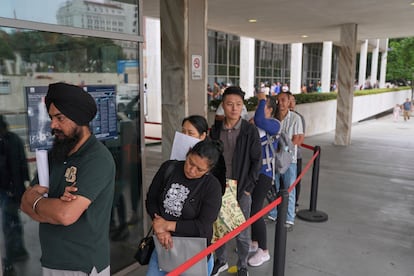

An unexpected notification arrived from U.S. Citizenship and Immigration Services (USCIS). “We hereby inform you that, due to unforeseen circumstances, we have had to cancel the interview scheduled for Wednesday, December 3, 2025, at 9:50 a.m.” Zoe, a Cuban woman who has been a permanent resident in New York for five years, was finalizing the details of the interview, reviewing the names of U.S. congressmembers and historical leaders, and re-reading the duties and rights that anyone aspiring to become a U.S. citizen should know. “I was happy because everything was going smoothly, I was studying Lincoln, Washington and every member of Congress,” she says. Then, through an email, she was informed that the path to her naturalization has been indefinitely postponed. That status is almost the only guarantee — for the moment — in a country determined to expel its immigrants.
The brief notification she received on December 1 stated that she would be informed of “any further action taken in this case, including information regarding the rescheduling of the interview.” USCIS also added that they regretted “any inconvenience this may cause.”
At first Zoe thought it might be a mistake, or an unforeseen event. “Just chance, the snowfall, or staff shortages due to the government shutdown,” she told herself. But when she woke up the next morning, the news was a reality in every media outlet in the country: the Trump administration had paused immigration applications from nationals of 19 countries considered high-risk, including Cuba and Venezuela, a measure taken as an expansion of the travel ban announced in June. Applications for permanent residency or citizenship were suspended, and applicants would be subject to more thorough vetting.
USCIS Director Joseph B. Edlow said in a statement that they were implementing “additional safeguards to ensure that fraud, deception, and threats do not compromise the integrity of our immigration system.” Immediately, migrants across the country began reporting receiving not only the same email, but also the cancellation of their citizenship oaths.
The latest measure taken by the White House targets those who thought they were a little safer: permanent residents, just one step away from becoming citizens. But at a time when there have even been threats to eliminate birthright citizenship, and when Immigration and Customs Enforcement (ICE) has detained naturalized citizens, the only certainty is that no immigrant is safe.
“I’d been talking to my husband for months, ever since more and more videos of arbitrary ICE arrests started coming out,” Zoe says. “He told me that none of this would affect me, that I’m a legal resident, married to an American citizen, with an American child. But I felt that it could, that it could happen to me too, because in the end they go after all immigrants, looking for new and sinister ways to intimidate us. Being a legal resident in the United States right now means being a second-class citizen. I’m afraid to travel and then not be allowed back in, afraid that they’ll revoke my green card, that they’ll separate me from my baby.”
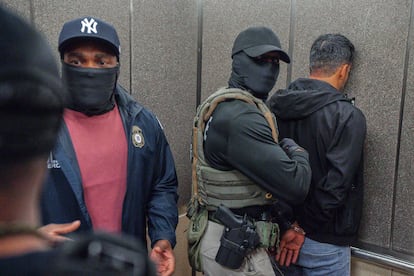
The first priority, according to the Trump administration, was to stop illegal immigration and expel “the worst of the worst” from the country. Suspensions of Temporary Protected Status and humanitarian parole followed. Then they extended their power to immigration courts, and ICE became a part of daily life in the nation’s major cities. But that’s not enough; they’re going much further. The concept of “criminal” has expanded, and the message is clear: no foreigner is welcome.
Aboard Air Force One, where Trump recently explained his idea of so-called reverse immigration — which involves “removing the people who are in our country” and who entered thanks to the Joe Biden administration — the president was asked if he planned to denaturalize migrants. “If I have the power to do it — I’m not sure that I do, but if I do — I would denaturalize, absolutely,” he replied.
Processes on hold
The shooting of two National Guard troops by 29-year-old Afghan national Rahmanullah Lakanwal was the final straw that led Trump to greenlight the intensification of his anti-immigrant policies. It wasn’t long after the incident that shook Washington, D.C., that the president threatened to suspend immigration from “all Third World countries.” By the end of November, the new measures that now have all migrants on edge were already being implemented.
According to immigration attorney Liudmila Marcelo, these policies primarily affect those without criminal records, “because these are the people who report to ICE, comply with their court dates, and want to follow the correct and necessary steps to obtain legal status.” “It has never been about immigrants with criminal records, because those immigrants are not easy to find and prosecute; those immigrants don’t go to court, they don’t report to ICE,” she maintains.
Ángela Linares — a Cuban woman who requested using an assumed name — has been repeatedly affected by the president’s immigration policies. Over a year ago, she thought she was fortunate when a legal path to the United States opened up for her after she received humanitarian parole. The day the White House ended the program, Linares began living on the margins of society in Florida.
“I was left in an illegal situation. I had to put everything on hold because since they restricted all the processes, I haven’t received my work permit or my residency. Life is on hold,” she says. Now she works “under the table,” and she doesn’t even dare drive from her home in West Palm Beach to her parents’ house in Cape Coral, for fear of being stopped by the police. “My father doesn’t want me to visit him. He knows that any trip is risky. They stop you and they don’t care about anything. They’re violating everything; there’s no security.”
The family lives in fear that, after nearly a decade of waiting, Linares, 49, will have to leave all by herself once again. In 2016, her parents, both U.S. citizens, began the process of petitioning for her. In 2024, her luck changed, and she joined them as a beneficiary of parole. The notification to appear at the embassy in Havana to obtain her family reunification visa arrived when she was already in the United States. At another time, she might have considered returning to the island and appearing before the consular authorities, but the travel ban considers her “non-priority” because she is an adult daughter. She also lost the possibility of pursuing her petition.
With the latest measures, she faced another setback. Because of her Cuban nationality, she was eligible to apply for the Cuban Adjustment Act, but now her residency process is being affected. In a message posted on X in late November, USCIS director Edlow said that at Trump’s request he had ordered “a rigorous, large-scale review of every green card of every alien from every country of concern.”
According to the attorney Marcelo, pausing these processes “means that the volume of stalled cases will increase,” even though considerable delays were already being experienced in processing Cuban Adjustment residency applications. “This will bring an even greater period of uncertainty for those who don’t feel secure until they receive their permanent residency, because even though they meet the requirements, until that residency is granted, they are at risk of being detained.”
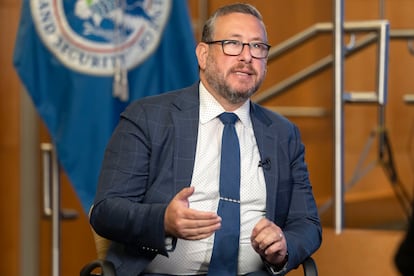
In addition to permanent residency and citizenship applications, asylum applications have also been paused. According to Edlow, the suspension will remain in place “until we can guarantee that all foreigners are investigated and examined with the utmost rigor.” The measure affects more than 1.5 million people with pending asylum applications.
Even so, attorney Aaron Ortiz-Santos insists that his firm is advising clients not to abandon their cases. “We tell people to keep going so that if a lawsuit is filed and these rules are suspended, the proceedings can continue.” For now, however, there is no official date for when they will resume.
“They are taking away the essentials so that people will leave”
The U.S. government — which knows that “the largest deportation in history” involves extreme expense and that it is also not easy to locate the millions of undocumented immigrants it intends to expel — has been using other types of strategies to corner them or make them opt for self-deportation.
The Republican administration began the last month of the year with restrictions on work permits, limiting to 18 months those that previously lasted up to five years. According to the director of USCIS, the measure ensures that those “seeking to work in the United States do not pose a threat to public safety or promote ideologies contrary to national values.”
On the other hand, several migrants have begun reporting notifications from their banks asking them to update their immigration status to avoid account closures or freezes. Those who have not applied for asylum, do not have residency, or lack work permits will find it impossible to justify their status.
Linares says the biggest challenge these days is waking up in the morning “without any security.” “How are you going to live if you don’t have money? Because if you don’t have a work permit and you have no way to pay, you can’t have an income. What do you do if you don’t have a driver’s license in a country where you have to drive? They’re suffocating you, they’re taking away your freedom, you can’t move around, and if you don’t have a job you can’t live in this country. That’s why they’re doing it. They’re taking away the essentials so people will leave.”
Sign up for our weekly newsletter to get more English-language news coverage from EL PAÍS USA Edition









































