
US Congress slashes all funding of public television and ‘Sesame Street’ as part of $9 billion in budget cuts
House of Representatives approves Trump’s cuts to foreign aid and media
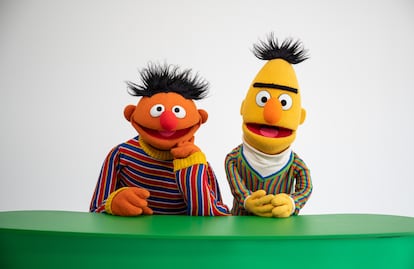

During the early hours of Friday, the U.S. House of Representatives definitively approved President Donald Trump’s request to cut $9 billion from both PBS, which airs the popular show Sesame Street and other programs, as well as foreign aid. The former, according to Republicans, due to bias and overt progressivism and the latter, unprofitability and being mired in bureaucracy.
The legislation, which was approved by a vote of 216 in favor and 213 opposed, was the subject of much interest, in part because it was the first time in decades that a president successfully requested a cut of this kind from Congress. The bill had been approved by the Senate the day before, and will now be signed into law by Trump.
Some $1.1 billion of funding will be canceled to the Public Broadcasting Service, which transmits the PBS television channel and NPR radio station, in addition to nearly $8 billion in different foreign aid programs, following previously announced cuts to USAID which practically dismantled the agency. The cuts are part of the tax and spending slashes envisaged in what Trump calls his “big, beautiful bill,” a battery of measures that benefits the most rich and deprives the poor of health coverage and even food stamps. The Congressional Budget Office estimates that the omnibus bill will increase U.S. debt by about $3.3 trillion over the next decade.
Some Republicans expressed reservations about the cuts, and two voted against them, but endorsed the president’s proposal out of fear of antagonizing him or slowing his agenda. House Speaker Mike Johnson, a Republican, hailed the vote as “an important step toward returning to fiscal sanity.” The cut completes the dismantling of USAID and, in regards to public broadcasting, deprives member stations of its two flagship outlets PBS and NPR of important funding. For many, these channels are an oasis of information and entertainment in a tense media landscape. Their coverage is deeply rooted in local communities — and there are fears for the viability of small member stations, particularly those located in rural areas — but is too independent and progressive for the Republicans’ liking.
Critics of the legislation expressed concern not only for the affected programming, but also the fact that Congress gave up its prerogative to set public spending to the executive power — yet another sign of Trump’s accumulating power — and described the Republican bill as unprecedented. No Democrat voted for the bill in the Senate, where it was approved by 51 to 48 votes. Tumult over the Epstein case — Democrats requested the publication of its associated documents — led to a delay in the House’s vote by a few hours, leading to its approval in the early hours of Friday.
During his electoral campaign, Trump stated repeatedly that he would seek vengeance against his enemies in the press and dubbed NPR and PBS “radical left monsters,” as well as his opinion that their government financing was unnecessary. The cancelled $1.1 billion represents the total amount the organizations were set to receive over the next two fiscal years. About two-thirds of the funds are distributed to more than 1,500 locally managed radio and television stations, with the remainder going to fund national programming for PBS and NPR.
“This is the final blow from a months-long campaign to dismantle a public service that informs, inspires and connects Americans in every one of the country’s communities. For New York Public Radio, it means the loss of nearly $6 million between this year and the next. We are devastated, but not defeated. We will continue fighting on multiple fronts, with determination and with support” from listeners, LaFontaine Oliver, president of New York Public Radio, commented by email.
Legislators who represent districts with large rural areas are particularly concerned about what cuts to public broadcasting could mean for some stations in their states. Alaska Republican Senator Lisa Murkowski argued that public broadcasting is “not just your news — it is your tsunami alert, it is your landslide alert, it is your volcano alert.” Meaning, that it constitutes a fundamental public service. Murkowski voiced her criticism as a local NPR station broadcast a tsunami warning following a 7.3 magnitude earthquake in Alaska.
Radio and television stations have launched fundraising campaigns and are preparing to restructure their broadcasting network, with local mergers and even the likely closure of smaller stations. Legions of listeners and viewers who have become loyal followers of such programs as PBS’s Sesame Street and Tiny Desk, NPR’s intimate live concert series, are mobilizing on social media to ensure their viability.
When it comes to foreign aid, among the cuts are $800 million for a program that provides emergency shelter, water, and family unification to refugees, and another $496 million in support to countries impacted by natural disasters and conflicts. There’s also $4.15 billion in cuts to programs designed to promote economies and democratic institutions in developing countries.
For the Democrats, the Republican administration’s animosity toward foreign aid programs undermines the U.S. role in the world, and makes it much easier for China to progress as a global superpower. “This is not an America first bill. It’s a China first bill because of the void that’s being created all across the world,” said Hakeem Jeffries, Democratic minority leader in the House of Representatives. For the White House, leaving nations in a difficult spot without an apparent lifeline is a way to strengthen its own agenda.
Sign up for our weekly newsletter to get more English-language news coverage from EL PAÍS USA Edition









































