
Trump administration eliminates protections for pregnant women and babies in CBP detention
A memorandum sent to border guards cancels the special care provisions for the most vulnerable migrants, such as the elderly and sick
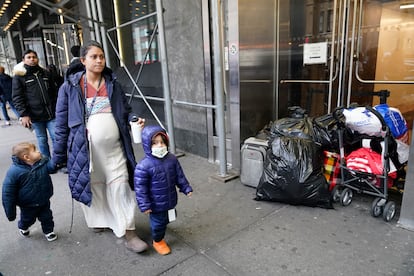

Since returning to the White House, Donald Trump has worked tirelessly to strip migrants of their rights. One of his most recent measures targets the most vulnerable individuals. A memorandum from Customs and Border Protection (CBP) has eliminated special care provisions for pregnant women, babies, the elderly, and people with serious medical conditions who are in immigration detention. Titled “Rescission of Legacy Policies Related to Care and Custody,” the May 5 letter is addressed to senior officials at the agency, which is primarily responsible for detaining and supervising undocumented migrants arriving at the U.S. border.
The letter is signed by Commissioner Pete Flores, who cancels other memorandums established during the Joe Biden administration, arguing that the policies are “outdated” and “misaligned” with the agency’s current priorities. The previous administration had developed these policies to address shortcomings in the care provided to new arrivals.
CBP officers will no longer be required to comply with guidelines requiring them to address the needs of the most vulnerable detainees, including providing access to water and food for pregnant women, ensuring the privacy of breastfeeding mothers, and storing current diapers and formula at detention centers, according to Wired.
CBP has been criticized for not providing proper medical care and attention to detainees. A report published in January on the conditions in which migrants are held under CBP custody revealed many deficiencies.
The report found systemic problems such as understaffing, prolonged detention of children, lack of documentation and evaluation of medical records, unclear and inadequate guidance for treating minors and other vulnerable individuals, and CBP’s failure to conduct meaningful oversight of its medical staff.
“While some steps were taken under the Biden Administration, more needs to be done. That’s especially true as formal monitoring of CBP medical care may soon end without court intervention. As the Trump Administration begins its aggressive and undisciplined anti-immigrant agenda, I urge CBP to adopt these recommendations. We must have increased monitoring, stricter oversight, and adequate care for vulnerable people, especially children, in government custody,” said Senator Jack Durbin, a Democrat from Illinois, who led the study.
The report summarizes an investigation conducted following the death of Anadith Danay Reyes Álvarez, an eight-year-old Panamanian girl who died at a CBP detention facility in Harlingen, Texas, in May 2023. The girl suffered from sickle cell anemia and heart disease. She had crossed the border with her family that same month and spent nine days in CBP custody, well beyond the 72-hour maximum limit.
The report revealed that it is common for children to exceed the time they should stay in detention centers, which can cause physical and mental harm to minors. In October 2024, 832 children were in CBP custody for more than seven days, and 56 children for more than 14 days.
One of the factors that contributed to Anadith’s death was the failure of medical personnel to seek further care when her health deteriorated, including securing transportation to a hospital or calling emergency services.
The Trump administration’s new memorandum urges CBP personnel to “continue to follow all established policies and procedures regarding medical care and the requirements set forth within the Flores Settlement Agreement,” which requires that children be provided safe and sanitary housing.
The treatment of migrant minors under the Trump administration has received fierce criticism from civil rights organizations. The government has deported sick children, separated families, and attempted to eliminate unaccompanied children’s right to an attorney. Additionally, it has made it harder for relatives to take custody of unaccompanied minors, which means they often have to remain longer in federal detention centers.
Sign up for our weekly newsletter to get more English-language news coverage from EL PAÍS USA Edition









































