
Defending its citizens abroad opens up another political front between Mexico’s government and the opposition
Sheinbaum’s initiative to confront Washington about the deaths of Mexicans in ICE custody has met with little to no support among other parties back home
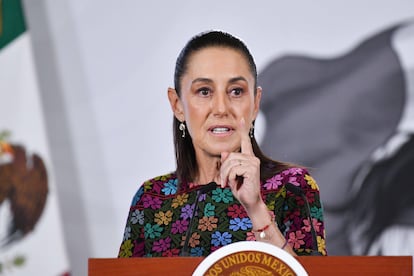

Not even the deaths of 17 Mexicans while in the custody of the U.S. Immigration and Customs Enforcement (ICE) has brought a pause to polarization in Mexican politics. President Claudia Sheinbaum’s bid to close ranks and call for national unity against the Trump administration, arguing that sovereignty and the lives of fellow Mexicans are at stake, has floundered. The response from parties opposed to the ruling government arrived quickly, but not in the expected way. The opposition has turned the presidential appeal into yet another political front in an international crisis that is only beginning.
The discussion about Mexican migrants killed in the United States has shifted into a domestic battleground. The Mexican president tried to construct a narrative of national unity in response to what her government considers a serious human rights violation. The strategy aims to elevate the case to a state-level cause: demanding international investigations, filing complaints in U.S. courts and calling on all parties to close ranks in defense of fellow Mexicans. From that perspective, the message seemed straightforward: in the face of an external attack, internal political disputes should recede. But that pause did not materialize.
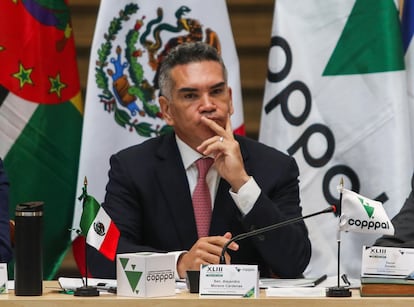
The first blow came from the Revolutionary Institutional Party (PRI). Party leader Alejandro Moreno dismissed the president’s call with a phrase that shattered any possibility of consensus. The invitation, he said, is “a poisoned apple.” He added that “there is no patriotism behind the call for unity, but an attempt by the ruling party to use the tragedy as a political smokescreen.” The PRI leader accused the government of seeking to protect “Morena’s narco-politicians,” mirroring a claim made by the U.S. government.
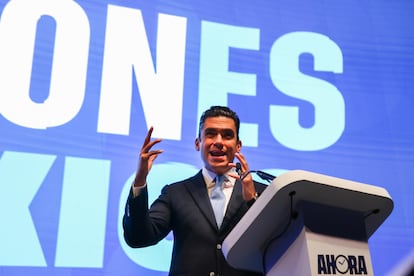
The National Action Party (PAN)’s response was less strident, though equally uncomfortable for Sheinbaum. Jorge Romero, head of the right-wing party, backed measures to protect fellow Mexicans and even announced he would push for a resolution demanding full respect for their human rights. But he recalled that the government had spent the last two years cutting off any dialogue with the opposition. Unity, the PAN argued, cannot be called for only when it is politically convenient. That reply closed the door on the possibility of PAN joining a united front.
Meanwhile the center-left Movimiento Ciudadano has chosen restraint. Its leader, Jorge Álvarez Máynez, supported the demand for a thorough investigation. “We do not share the motives; they relate to defending a very specific case of impunity around Governor Rubén Rocha Moya, but we must separate the issues. The violation of human rights by U.S. agencies, which have not only targeted Mexicans but also U.S. citizens, is an action that should be supported,” he said.
The president and the ruling party have responded in the same confrontational tone. Sheinbaum condemned the opposition’s attitude and lamented that although the situation warranted unity to seek justice for the deaths of 17 Mexicans in immigration raids, opposition leaders instead limited themselves to discrediting her. “The PAN and PRI leaders only criticize me, but they do not say whether they stand in solidarity with Mexicans,” she said on Tuesday during her morning press conference.
In the same vein, another Morena official, Ariadna Montiel, called the PRI’s rejection and the PAN’s reservations “petty.” She added that, faced with the deaths of compatriots while in ICE custody, the homeland should come before any partisan calculation.
Although positions differed, the political outcome was the same. The presidential attempt to build national consensus has capsized amid a logic of permanent confrontation. Morena insists on framing unity as a nationalist duty. Ricardo Monreal, the ruling party’s leader in Congress, called for a common stance from the Chamber of Deputies. Meanwhile, in the Senate the governing majority has announced it will use all tools of international law to demand justice.
For the PRI, accepting that call would mean conceding a moral leadership to the government that it considers nonexistent. The migratory tragedy, it argues, cannot erase the accusations facing several officials in the ruling party, nor become a hiatus that pauses political scrutiny. Under that logic, the presidential appeal is really a covert operation to reposition the government as the legitimate defender of national sovereignty.
The opposition represented by PAN and PRI seeks to prevent that narrative from taking hold and to keep the focus on alleged links to drug trafficking facing Morena. Even so, the situation remains awkward for the Mexican president. Her call for national unity in the conflict with the U.S. has ended up exposing the limits of her ability to build consensus and leaves the country at one of the most delicate moments in its relationship with the U.S. without a shared narrative.
Sign up for our weekly newsletter to get more English-language news coverage from EL PAÍS USA Edition









































